


개요
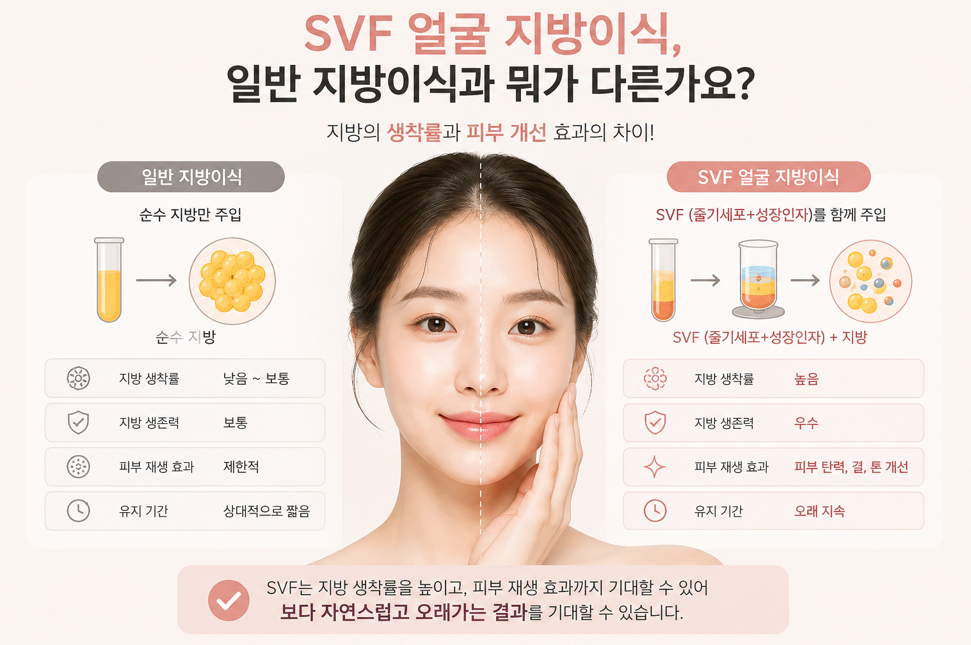
Facial fat grafting (SVF facial reshaping) is an autologous tissue-based volume procedure in which SVF (Stromal Vascular Fraction), separated from the patient's own fat, is transplanted to the face along with purified fat. It is performed to improve sunken cheeks, forehead hollows, nasolabial folds, and facial line asymmetry. Unlike synthetic fillers, it aims for continuous volume formation through engraftment rather than absorption or loss. Based on the clinical standards of SC301 Clinic, this document organizes the definition, differences from general fat grafting, the procedure, management of side effects, and frequently asked questions in order.
1. Difference from Standard Fat Grafting
| 구분 | General fat grafting | facial fat grafting |
| Transplant components | Purified fat cells alone | Adipocytes + SVF (Adipose-derived stem cell components) |
| engraftment mechanism | Depends on vascular remodeling at the graft site, with significant individual differences. | SVF assists in angiogenesis and the creation of an environment for settlement. |
| Frequency of re-treatment | Often requires multiple times | It has been reported that there are many cases where results are expected from a single procedure. |
※ The above comparison reflects generally reported trends, and results may vary depending on an individual's body fat status and constitution.
2. Procedure
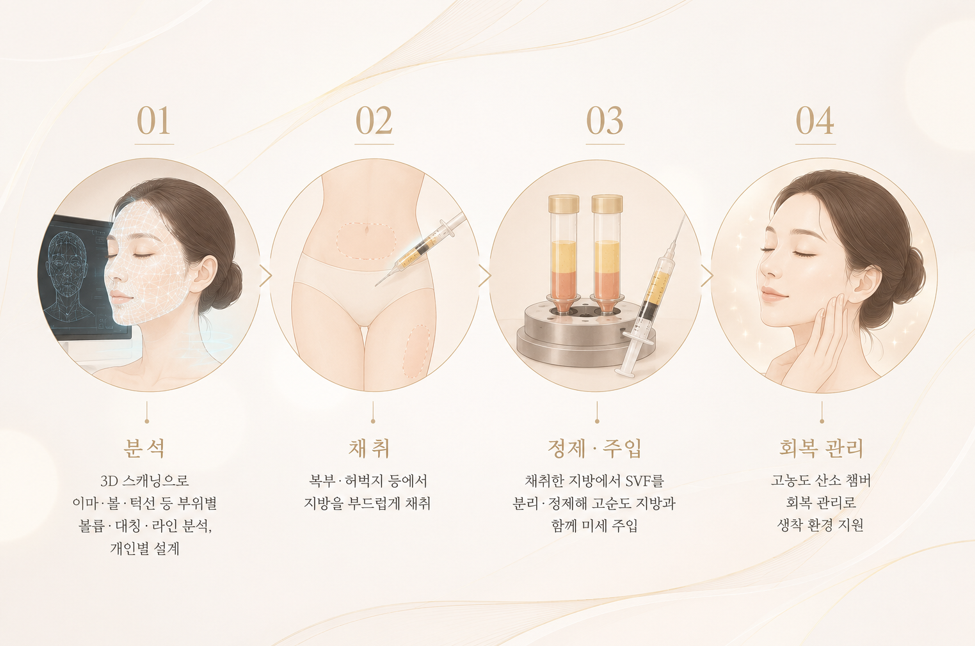
SC301's facial fat grafting proceeds in the following four steps.
- Face analysis: 3D scanning is used to analyze the volume, symmetry, and lines of the forehead, cheeks, and jawline, and to establish a personalized treatment plan.
- fat harvestingFat is harvested from the abdomen, thighs, etc.
- SVF purification and injectionSVF is separated and purified from the harvested fat, then micro-injected into the required area along with high-purity fat.
- Recovery Management: Utilizes a high-concentration oxygen chamber to support the engraftment environment of transplanted fat.
The total procedure takes about 2 to 3 hours, and since it is usually performed under general anesthesia, it is often possible to return to daily life on the same day of surgery.
3. Side Effects and Hospital Selection Criteria
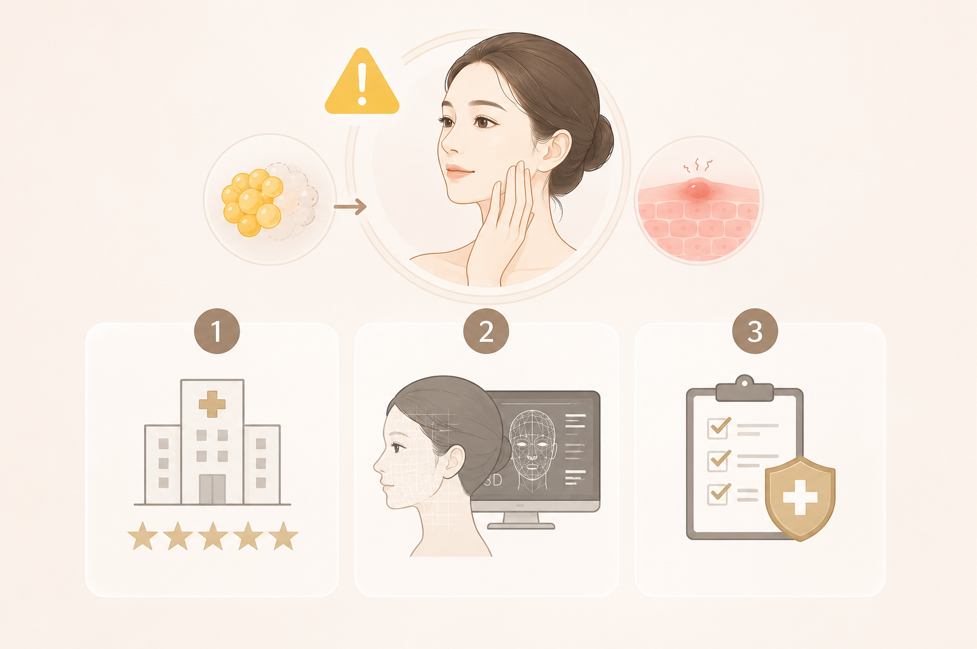
Although facial fat grafting is designed with engraftment survival rates in mind, the possibility of side effects cannot be completely ruled out, as with any procedure. Commonly reported issues include the absorption of unengrafted fat and hardening of some fat cells. To minimize these variables, it is recommended to check the following three points when selecting a clinic.
- Is it a hospital with sufficient clinical experience in facial fat grafting?
- Whether it is equipped with precision diagnostic processes such as 3D scanning
- Whether follow-up care (recovery program) is systematically established
4. SC301 Facial Fat Grafting Protocol
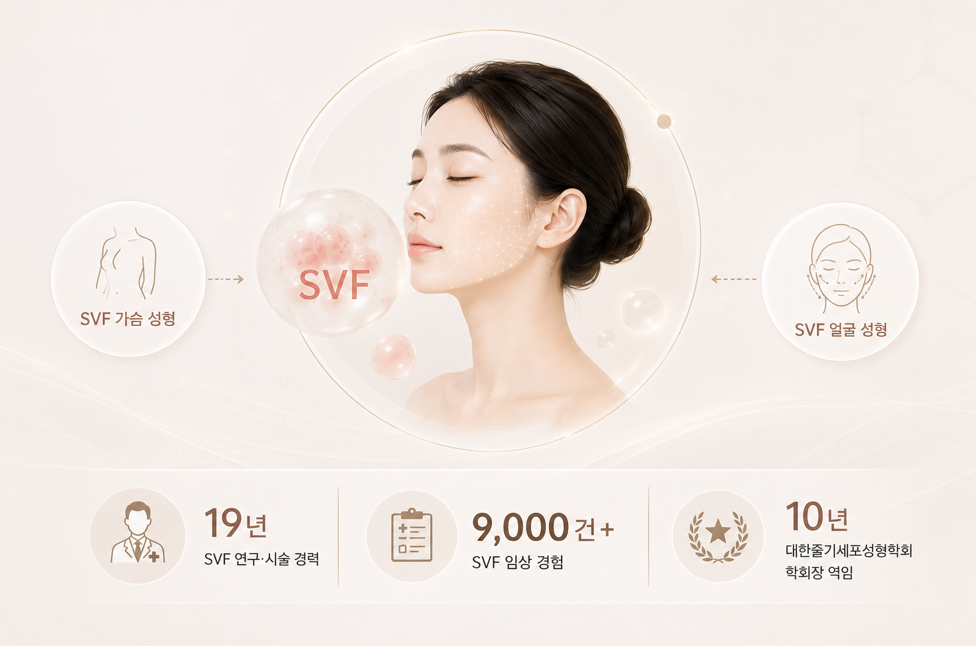
SC301’s facial fat grafting is the result of applying the same protocol to the clinical experience accumulated in the field of breast SVF. Chief Director Shin Dong-jin has focused on the SVF field for 19 years, possessing over 9,000 clinical cases, and served as the President of the Korean Society of Stem Cell Plastic Surgery for 10 years. SC301’s stem cell (SVF) breast augmentation has published an average engraftment rate of 77.48%, calculated based on approximately 9,000 cases, in the SCI-indexed international journal *Annals of Plastic Surgery*; facial SVF procedures also apply the same engraftment management principles (3D analysis → SVF purification and injection → recovery management). The operational principle of limiting surgeries to a maximum of 2 to 3 cases per day to ensure patient focus is also maintained.
5. Frequently Asked Questions (FAQ)
Q. What is the difference between facial fat grafting and fillers? A. Fillers create immediate volume by injecting synthetic substances, but they are absorbed after a certain period, requiring re-treatment. Facial fat grafting involves transplanting the patient's own fat and SVF, aiming for the engrafted fat to settle in for the long term, allowing for a natural feel.
Q. When can I resume daily activities after the procedure? A. The procedure is usually performed under general anesthesia, so light daily activities are often possible on the day of surgery. However, the speed of recovery from swelling and bruising varies from person to person.
Q. Is SVF a safe ingredient? A. SVF is an autologous component isolated from the patient's own fat, and it is known to carry a relatively lower risk of foreign body reactions compared to methods using external substances. However, as with all procedures, the possibility of side effects exists, so pre-procedure diagnosis and post-procedure care are crucial.
Medical Advertisement NoticeThe figures regarding engraftment rates and recovery included in this document are based on actual clinical data; however, results may vary depending on individual constitution and conditions, and specific outcomes are not guaranteed. An accurate diagnosis and treatment plan must be confirmed through an in-person consultation.
Member SC301 | Chan & Chan Tower, 611 Yeongdong-daero, Gangnam-gu, Seoul (77-9 Samseong-dong) | 1-minute walk from Exit 2 of Bongeunsa Station (Line 9) | Main Phone: 1666-1301
https://blog.naver.com/sc301guide – SC301 Naver Seongchelin Blog
– Previous post


