



What is the first change you notice when you look in the mirror as you get older?
Many people say that they feel the loss of facial volume and the blurring of facial contours the most, even more so than their skin tone.
This is not a problem with the skin surface, skinand organization
The supporting foundation itselfThis is because it gradually weakens.
facial fat graftingIt approaches these changes from a more fundamental perspective Playback-based volume management method.
Today, I will explain the principles of facial fat grafting, the key points for approach by age group, and the differentiated system of SC301 one by one.
What is facial fat grafting?
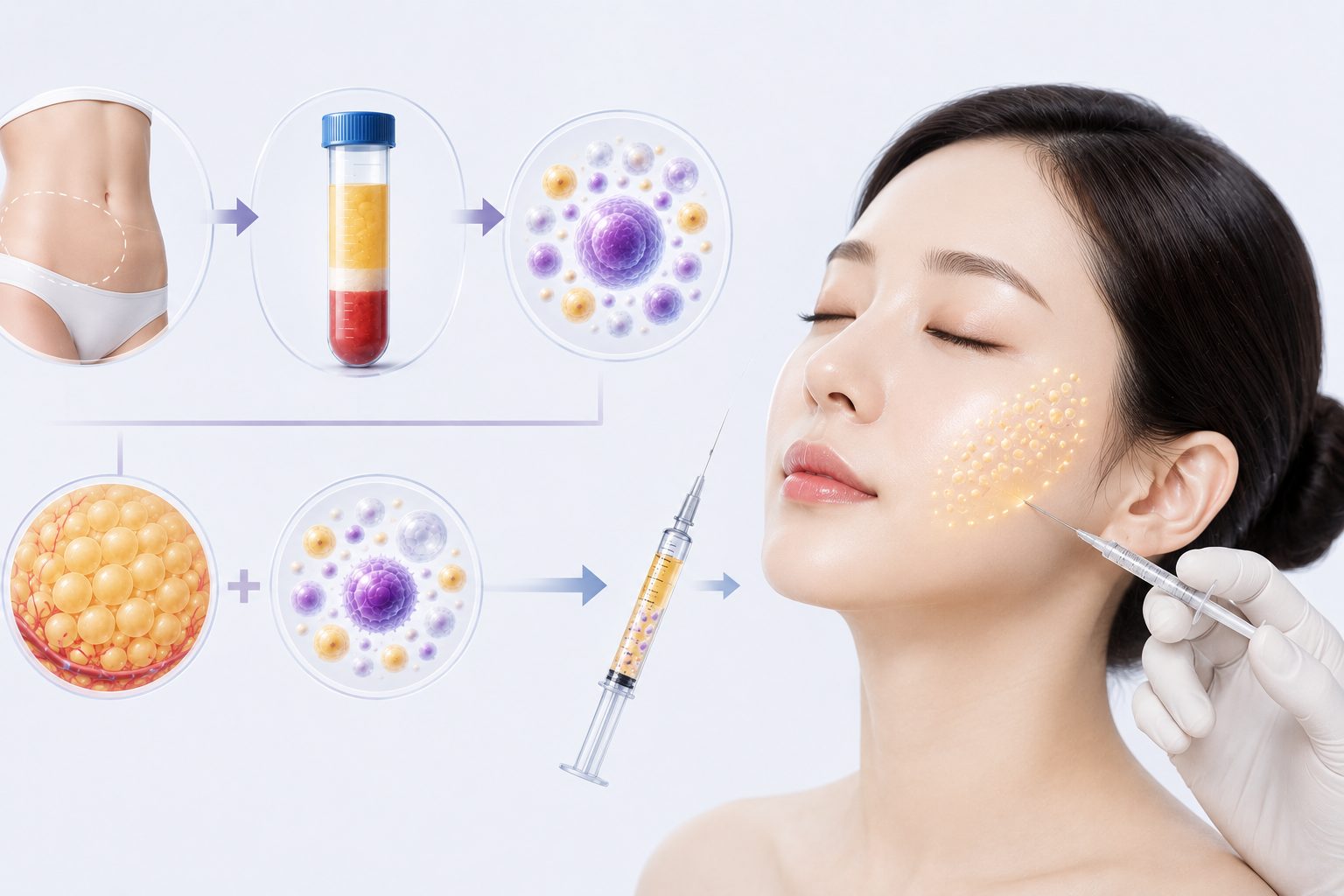
Facial fat grafting abdomen, thighs, sides Collected from the back
It is a method of transplanting the patient's own fat, after undergoing a purification process, to areas of the face that require volume.
The key point here is that it is not a simple fat graft.
existing within adipose tissue SVF, In other words, precisely the fat-derived cell components Separation and purificationAfter that, pure fat and
The biggest difference from general fat grafting is that it is mixed and applied in the appropriate ratio.
SVF contains various active components involved in tissue environment and angiogenesis,
When applied to areas with reduced volume, such as the forehead, cheeks, and nasolabial folds, it goes beyond simple volume enhancement to provide a natural look.
You can expect an improvement in impressions.
This method is particularly considered for those who prefer results that settle smoothly over time rather than drastic changes.
Approaches to Facial Fat Grafting by Age Group
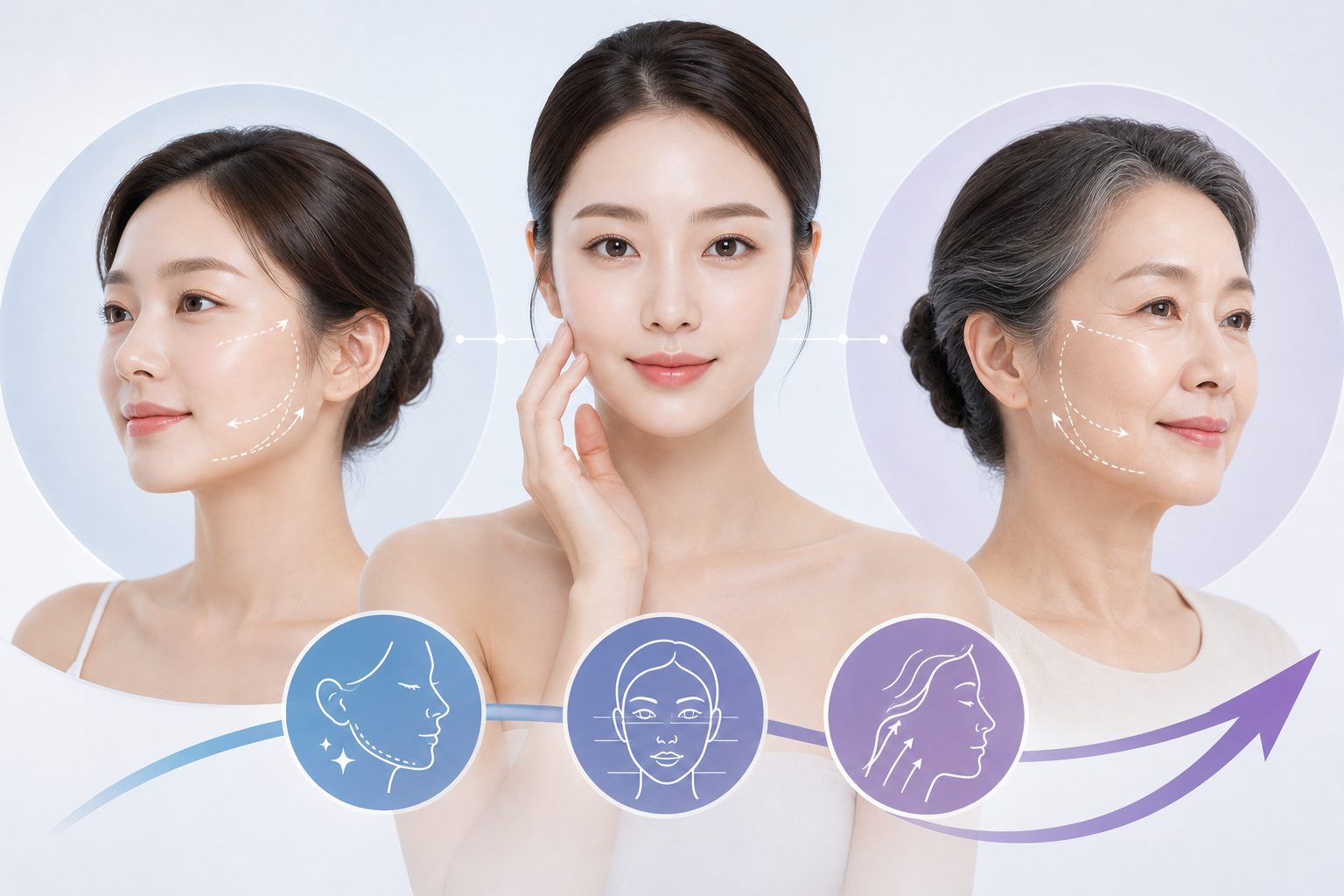
Since the approach to facial fat grafting varies depending on age and skin condition, it is important to understand the direction that suits your age and current state.
20s to 30sIn this case, since it is the stage before the decline in skin elasticity begins in earnest
Rather than adding excessive volume, balance the facial lines and
Focus on contouring.
It is often approached as a preventive care concept when the face starts to look tired or volume in specific areas begins to appear to have dropped.
40s to 60s는 Volume reductionwith Sagging, wrinkles, elasticity
loweringIt is a period when complex manifestations occur.
During this period, rather than supplementing only specific areas, the face
Considering the overall balance Volume recoveryand Line cleanupPlanning together leads to a much more natural result.
What is common to all age groups is to set the direction of change without going overboard, and sufficient prior consultation is essential for this.
Facial fat grafting, why SC301?

Facial fat grafting Cell purification process, formulation ratio, application methodThe stability and naturalness of the results may vary significantly depending on this.
Even with the same procedure name, the results vary depending on where you receive it.
Here is the reason why it can be different.
The reason SC301 is attracting attention Three thingsI will summarize it for you.
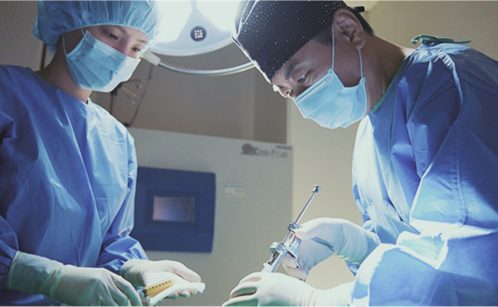
firstMedical staff with over 20 years of clinical experience personally handle everything from consultation to surgery.
Also, research results related to SVF reshaping Listed in international academic journals including the Oxford Journaland
We have been continuously building up our technical foundation.
In that they are medical professionals backed by experience and research
It has high reliability.
second, Possessing proprietary know-how for SVF separation and purificationWe are doing.
It aims for more uniform results through a process of stably separating and purifying adipose-derived cell components,
We operate a system that stores SVF components extracted through cell banking so they can be utilized for future personalized care.
third, with fat harvesting that closely considers individual body type and condition
A direction to minimize tissue damage and reduce the burden of recoveryThe procedure is performed as follows.
Those who need to consider when to return to their daily lives can also through counseling
You can make a sufficient plan.
What is the SC301 Stem Cell Engraftment Research Center?
SC301 is Operates an in-house stem cell engraftment research centerand
There is.
This research center is From fat extraction to SVF separation and purification processAs a space where the entire process up to is directly managed,
It is fundamentally different from a clinic that simply performs procedures.
Cell processing by a team of expert researchers with over 10 years of experience Perform the entire process yourselfWe focus on maintaining consistent quality.
We are also taking a meticulous approach to safety management through an environment that separates the collection and processing rooms and a sterile system, and
Possessing numerous SVF-related equipment enables accurate separation and storage
We have built a feasible system.
The outcome of the procedure depends as much on how stably the cells are handled as on the medical team's manual dexterity,
In this regard, SC301 has its own infrastructure.
Facial fat grafting involves using materials from another person or artificial fillers
not Utilize my organizationThe impression and volume of the face
This is a method to organize things naturally.
Not a change that merely alters the surface, Improve the organizational environment itselfdoing
Because it approaches in this direction, you can expect results that do not look unnatural even after a long time.
SC301 is based on clinical experience and research data.
We aim for changes that are not excessive and are not unreasonable.
If you are curious about facial fat grafting or want a treatment that suits you
If you are unsure about the direction, consult with the SC301 medical team for a 1:1 consultation tailored to your current condition
I recommend that you receive guidance on the method.
Frequently Asked Questions (Q&A) about Facial Fat Grafting
Q1. How is facial fat grafting different from general fat grafting?
Conventional fat grafting involves purifying harvested fat through methods such as centrifugation and transplanting it as is. In contrast, facial fat grafting utilizes SVF—specifically fat-derived cell components present within the fat tissue—which is then separated and purified before being blended with pure fat in appropriate proportions. Since SVF contains various active cellular components involved in blood vessel formation and tissue environment improvement, the key difference lies in creating an environment where the transplanted tissue can stably take root, going beyond simply adding volume. SC301 possesses proprietary know-how regarding this SVF separation and purification process and directly manages the entire cell processing stage through its in-house Stem Cell Engraftment Research Center. Because a team of expert researchers with over 10 years of experience focuses on maintaining consistent quality from harvesting to purification, the level of cell processing is fundamentally different from that of typical fat grafting clinics.
Q2. How long does the swelling and recovery period take after facial fat grafting?
Since facial fat grafting involves both the transplantation and the harvesting of fat, the recovery period must take into account both the harvesting and transplanting sites. Generally, swelling is most pronounced between 3 and 7 days after the procedure, and recovery to a state where daily life can be resumed without difficulty occurs around two weeks. However, the speed of recovery may vary depending on individual constitution, the amount of fat harvested, and the extent of the transplantation site. SC301 designs the procedure to minimize tissue burden by carefully considering each individual's body type and physical condition, and operates a post-operative care process that takes into account the timeline for returning to daily life. Even those who need to adjust their recovery period due to work or childcare can fully plan their schedule through a preliminary consultation, so it is recommended to honestly share your situation during the consultation.
Q3. How long do the effects of facial fat grafting last?
This is one of the most frequently asked questions by those considering facial fat grafting. Unlike artificial fillers that decompose within the body, facial fat grafting involves transplanting the patient's own tissue; therefore, cells and tissues that successfully engraft have the characteristic of maintaining their quality for a relatively long period. However, not all transplanted fat engrafts 100%, and the survival rate varies depending on the cell processing method, transplantation technique, and the individual's physical condition. Increasing the engraftment rate is the key factor determining the quality and longevity of the results, and SC301 has concentrated its research capabilities precisely on this aspect. By incorporating SVF components to optimize the transplantation environment and publishing related research results in international academic journals such as the Oxford Journal, we are continuously accumulating technical evidence for improving engraftment rates. SC301's differentiating point is that it aims to achieve more stable results in a single procedure, rather than simply repeating the treatment.
Q4. If I have fat grafted to my face, won't the shape become distorted later when I gain or lose weight?
It is a natural concern. Since the transplanted fat cells are your own tissue, they may react to changes in body weight to some extent. If you gain weight significantly, the volume of the transplanted area may increase, while conversely, if you lose weight rapidly, the volume may decrease. However, the amount of fat transplanted to the face is relatively less affected compared to changes in body fat throughout the body due to changes in body shape, and in most cases, a natural state is maintained within a normal range without drastic weight fluctuations. SC301 designs the amount and location of transplants considering the individual's body type and lifestyle patterns, approaching the procedure in a way that minimizes the risks associated with such changes in advance. If you inform us in advance during the consultation if you have any current weight management plans or future dieting plans, we can create a more realistic treatment plan.
Q5. Facial fat grafting or fillers, which is right for me?
Since the two procedures differ in purpose and method, it is important to choose the one best suited to your individual situation rather than simply comparing them. Fillers offer distinct immediate volume enhancement, a short procedure time, and minimal recovery burden. However, because they degrade over time, periodic re-treatments are necessary, and it is important to consider that tissue changes may accumulate with repeated procedures. Facial fat grafting utilizes the patient's own tissue, resulting in a lower risk of foreign body reactions, and once the tissue is stably engrafted, it maintains its effects for a relatively long period. However, because it involves the fat harvesting process, a relatively longer recovery period is required. Based on over 20 years of clinical experience and accumulated research data, SC301 determines which method—fillers or facial fat grafting—is more suitable for your current condition. Rather than unconditionally recommending a single method, SC301’s consultation approach guides you toward the most realistic path by comprehensively considering your age, skin condition, degree of volume loss, and potential recovery time.


Frequently Asked Questions
What is facial fat grafting?
Facial fat grafting is a method in which the patient's own fat, harvested from areas such as the abdomen, thighs, or flanks, undergoes a purification process and is transplanted to areas of the face requiring volume. The key point here is that it is not a simple fat graft. After precisely separating and purifying the SVF—that is, fat-derived cell components—present within the fat tissue, pure fat and
Facial fat grafting, why SC301?
The stability and naturalness of the results from facial fat grafting can vary significantly depending on the cell purification process, mixing ratio, and application method. This is precisely why results can differ depending on where the procedure is performed, even if the name is the same. Let me summarize three reasons why SC301 is gaining attention. First, medical staff with over 20 years of clinical experience personally handle everything from consultation to surgery.
What is the SC301 Stem Cell Engraftment Research Center?
SC301 operates its own Stem Cell Engraftment Research Center. This center is fundamentally different from clinics that merely perform procedures, as it directly manages the entire process from fat harvesting to SVF isolation and purification. A team of expert researchers with over 10 years of experience personally carries out the entire cell processing, focusing on maintaining consistent quality.


