


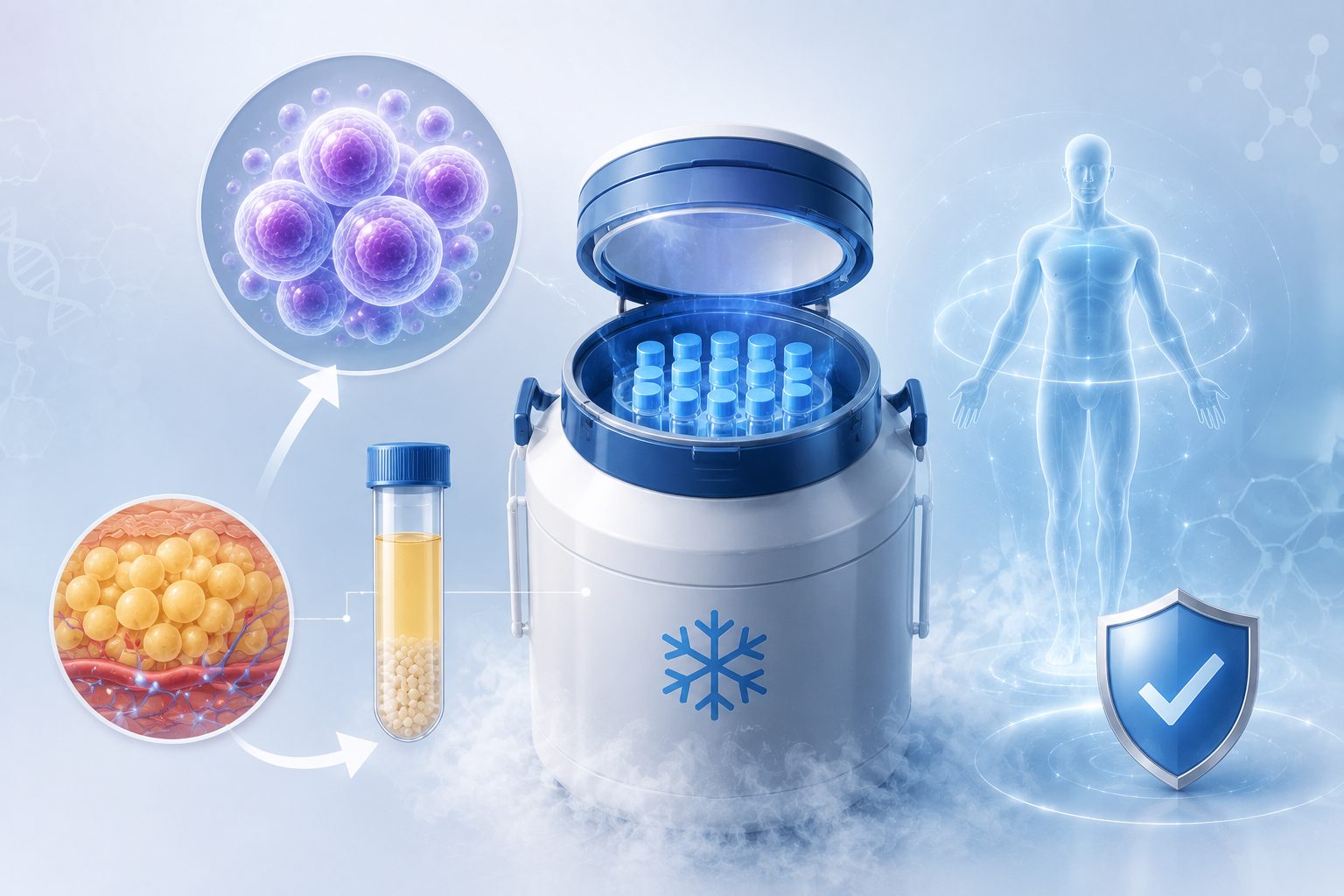
With the growing interest in health and anti-aging these days
Cellular levelThose who want to take care of their bodies
It is increasing.
Among them Stem cell (SVF) storage (cell banking)It preserves the current healthy cell state and then at the time when needed.
It is attracting attention as a future-oriented management concept that utilizes it.
Today, I will summarize what stem cell (SVF) storage (cell banking) is, how it operates, and how the SC301 system is differentiated.
What is stem cell (SVF) storage (cell banking)?
SVF는 Stromal Vascular FractionAs an abbreviation of,
A collection of various cellular components extracted from adipose tissue
It means.
Simply put Regeneration-related cell complex derived from fatYou can understand it as follows.
Stem cell (SVF) storage (cell banking) involves these cell components Liquid nitrogen tank at minus 196 degreesIt is a system for ultra-low temperature storage.
It can be viewed as a personalized bio-management method that stores the healthy state of your cells at this very moment and retrieves them when needed.
As the state of cells changes with age, the key is to store them in advance while you are young and healthy.
What role does SVF play in the body?

SVF is blood vessel formationand Involved in the protein synthesis process, tissue
Creating a recovery environmentAs something that can help with doing
It is known.
In addition, related research in terms of skin and soft tissue care
It continues steadily, both domestically and internationally Anti-aging and
Recycling sector It has established itself as a subject of interest in research.
confirmed through research to date Key Functional Characteristics of SVFTo summarize, it is as follows.
1. In terms of supporting immune balance, it is involved in maintaining the immune-related cellular environment and managing overall bodily balance.
I can help.
2. Homing refers to a nature-oriented characteristic that moves on its own to the necessary parts of the body and acts in response to changes in the internal environment.
3. In terms of creating an environment for angiogenesis, it is involved in establishing the environment necessary for blood supply and tissue recovery, and
Acting in a way that helps restore function in a damaged tissue environment
Characteristics related to tissue differentiation are also observed.
4. It plays a positive role in managing the recovery speed of the skin and soft tissues, and is also involved in regulating homeostasis to maintain internal balance.
What are the procedures for SVF treatment and cell banking storage?
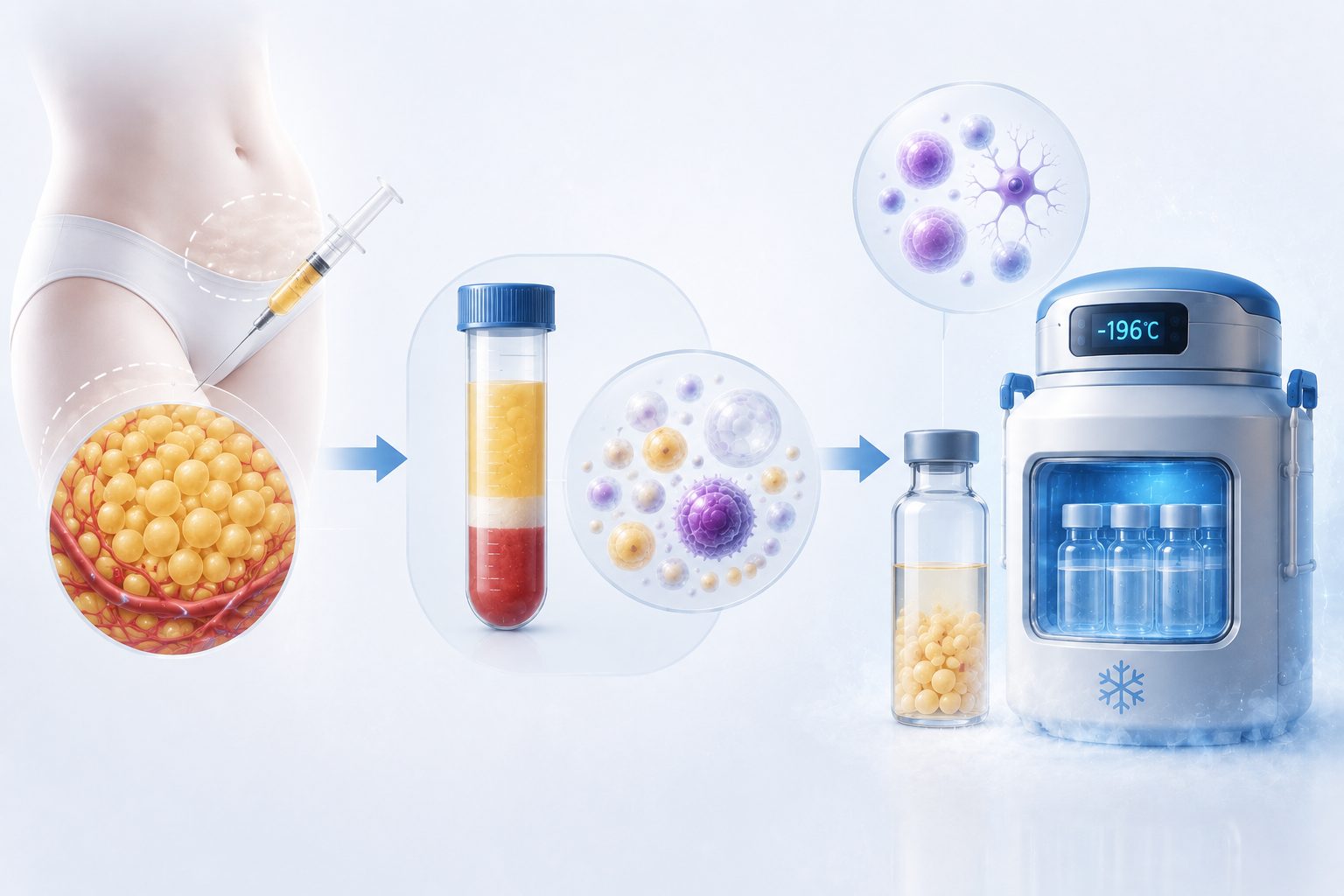
Stem cell (SVF) storage (cell banking) is entirely based on autologous tissue.
It is characterized by the fact that it proceeds.
The procedure is largely Three stepsIt is divided into.
at first fat harvesting.
A necessary amount from areas such as the abdomen or thighs
Adipose tissue is harvested.
second is SVF separation and purification stepsin,
Precisely extract only the SVF component from the harvested fat
Separate and purify.
the third Utilization or storage stagein,
Use immediately or
It is stored via cell banking in an ultra-low temperature environment of minus 196 degrees.
Because autologous tissue is used, it is biocompatible, and the burden of foreign body reactions
It is also worth noting that it is relatively small.
How far has global SVF research progressed?
Research utilizing SVF, centered in the United States and Japan
In fields such as anti-aging and neurovascular care.
It is expanding.
Continuous interest as a pillar of cell-based regenerative research
Clinical and basic research is actively underway.
In Korea, therapeutic use is currently limited, but
The potential for use for cosmetic and functional improvement and research purposes
It is gradually expanding.
Amidst these international research trends, SC301 is also SVF-based
We are continuously continuing our research on aesthetics and function.
SC301 Stem Cell (SVF) Storage (Cell Banking), What Is Different?
The reason SC301's stem cell (SVF) storage (cell banking) system is attracting attention
It can be summarized into three points.
at first Clinical experience and research data-based system.
Continuous research and clinical data since the introduction of SVF surgery
has accumulated,
related results Publication history in SCI-indexed academic journals이 있습니다.
Not just a simple procedure center Reliability as a research-oriented medical institutionEquipped with
second is Systematic separation and storage management environment.
We manage the entire process, from SVF separation and purification to storage, through a proprietary process.
Maintains a stable storage environment.
Personalized management through cell banking storage services for a set period
We are also keeping open the possibility of utilization.
the third Management approach considering organizational burden.
We aim for an approach that minimizes tissue burden by considering the individual's body type and condition, and design the recovery process to be seamless.
Stem cell (SVF) storage (cell banking) is not a simple procedure, but rather the act of storing the current healthy cell state for the future.
It is a concept of biometric data management.
Because the quality of cells is bound to change as we age,
If you are interested, it is recommended that you seek counseling when you are in good health.
SC301 covers everything from cell extraction to storage and utilization
As a research-oriented medical institution that directly manages the entire process,
We are focusing on building a more stable system.
If you have any questions about stem cell (SVF) storage (cell banking),
Management methods suitable for the current state
I recommend that you seek counseling.
Frequently Asked Questions (Q&A) about Stem Cell (SVF) Storage (Cell Banking)
Q1. When is the best time to receive stored stem cells (SVF) (cell banking)?
A. The key to stem cell (SVF) storage (cell banking) is to store cells when their quality is at its peak. Generally, cell activity and regenerative capacity begin to gradually decline starting in the late 20s to early 30s. In other words, it is advantageous to store cells while your body is healthy and the quality of your adipose tissue is good, before aging begins in earnest. This is particularly recommended for those preparing for body shape changes or dieting after childbirth, or for those in their mid-30s or later who wish to start anti-aging care. Since SC301 has accumulated clinical data across various age groups since the introduction of stem cell (SVF) banking, we can provide evidence-based guidance on determining the optimal harvesting time based on an individual's age and cell condition. The correct approach is to view this not simply as "needing it right now," but as "storing it now for the future."
Q2. How long is the storage period for stem cells (SVF) in cell banking? Do the cells deteriorate?
A. Cells stored at ultra-low temperatures in a liquid nitrogen environment of -196 degrees Celsius remain in a state where cellular metabolic activity is nearly suspended. Theoretically, storage is possible for decades, and it is known that cell viability and functional characteristics remain relatively stable provided the appropriate environment is maintained. However, storage quality can vary depending on the technical expertise during the separation and purification stages as well as the level of storage environment management. SC301 operates the entire process from SVF separation to purification and storage using a proprietary process and is equipped with a system that consistently maintains the stability of the storage environment. Because a systematic management process that considers cell viability and activity is applied rather than simply placing the cells in a storage container, a more stable state can be expected even during long-term storage.
Q3. Are there no side effects from the SVF procedure? Is it a safe procedure?
A. The SVF procedure utilizes autologous cell components extracted from the patient's own fat tissue, rather than using cells from another person or artificial materials. For this reason, the risk of immune rejection or foreign body reactions is relatively lower compared to general filler or graft procedures. However, temporary bruising or swelling that may occur during the fat harvesting process, or recovery reactions depending on the individual's constitution, may still occur. SC301 designs the procedure to minimize tissue burden by carefully considering the individual's body type and physical condition. Furthermore, we operate a comprehensive post-procedure care process to ensure a smooth recovery. The most important aspect of any procedure is to first confirm whether it is suitable for your condition through sufficient pre-procedure consultation, and SC301's accumulated clinical data serves as the practical basis for this assessment.
Q4. In what situations can stem cells (SVF) be utilized after storage (cell banking)?
A. Stem cell (SVF) storage (cell banking) is a concept of preparing for a "future point of need" rather than "the present." Situations where it can be utilized include when skin and soft tissue elasticity declines due to aging, when tissue volume restoration is required in specific areas, or when the regenerative environment needs improvement. Currently, while its use for therapeutic purposes is limited in Korea, its potential for use in cosmetic and functional improvement, as well as for research, is gradually expanding. SC301 is an institution that directly manages the entire process, from cell banking storage services to the actual utilization of stored cells for aesthetic and functional purposes. A key strength unique to SC301 is that it manages extraction, storage, and utilization consistently within a single institution, rather than simply outsourcing cell custody. Even if you do not have immediate plans for use, we recommend consulting with us as preparation for the future.

Frequently Asked Questions
What is stem cell (SVF) storage (cell banking)?
SVF stands for 'Stromal Vascular Fraction,' which refers to a collection of various cellular components extracted from adipose tissue. Simply put, you can understand it as a regeneration-related cell complex derived from fat. Stem cell (SVF) storage (cell banking) is a system that stores these cellular components at ultra-low temperatures in liquid nitrogen tanks at minus 196 degrees Celsius.
What role does SVF play in the body?
SVF is known to be involved in angiogenesis and protein synthesis processes, which can help create an environment for tissue recovery. Furthermore, related research is continuously being conducted regarding skin and soft tissue care, and it has established itself as a subject of interest in the fields of anti-aging and regeneration research both domestically and internationally. The key functional characteristics of SVF confirmed through research to date are summarized as follows.
What are the procedures for SVF treatment and cell banking storage?
A key feature of stem cell (SVF) storage (cell banking) is that it is entirely based on autologous tissue. The process is broadly divided into three stages. The first is fat harvesting. The required amount of adipose tissue is collected from areas such as the abdomen or thighs. The second is the SVF isolation and purification stage, in which only the SVF components are precisely extracted from the harvested fat.
How far has global SVF research progressed?
Research utilizing SVF is expanding into fields such as anti-aging and neurovascular health, centered around the United States and Japan. Receiving continuous attention as a key pillar of cell-based regenerative research, active clinical and basic studies are currently underway. In Korea, while therapeutic use is currently limited, the potential for utilization in cosmetic and functional improvement, as well as for research purposes, is...
SC301 Stem Cell (SVF) Storage (Cell Banking), What Is Different?
The reasons why SC301's stem cell (SVF) storage (cell banking) system is attracting attention can be summarized into three points. The first is a system based on clinical experience and research data. Since the introduction of SVF reconstructive surgery, the company has continuously accumulated research and clinical data, and has a history of publishing related results in SCI-indexed academic journals. It possesses credibility as a research-oriented medical institution, rather than merely a facility for performing procedures.


