


Hello! This is the Seongchelin manager 🖐️
When considering breast augmentation
Have you ever had a worry like this?
“How much vacation time should I take?”
Even amidst a busy schedule
I'm worried about whether surgery is possible.
In plastic surgery, the recovery period is a more important factor than you might think.
No matter how well the surgery goes,
This is because a prolonged recovery puts a strain on daily life.
so today
Stem cell (SVF) breast augmentation (breast fat grafting)
Regarding the actual recovery period
I’m going to summarize it for you in the easiest way possible!
Stem Cell (SVF) Breast Augmentation: How Long Does Recovery Take?
Stem cell (SVF) breast augmentation (breast fat grafting) is
Naturally harvest fat from the chest, thighs, abdomen, etc.
Mix refined fat and SVF (adipose-derived cell components)
Injection via microcannulaThis is the method.
As such, the incision area is very small and tissue damage is minimal
The biggest feature is that the downtime is not long.
✔️ Mostly light activity the next day
✔️ Everyday movements O
✔️ Simple return to work O
Since it is not a surgery that is visible on the outside
The advantage is that you don't have to worry too much about what others think!

If it's a typical office job
It is fully possible without a separate long vacation, and
If you have a job that involves a lot of movement
It is safe to plan with an interval of about 1 to 2 weeks.
Bruising or swelling varies from person to person, but
Because most of them fall out naturally within 1 to 2 weeks
There will be no major problems returning to work.
Stem Cell (SVF) Breast Augmentation: Will There Be Scars?
At SC301, skilled specialists
I am performing sophisticated surgery.
First, when extracting fat
In hard-to-see places such as the navel, groin, and buttocks folds
A small incision of approximately 5mm is made.
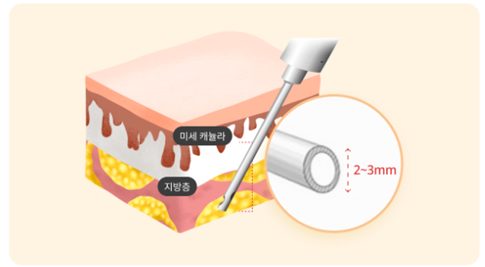
Even when injecting fat into the breasts
At the boundary between the armpit and the chest
We only use micro-incisions of about 2 to 5 mm.
This size fades and becomes natural over time.
You don't stand out much even when wearing a bikini!
Stem Cell (SVF) Breast Augmentation, Why Is Recovery Faster with SC301?
SC301 is used during the surgical process
Using the principle of minimizing damage to normal tissue
We are focusing on reducing swelling and bruising.
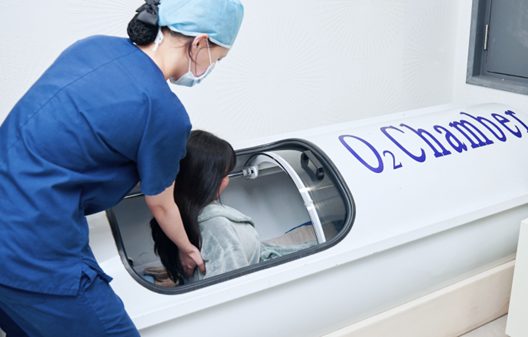
Also to aid recovery
Supply high-concentration oxygen to the high-pressure oxygen chambersun
It is accelerating the speed of cell regeneration and tissue recovery.
It tends to be easier to return to daily life.
Thanks to this system
Many people are more than expected
You are experiencing a much faster recovery, aren't you!
Stem Cell (SVF) Breast Augmentation: Can Satisfactory Volume Be Achieved with a Single Procedure?
Traditional fat grafting has a low survival rate.
I had to repeat it 2 to 3 times to achieve the desired volume, but
SC301's stem cell (SVF) breast augmentation (breast fat grafting) is
Optimize the grafting environment Average engraftment rate 77.48%showing
The results are relatively stable with just a single treatment.
However, to increase the survival rate
Pre- and post-operative care is very important!
So in SC301
Before surgery, secure good fat through diet management.
After surgery, through post-operative dietary management for 6 months
It helps fat cells engraft stably.
Especially the six months after death
Because it is the period for the transplanted fat to fully settle.
Avoid strenuous exercise and
Maintaining a healthy intake of fats and proteins is key..
If you have been worried because of your busy daily life
Stem cell (SVF) breast augmentation has a relatively short recovery period and
I tend to return to daily life quickly.
You can plan without much burden.
However, the completeness of the surgical result is
Depending on pre-conditioning and post-care
Because it changes significantly,
A hospital where this part is systematically organized
It is important to make a choice.
Safe and according to my schedule
If you want natural results
We recommend that you make an accurate plan with SC301.
This has been the Seongchelin Guide 🍀

Frequently Asked Questions
Stem Cell (SVF) Breast Augmentation: How Long Does Recovery Take?
Stem cell (SVF) breast augmentation (breast fat grafting) is a method in which fat is naturally harvested from the breasts, thighs, or abdomen, mixed with purified fat and SVF (fat-derived cell components), and injected using a micro-cannula. The most significant feature is that the downtime is short due to the very small incision area and minimal tissue damage. ✔️ Light activity is generally possible the following day.
Stem Cell (SVF) Breast Augmentation: Will There Be Scars?
At SC301, skilled specialists perform precise surgeries. First, when extracting fat, small incisions of approximately 5mm are made in inconspicuous areas such as the navel, groin, and buttock crease. When injecting fat into the breasts, only micro-incisions of about 2 to 5mm are used at the boundary between the armpit and the breast.
Stem Cell (SVF) Breast Augmentation, Why Is Recovery Faster with SC301?
The SC301 focuses on reducing swelling and bruising by employing the principle of minimizing damage to normal tissue during the surgical process. Additionally, to aid recovery, it supplies high-concentration oxygen via a hyperbaric oxygen chamber to accelerate cell regeneration and tissue healing, making a return to daily life easier. Thanks to this system, many people find that...
Stem Cell (SVF) Breast Augmentation: Can Satisfactory Volume Be Achieved with a Single Procedure?
Traditional fat grafting required 2 to 3 repetitions to achieve the desired volume due to low engraftment survival rates, but SC301's stem cell (SVF) breast augmentation (breast fat grafting) optimizes the engraftment environment, demonstrating an average survival rate of 77.48% and providing stable results with just a single procedure. However, proper pre- and post-operative care is crucial to maximizing the survival rate!


