



Stem cell (SVF) breast augmentation (breast fat grafting) is an autologous tissue-based breast augmentation procedure that involves transplanting purified fat and SVF (fat-derived cell components) together. The outcome is not determined solely by the fact that SVF is injected; engraftment stability is enhanced when the SVF extraction and purification environment, the precision of the transplantation process, and pre- and post-operative care are integrated into a cohesive flow. SC301 has published an average engraftment rate of 77.48% based on approximately 9,000 cases in the SCI international journal *Annals of Plastic Surgery*, although results may vary depending on individual constitution and lifestyle.
Why Graft Survival Rate Is Important in Breast Augmentation
Breast augmentation is a choice that considers not only appearance but also confidence and daily satisfaction. In particular, with fat grafting methods such as stem cell (SVF) breast augmentation, the survival rate—how stably the transplanted tissue takes root—significantly determines the outcome. If survival is insufficient, volume may decrease or asymmetry may develop over time, requiring a surgical plan that takes these factors into account from the pre-operative stage.
The working principle of stem cell (SVF) breast augmentation
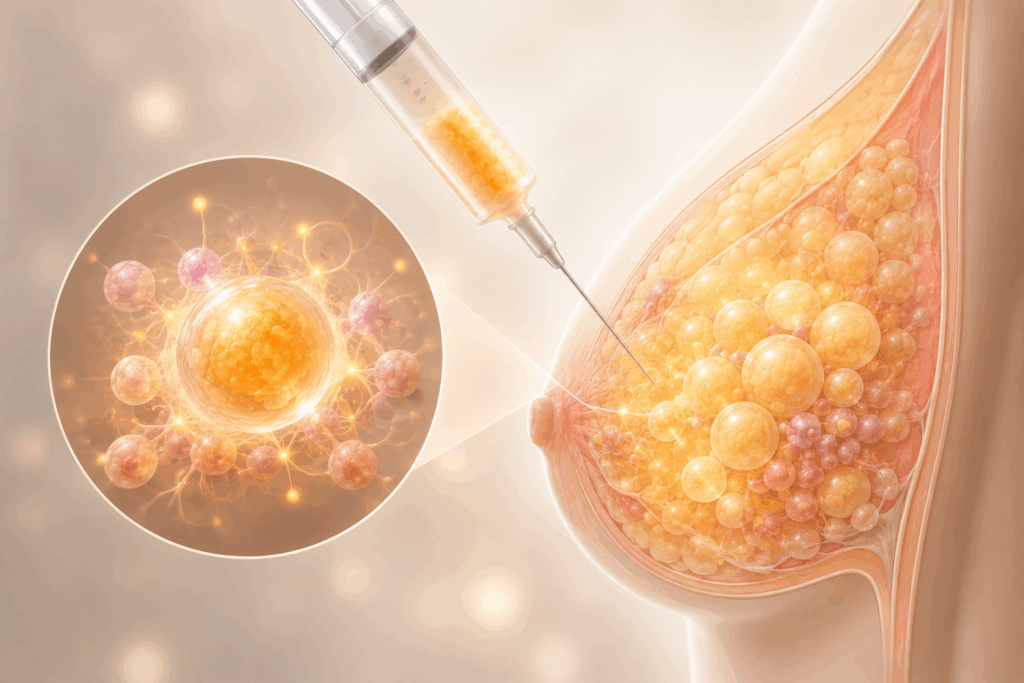
Stem cell (SVF) breast augmentation is a method that utilizes SVF (adipose-derived cell components) along with purified fat for transplantation. SVF contains components that help form a more stable environment surrounding the transplanted fat, contributing to creating favorable conditions for the fat to settle.
Based on this principle, it helps maintain a stable environment for engraftment and allows for smooth tissue adaptation during the recovery process, making it a method that attracts attention from those seeking a natural feel and lines. Another feature is that there is less concern about a foreign body sensation because the patient's own fat is utilized.
The key to determining results: the refining process
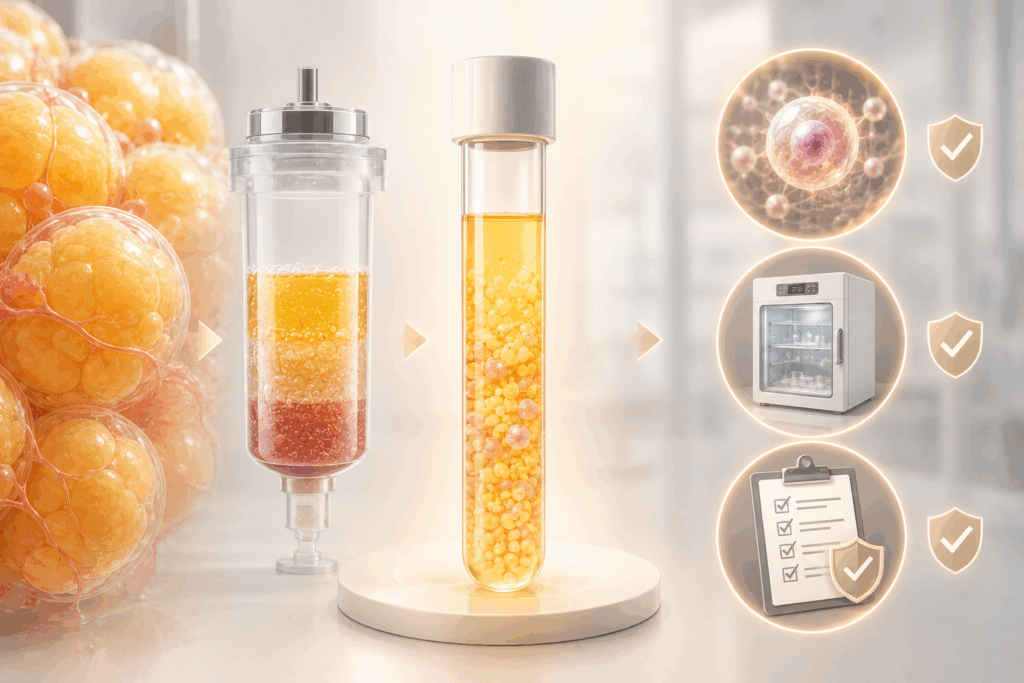
One of the key factors influencing the outcome of stem cell (SVF) breast augmentation is how the adipose-derived cell components are extracted and managed. The results after transplantation can vary depending on how delicately the purification and separation processes are performed.
In this process, it is important that the following elements are also present.
- An environment that minimizes unnecessary damage
- A system that can stably preserve the system until the procedure
- A process that maintains consistent quality
SC301 designs this entire process as a single flow to ensure that fat and adipose-derived cell components work harmoniously.
dictionary·Design that includes after-sales service
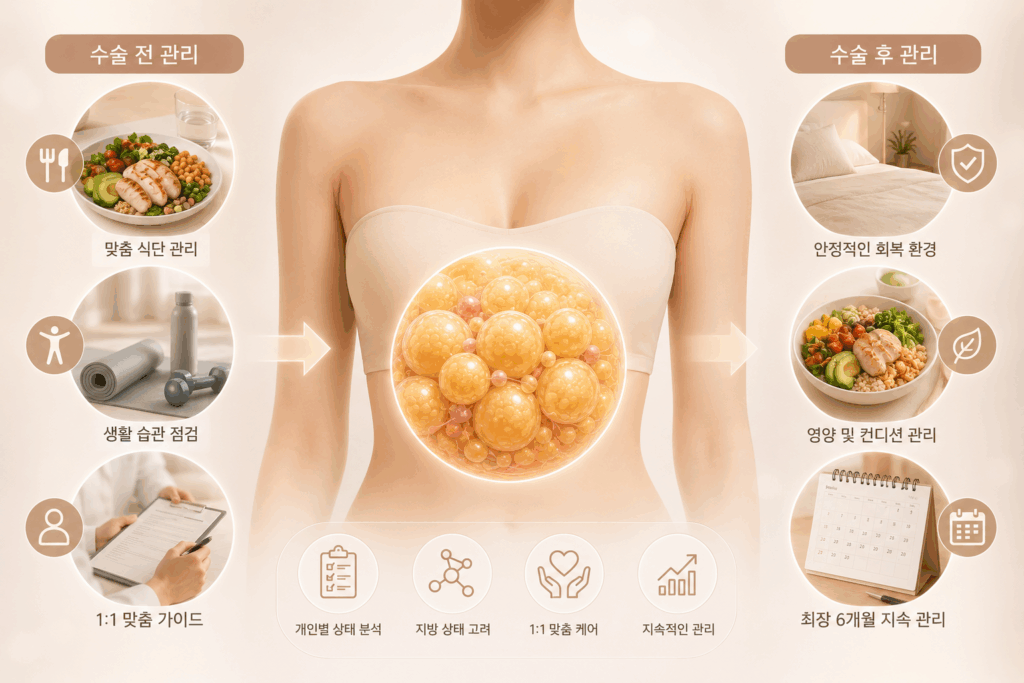
Stem cell (SVF) breast augmentation is not a procedure that concludes in a single day. When combined with pre- and post-procedure care, it can help maintain a more stable environment for engraftment.
Pre-operative management We review your diet and lifestyle habits to secure healthy fats and create conditions suitable for extracting fat-derived cell components. Since excessive weight fluctuations or unbalanced eating habits can affect fat status, personalized management is crucial. SC301 provides a 1:1 customized dietary guide that takes into account your body type, lifestyle patterns, and current fat status.
Post-operative care After the procedure, overall lifestyle management continues to ensure the transplanted fat settles stably. As nutrition and physical condition management are crucial, SC301 monitors the condition for up to six months and adjusts the management plan accordingly.
Progress timeline by period
| Time | Progress |
| 2 to 4 weeks before surgery | Check diet and lifestyle habits, and verify fat status. |
| Day of surgery | Liposuction → Separation of fat cells and SVF → Precise transplantation |
| Immediately after surgery ~ 2 weeks | Swelling management, early recovery |
| 1 to 3 months | The period when fat and SVF adapt to the tissue and engraftment proceeds. |
| 3 to 6 months | Phase where graft survival results are relatively distinct; management program conducted for up to 6 months. |
Things to check during consultation
- Whether the SVF extraction and purification process is managed by an in-house system or outsourced.
- Whether pre-surgery diet and lifestyle guides are provided individually
- Is it specifically provided whether the post-surgery care period is in days or months?
- Whether result indicators such as graft survival rate are disclosed using objective data (papers, etc.)
Frequently Asked Questions
Q. Does simply including SVF improve the results? A. That is not the case. While SVF is a factor that aids in the engraftment environment, stable results can only be achieved when the purification and preservation environment, the precision of the transplantation process, and pre- and post-operative care are all carried out together.
Q. Why is follow-up care necessary for up to 6 months? A. This is because it takes a certain amount of time for the fat and SVF to fully adapt and settle into the tissue. During this period, the progress is monitored and the management direction is adjusted.
Q. Does pre-operative diet management affect the actual results? A. Excessive weight fluctuations or unbalanced eating habits can affect fat status, so managing diet and lifestyle habits before and after surgery can help improve the graft survival environment.
Introduction of the surgeon
This article was written based on the clinical standards of Chief Director Shin Dong-jin (19 years of experience, over 9,000 cumulative surgeries performed), who has established the field of stem cell (SVF) breast augmentation. He served as the President of the Korean Society of Stem Cell Plastic Surgery for 10 years and maintains a principle of performing a maximum of only 2 to 3 surgeries per day.
This content is for informational purposes only, and treatment results, graft survival rates, and recovery periods may vary depending on individual constitution, fat condition, and lifestyle. Please confirm an accurate diagnosis and eligibility for the procedure through an in-person consultation.
Member SC301 · Chan & Chan Tower, 611 Yeongdong-daero, Gangnam-gu, Seoul (77-9 Samseong-dong) · 1-minute walk from Exit 2 of Bongeunsa Station (Line 9)
https://blog.naver.com/sc301guide – SC301 Naver Seongchelin Guide Blog


