


Good morning.
Fat is not simply a storehouse for energy, but a place where various cells and signaling molecules travel Active tissueis known as
Among them, the cell that has been consistently researched in the fields of regenerative medicine and plastic surgery is ADSC (Adipose-derived Stem Cell) .
Continuing from the last post, today we will take it a step further.
● Exactly what kind of cells ADSCs are
● What mechanisms of action are being studied besides 'differentiation'
● How it differs from adjacent concepts such as SVF and exosomes
● Why and how it is mentioned in the context of plastic surgery
I will organize it for you calmly and in a balanced way.
What are Adipose Tissue-Derived Stem Cells, ADSCs?
ADSCs are capable of being isolated and cultured from adipose tissue Mesenchymal stem cells (MSC) It is a type of.
ADSCs are mesenchymal stem cells of mesodermal origin that are reported to possess the classical differentiation ability into adipocyte, osteocyte, and chondrocyte lineages.
Since adipose tissue is relatively accessible for harvesting, ADSCs have attracted attention as a research subject due to the fact that they can be obtained relatively easily through minimally invasive liposuction, have a high number of viable cells, and exhibit excellent proliferative and secretory activity.
Wait, ADSC and SVF are different concepts.
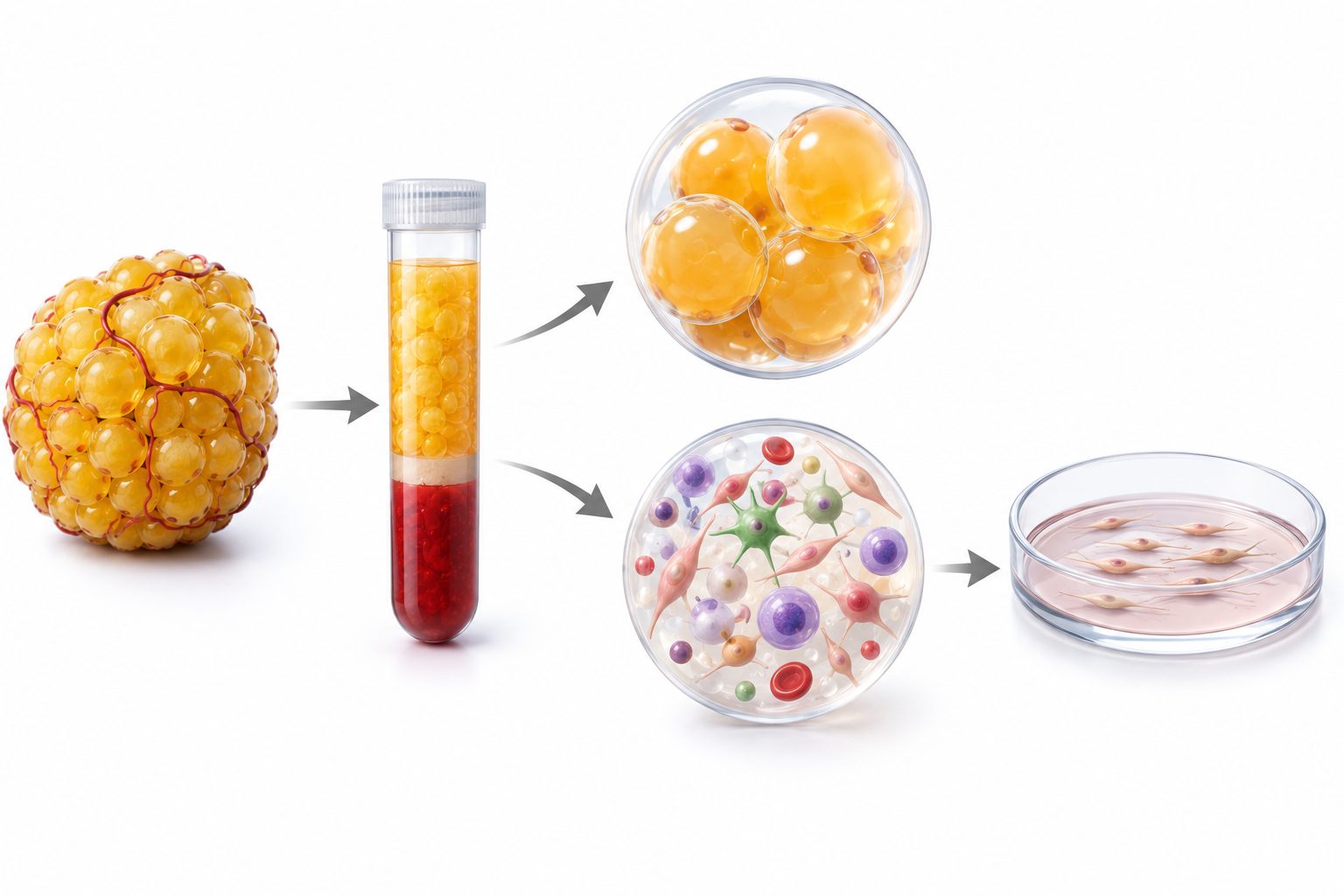
A term that frequently appears when discussing ADSC is SVF (Stromal Vascular Fraction) .
Simply put, SVF is collected from fat after removing fat cells. A mixture of various cellsADSC refers to a group of cells within it that exhibits specific stem cell characteristics.
In other words, if SVF is 'sand mixed with raw materials,' ADSC is closer to the concept of isolating and culturing a portion of it.
Since these two are treated separately in research and discussions, it is advisable to avoid confusing the terms when reading information.
Representative differentiation research directions of ADSC
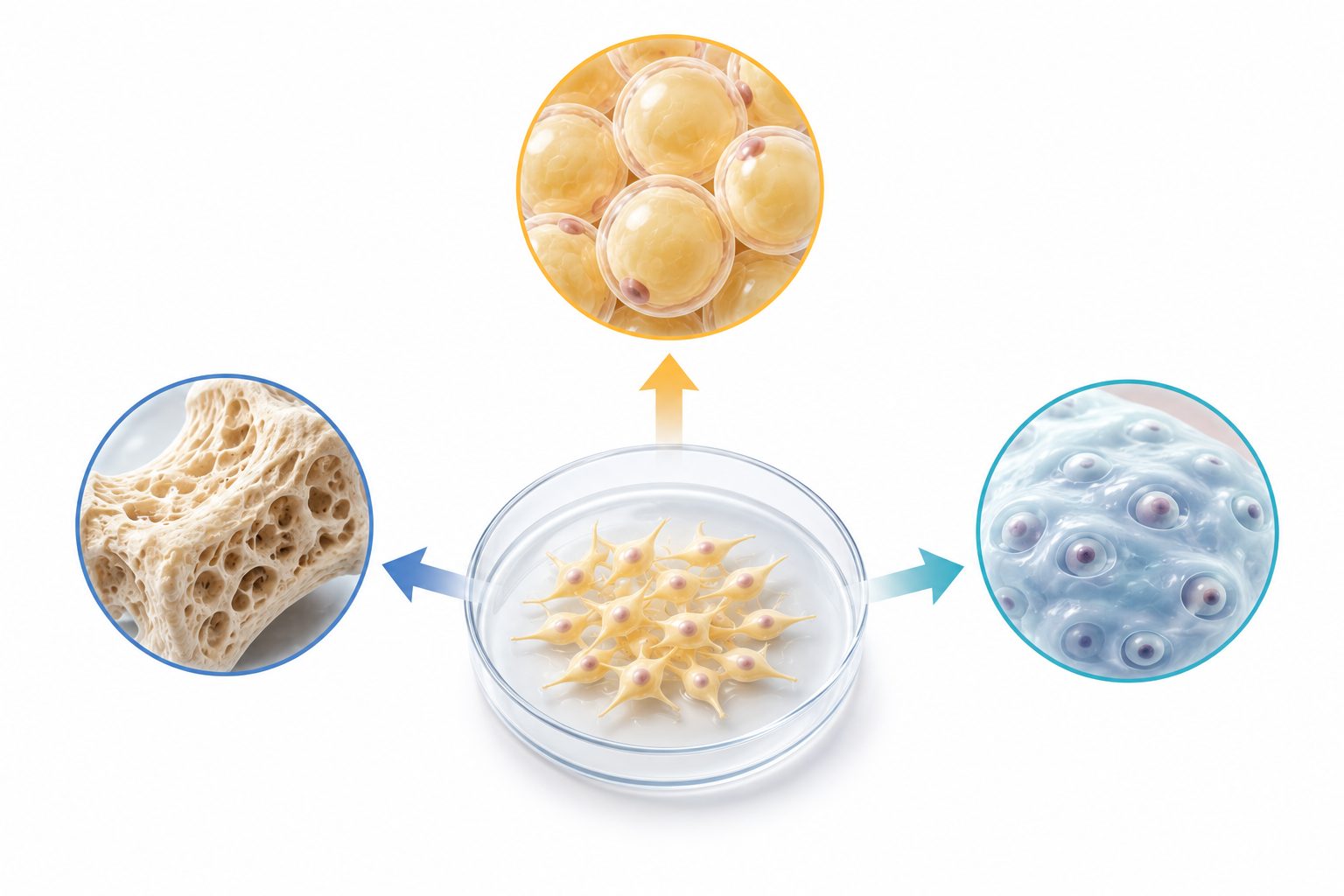
The following differentiation patterns have been observed in ADSCs depending on culture conditions in research environments.
1. Adipogenic direction
It is reported to have the characteristic of differentiating into a form similar to adipocytes in an adipose tissue environment, and is utilized in basic research related to fat grafting.
2. Osteogenic Direction
Characteristics similar to bone tissue are observed under specific culture conditions, and it is mentioned in reconstruction and regeneration research.
3. Chondrogenic direction
Differentiation patterns similar to cartilage have been reported in three-dimensional culture environments, and are utilized in tissue engineering research.
Interestingly, it has been reported that ADSCs can differentiate beyond the mesodermal lineage into non-mesenchymal lineages such as vascular endothelium, muscle, and nerve cells, and which cell type they differentiate into is regulated by a combination of various inducing factors.
Another mechanism that has become as important as 'differentiation' — paracrine action
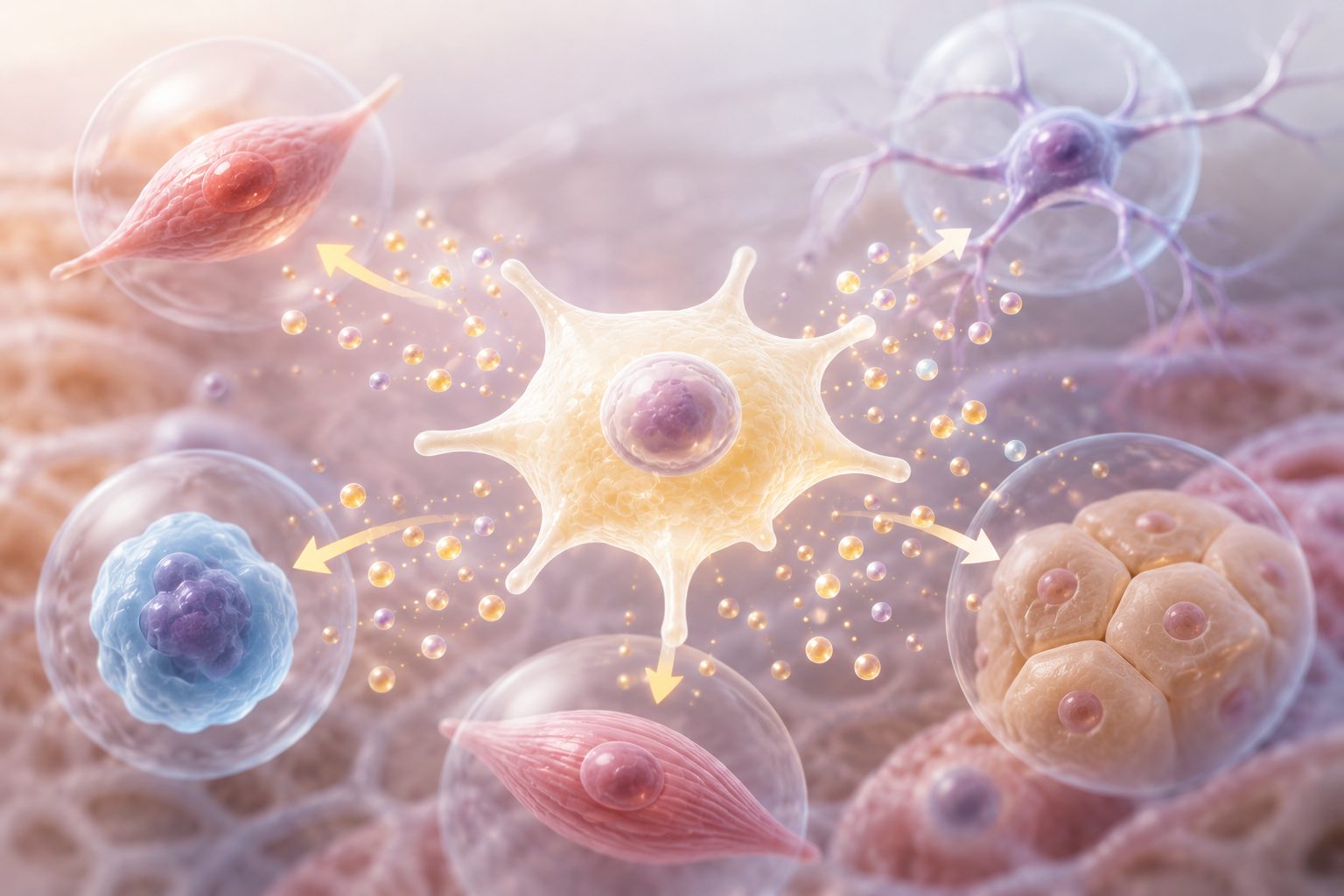
A particularly noteworthy aspect of recent research is that ADSCs are converted into other cells Direct change (differentiation) The point is that it does not function solely on its own.
The principles of regenerative medicine are based on the ability of stem cells to replace dead cells with newly differentiated cells, or on the paracrine activity that promotes tissue regeneration.
In other words, ADSCs are to surrounding cells secrete signaling substancesIt is also studied in ways that affect the recovery environment.
Specifically, ADSCs possess secretory activity that secretes a wide range of bioactive molecules, such as cytokines, antioxidant factors, chemokines, and growth factors.
For example, there are research reports that ADSCs introduced into areas with insufficient blood flow can secrete vascular endothelial growth factor (VEGF), attract local endothelial cells, and induce angiogenesis.
In this context, "what signals stem cells send to their surroundings" is being treated as an important research topic, just as much as "what stem cells turn into."
keyword exosome (extracellular vesicle)
What is frequently mentioned along with secretory action is Exosomes (Exosomes, Extracellular Vesicles) .
ADSCs are reported to secrete various secretory factors and extracellular vesicles, thereby maintaining their self-renewal ability and multipotential potential.
For this reason, in the field of research, 'cell-free' approaches that utilize not only the cells themselves but also the substances secreted by ADSCs are being examined.
How are ADSCs different from other stem cells?
The object that is frequently compared Bone marrow-derived stem cells (BM-MSC) .
There are reports that in donor-matched comparative studies, ADSCs demonstrated higher proliferative and adipocyte differentiation capabilities, whereas bone marrow stem cells showed a tendency toward higher bone and cartilage differentiation capabilities.
This is stem cells Where it originated fromThis suggests that the tendency toward a specific direction may vary depending on...
Of course, there are studies suggesting that the bone differentiation ability of ADSCs is comparable to that of bone marrow stem cells, so it is still difficult to definitively determine superiority.
Why ADSC is mentioned in the field of plastic surgery
In the field of plastic surgery, ADSC Rather than the concept of a standalone procedure, it is a cellular element discussed together in the context of research on fat grafting, tissue reconstruction, and recovery environments.
In particular, studies have reported that the secretion of growth factors through secretory mechanisms may enhance the regenerative capacity of adipose tissue, which can help improve volume, symmetry, and cosmetic results in breast reconstruction.
In addition, the therapeutic potential of ADSCs in various fields, such as fat grafting, wound healing, bone regeneration, muscle restoration, tendon reconstruction, cartilage regeneration, and nerve regeneration, has been examined through preclinical and clinical studies.
However, in actual clinical practice
● Procedure
● Individual organizational status
● Recovery Process
Since various variables work together, ADSC alone cannot explain the results.
Plastic Surgery Trends Focus on 'Process' Rather Than Change

The recent trend is more than simple external changes
● Recovery Process
● Organizational stability
● Maintains a natural look
Such as Process-oriented perspectiveIt is expanding into.
ADSC is also one of the keywords appearing together in regenerative medicine and plastic surgery research within this trend.
Was today's Seongchelin Guide helpful?
We will continue to deliver complex medical concepts accurately and information in a balanced manner.
Frequently Asked Questions (Q&A) regarding ADSC
Q1. How are ADSCs different from regular stem cells?
A. ADSCs are a 'type' of stem cells. More precisely, they are mesenchymal stem cells (MSCs) of mesodermal origin that possess the ability to differentiate into adipocyte, osteocyte, and chondrocyte lineages. Stem cells are classified according to their tissue of origin, such as bone marrow-derived or umbilical cord-derived, and ADSCs are among them. obtained from adipose tissue Its distinguishing feature is that it consists of stem cells. A frequently cited advantage in research is that it can be obtained relatively easily through minimally invasive liposuction, and a large number of viable cells can be secured at once.
Q2. Are there any ways ADSCs function other than 'transforming' into other cells?
A. Yes, actually, mechanisms other than differentiation are being studied more actively recently. ADSCs differentiate directly into other cells, but at the same time, they send signals to surrounding cells. secretion (paracrine) actionIt is reported to have activity in secreting various bioactive molecules such as cytokines, antioxidant factors, chemokines, and growth factors, and there are studies showing that, for example, it can induce angiogenesis by secreting vascular endothelial growth factor (VEGF) in areas with insufficient blood flow. In other words, "what kind of environment it creates in the surroundings" is just as important a research topic as "what it transforms into."
Q3. Are 'ADSC', 'SVF', and 'exosome' the same thing?
A. Although they are related Another conceptSVF (stromal-vascular fraction) is a mixture of various cells collected from fat after excluding adipocytes, while ADSCs are closer to a group of cells exhibiting stem cell characteristics isolated and cultured from within it. Exosomes (extracellular vesicles) are not the cells themselves, but ADSCs secreted substanceIt refers to. ADSCs secrete various secretory factors and extracellular vesicles; for this reason, research is also exploring 'cell-free' approaches that utilize secretions rather than using cells directly. Distinguishing between these three terms when reading information can help reduce confusion.
Q4. Are ADSCs better than bone marrow stem cells?
A. This is an area that is difficult to generalize about. Tendencies vary depending on the tissue of origin; there are reports from donor-matched comparative studies indicating that ADSCs showed higher proliferative and adipocyte differentiation capabilities, whereas bone marrow stem cells tended to exhibit higher osteochondrocyte differentiation capabilities. However, there are also studies suggesting that the osteogenic differentiation ability of ADSCs is comparable to that of bone marrow stem cells. Therefore, rather than stating that one is unilaterally superior to the other, it is more accurate to understand that they are evaluated differently depending on the purpose and context.



Frequently Asked Questions
What are Adipose Tissue-Derived Stem Cells, ADSCs?
ADSCs are a type of mesenchymal stem cell (MSC) that can be isolated and cultured from adipose tissue. ADSCs are mesenchymal stem cells of mesodermal origin and are reported to possess the classical ability to differentiate into adipocyte, osteocyte, and chondrocyte lineages. Since adipose tissue is relatively accessible for harvesting, ADSCs can be obtained relatively easily through minimally invasive liposuction. They have attracted attention as a research subject due to their high viable cell count and excellent proliferative and secretory activity.
How are ADSCs different from other stem cells?
Bone marrow-derived stem cells (BM-MSCs) are frequently compared. In donor-matched comparative studies, ADSCs have been reported to have shown higher proliferative and adipocyte differentiation capabilities, whereas bone marrow stem cells tended to show higher osteochondrocyte differentiation capabilities. This suggests that the propensity of stem cells in a specific direction may vary depending on their origin.


