


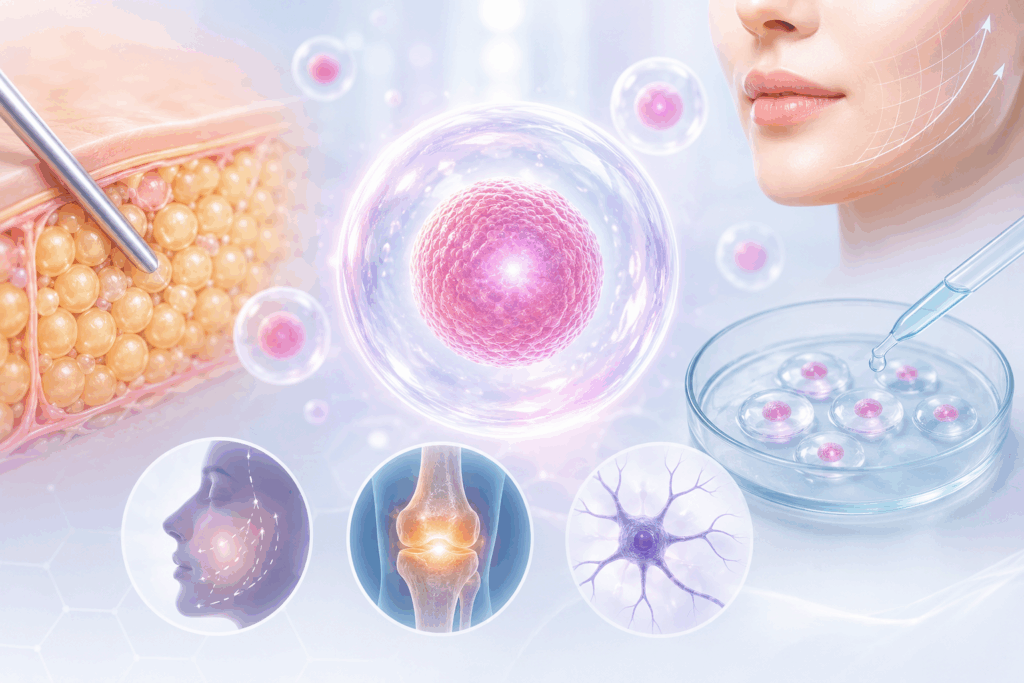
Adipose-Derived Stem Cells (ADSCs) are cells that can be isolated from adipose tissue, and research has reported their characteristic of differentiating into forms similar to adipocytes, bone cells, and chondrocytes under specific culture conditions. While SVF (stromal-vascular fraction) refers to a mixture of various cells, ADSCs specifically refer to the cells within it that possess multipotential characteristics. In the fields of plastic and reconstructive surgery, they are being researched and utilized for their auxiliary role in improving the tissue environment during fat grafting; however, due to legal restrictions on cell-related medical procedures in Korea, the actual scope of clinical application may vary depending on relevant laws.
ADSC, a special cell found in fat
ADSCs are cells that can be isolated from adipose tissue and possess the characteristic of being able to grow into various forms depending on the environment. Due to these characteristics, they are being actively researched in diverse fields, including plastic surgery, regenerative medicine, and tissue recovery research.
Background of the ADSC Study
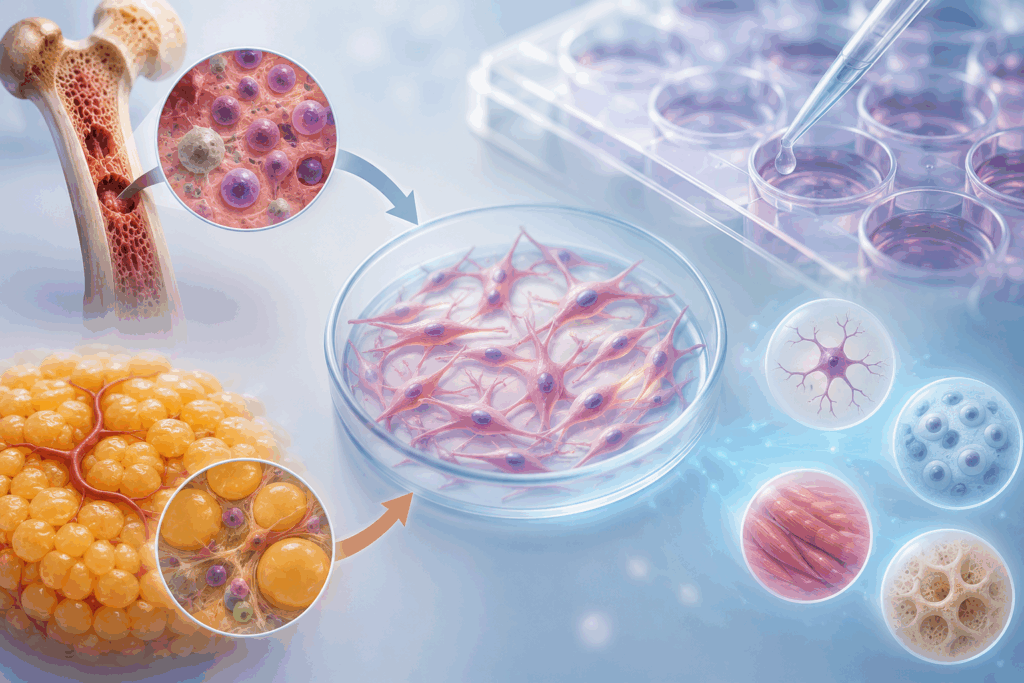
After the pluripotency of mesenchymal stem cells (MSCs) derived from bone marrow was first reported in the academic community, ADSCs began to receive attention in the 2000s as research continued showing that cells with similar characteristics also exist in adipose tissue.
The fact that fat is relatively easy to extract and yields a large amount of cells makes it highly accessible as a research material, which is cited as one of the reasons for the active development of ADSC research.
3 Differentiation Characteristics of ADSCs
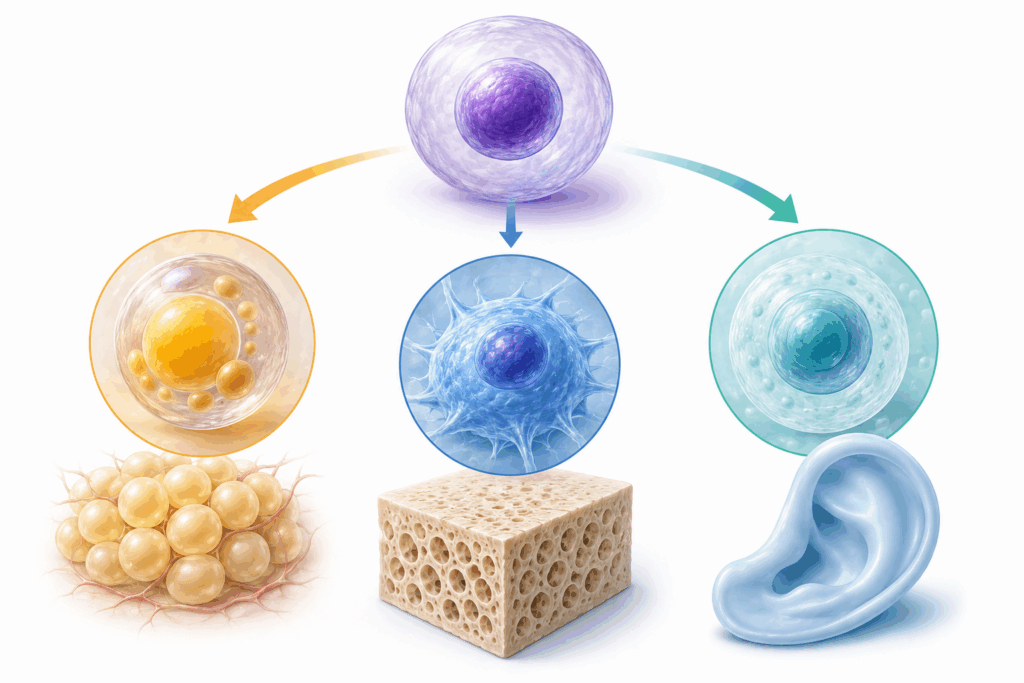
Grows into fat cells Under specific conditions, small fat droplets form and transform into a form similar to fat cells. This is why ADSCs frequently receive attention in fat grafting research.
Changes in the direction of bone cells Under different conditions, it can also be observed growing in a form similar to hard bone tissue. This is also why there is so much research on ADSC in the field of reconstruction.
Develops into a form similar to cartilage cells When cultured in 3D, they can form like elastic cartilage cells. This is frequently used in research on areas requiring cartilage, such as the ears, nose, and joints.
Important NoticeThe above changes are research results observed under experimental conditions (specific culture environments), and not all differentiation directions can be utilized in the same way in actual clinical practice.
Difference between ADSC and SVF
| 구분 | SVF (stromal vascular fraction) | ADSC (Adipose-derived cells) |
| Justice | Cell mixture obtained from fats through enzymatic treatment, etc. | Cells with multipotent characteristics among the cells contained within the SVF |
| 상태 | A form in which various types of cells are mixed | A specific group of cells obtained through culture, etc. |
| Main uses | Transplanted together during fat grafting | Research related to tissue differentiation and regeneration |
It can be understood that SVF is closer to a material mixed with various cells, while ADSC refers to specific cells contained within that material.
Application in plastic surgery
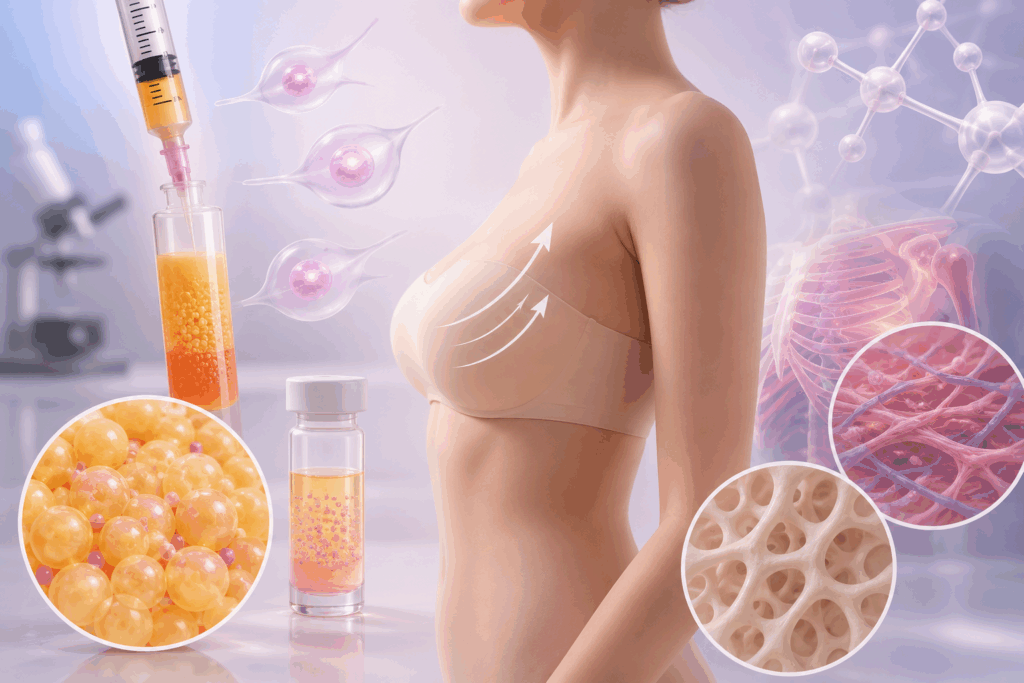
Currently, ADSC is being researched and utilized in the fields of plastic surgery and reconstruction for the following auxiliary roles.
- Research on improving the tissue environment during fat grafting
- Potential for application in the field of bone and cartilage reconstruction
- Basic research to aid in wound healing
In particular, methods that combine fat and ASC, such as CAL (Cell-Assisted Lipotransfer), are being discussed as one of the approaches to complement the limitations of fat grafting.
SC301’s stem cell (SVF) breast augmentation also utilizes a method that combines purified fat with adipose-derived cell components, an approach that aligns with this research trend. SC301 has published and disclosed an average engraftment rate of 77.48%, calculated based on over 9,000 cases, in the SCI-indexed international journal *Annals of Plastic Surgery*. (Results may vary from person to person.)
The boundary between research and clinical application
While various research results related to ADSCs are being presented, the potential observed during the research phase may differ from the actual scope of clinical application approved in Korea.
As there are legal restrictions on cell-related medical practices in Korea, it is important to receive clear guidance on the actual purpose and scope of their use at this time during consultations.
Frequently Asked Questions
Q. Is it possible to regenerate or treat any disease using ADSC?
A. That is not the case. The characteristic of differentiating into various tissues has been reported through research, but its use for all therapeutic purposes has not been approved in Korea. It is best to confirm the exact scope of application through consultation.
Q. Can I experience the effects of ADSCs even if I only receive an SVF transplant?
A. Since SVF contains a mixture of various cells including ADSCs, ADSCs can also play a role in procedures utilizing SVF. However, the characteristics of cultured pure ADSCs may differ from those contained within SVF.
Q. Is ASC research actively being conducted in Korea as well?
A. While related research is ongoing at the level of basic research both domestically and internationally, the scope of its application in actual medical settings may be limited in accordance with relevant laws and regulations.
Introduction of the surgeon
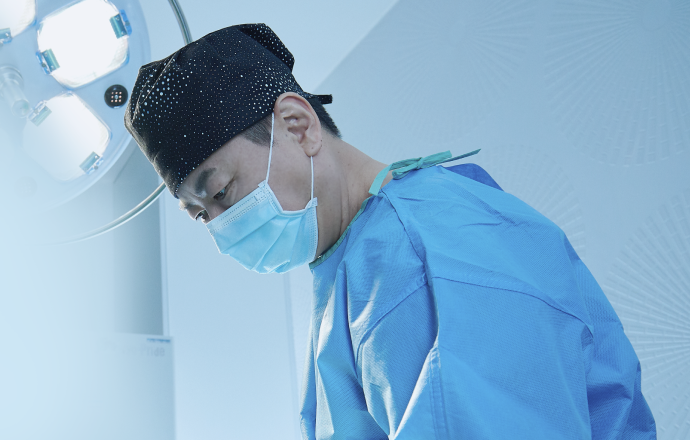
This article was written based on the clinical standards of Dr. Shin Dong-jin, Chief Director of SC301 Clinic. Dr. Shin has accumulated 19 years of clinical experience in the field of autologous fat and SVF procedures, and he continuously incorporates relevant research trends based on the principles of accurate diagnosis and personalized planning.
This content is for informational purposes only. The research content regarding ADSC is an introduction based on academic materials and does not guarantee therapeutic efficacy for specific diseases or individual health conditions. The scope of medical application in Korea may be restricted in accordance with relevant laws, so please confirm accurate guidance through an in-person consultation.
Member SC301 · Chan & Chan Tower, 611 Yeongdong-daero, Gangnam-gu, Seoul (77-9 Samseong-dong) · 1-minute walk from Exit 2 of Bongeunsa Station (Line 9)
https://blog.naver.com/sc301guide – SC301 Naver Seongchelin Guide Blog


