


( SVF Research Center )
Tour of Stem Cell Research Center Equipment
The place where cells pass first before surgery
A space for isolating stem cells (SVF), counting the number of cells, and storing them.
We introduce the interior of the SC301 Clinic Stem Cell Research Center by equipment.
Key takeaways
SC301 Clinic Stem Cell Research Center (SVF Research Center)It is a research facility that opened in 2007 and is responsible for the process of isolating, counting, verifying, and storing SVF from patient fat. Since 2007, it has analyzed approximately 9,000 cases of engraftment data.
- Ministry of Health and Welfare and Ministry of Food and Drug Safety Advanced Regenerative Medicine Implementing Agency designation, Cell processing facility Home
- Ministry of Science and ICT Research and Development Department admit
- Clean zone, pass box, centrifuge, ADAM cell counter, CO₂ incubator, medical refrigerator, LN2 tank, etc. More than 10 types of SVF-related equipment possession
- SVF extraction is SVF specialist researcher with over 10 years of experienceProceed manually according to this protocol
- In an SCI-indexed international academic journal (Annals of Plastic Surgery, 2023) Average engraftment rate 77.48% Announcement
( Intro )
Stem cell (SVF) fat grafting,
Another room next to the operating room
When you hear the term "stem cell (SVF) fat grafting," you usually think of the operating room first.
At SC301 Clinic, fat is not returned to the operating room immediately after being removed from the body. First, it goes through the stem cell research center.
The result of stem cell (SVF) fat grafting is
It depends on how healthily the SVF is isolated.
So, we have set aside a separate space for this process. I will show you that space along with every piece of equipment.
- 2007Opening of Stem Cell Research Center
- Approximately 9,000 casesAnalyzed engraftment data
- 77.48 %Published in an SCI-indexed international academic journal
Average survival rate - 3 types of patentsRegarding fat grafting
( Lab Tour )
SVF Separation · Counting · Verification · Storage
7 types of research center equipment
Follow the SVF in the order it passes, from the entrance of the clean zone to the minus 196 degree liquid nitrogen tank.
01 · Clean Area
It is different right from the entrance.
Why are clean zones necessary?
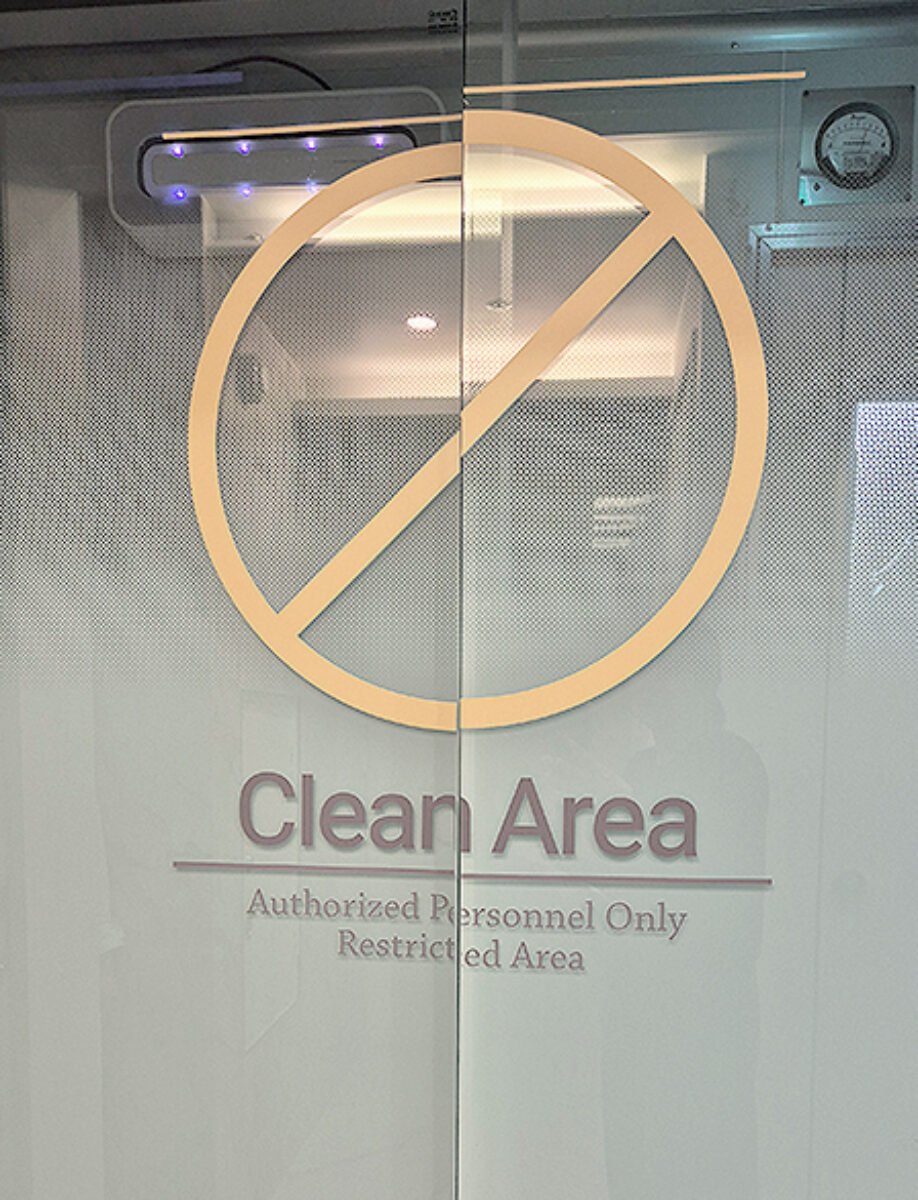
The clean zone is a space that controls airborne dust and bacteria to prevent external contamination while separating the SVF.
At the entrance of the research center “Authorized Personnel Only”It says: Only authorized personnel are allowed to enter.
upper right of the door 차압계It is an instrument that displays the pressure difference (differential pressure) inside and outside the clean zone. Researchers use this figure to frequently check whether the air in the clean zone is being managed within the normal range.
The purple light on the left above the door is Insect guide lightIt is. We first block the entrance to prevent insects from entering the clean zone. Aseptic management for the entire hospital is sterile systemYou can see it at.
02 · Pass Box
Items don't just come in easily, either.
What is Pass Box?
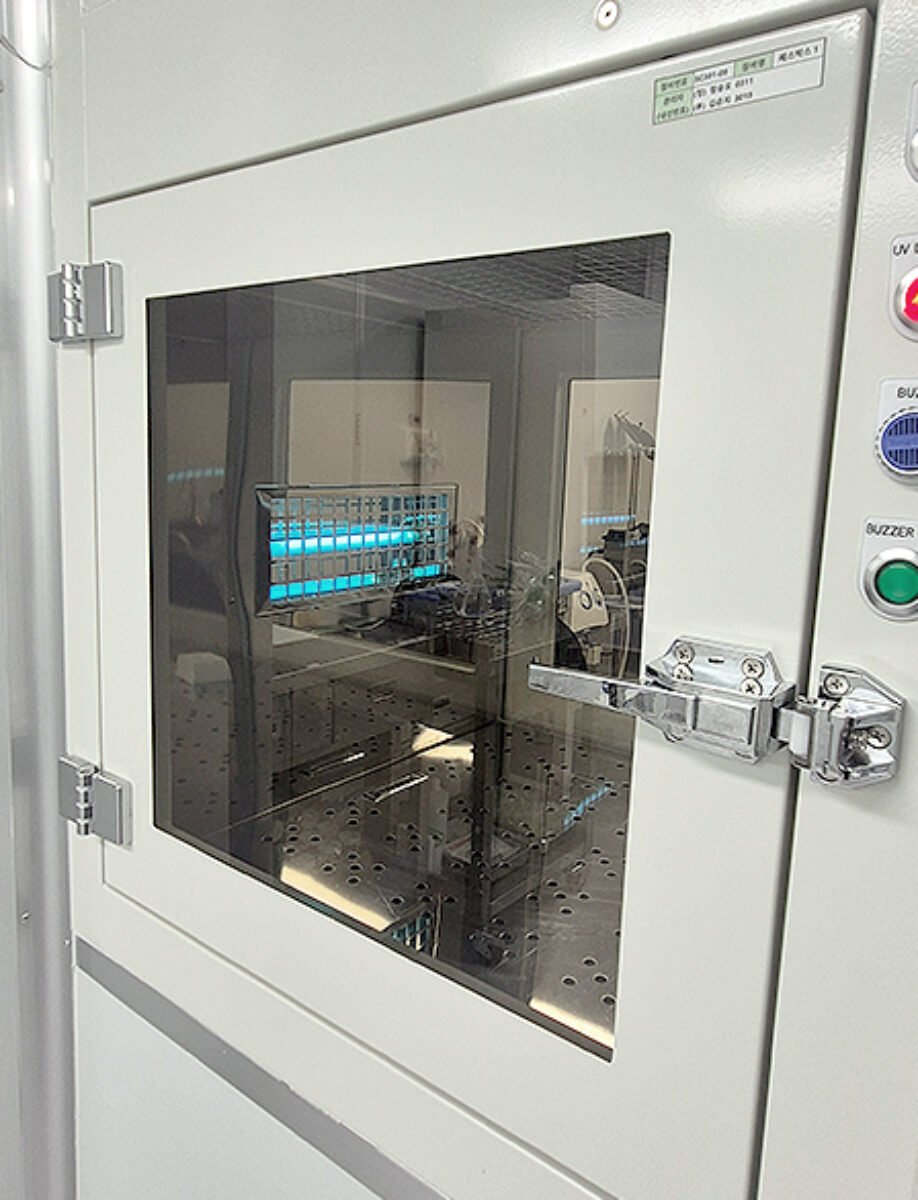
A pass box is a pass-through box that sterilizes its surface with UV light when bringing items into a clean zone.
Do not bring items needed for the laboratory through the door. Place them in the pass box, sterilize them with UV light, and retrieve them from the opposite side.
Both doors do not open simultaneously, so the air in the clean zone does not mix with the outside.
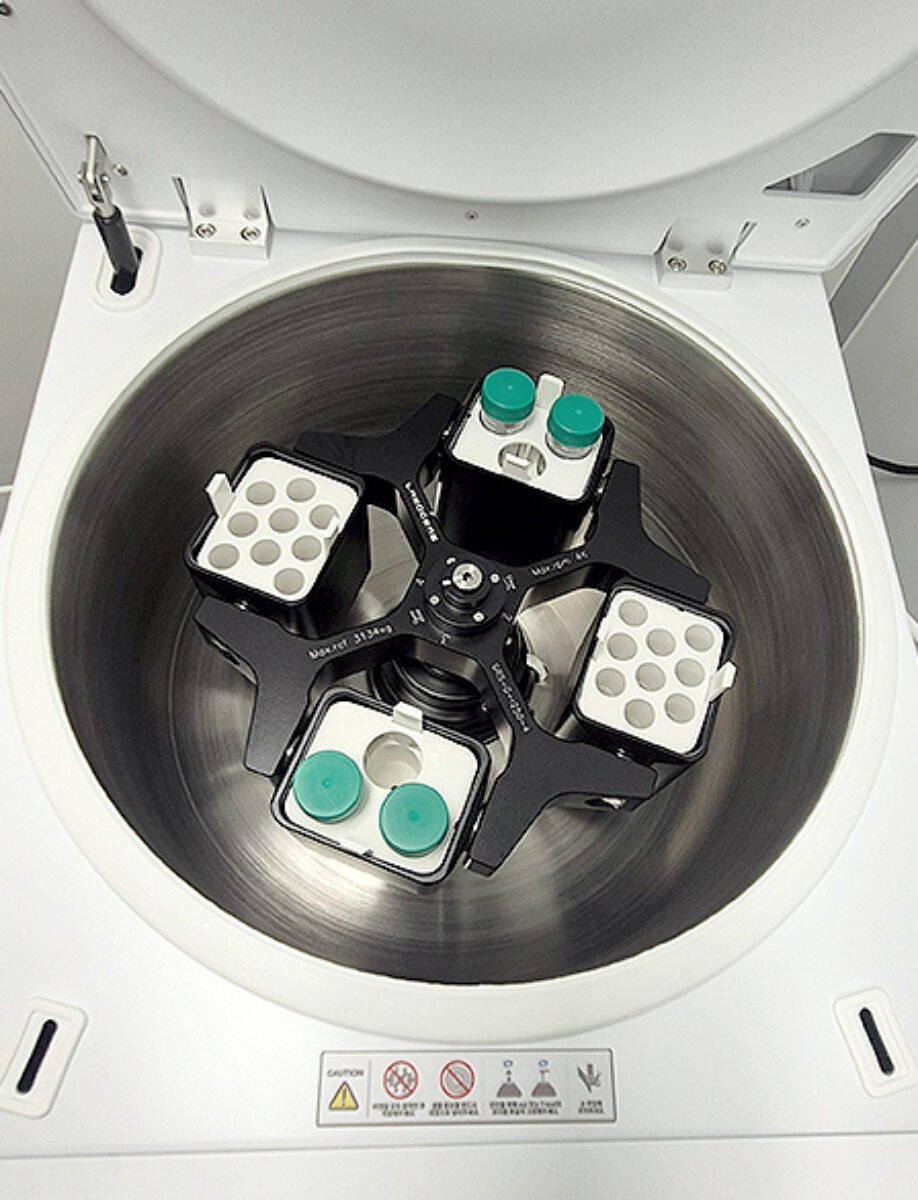
03 · Centrifuge
The first step in separating SVF
How do you separate SVF?
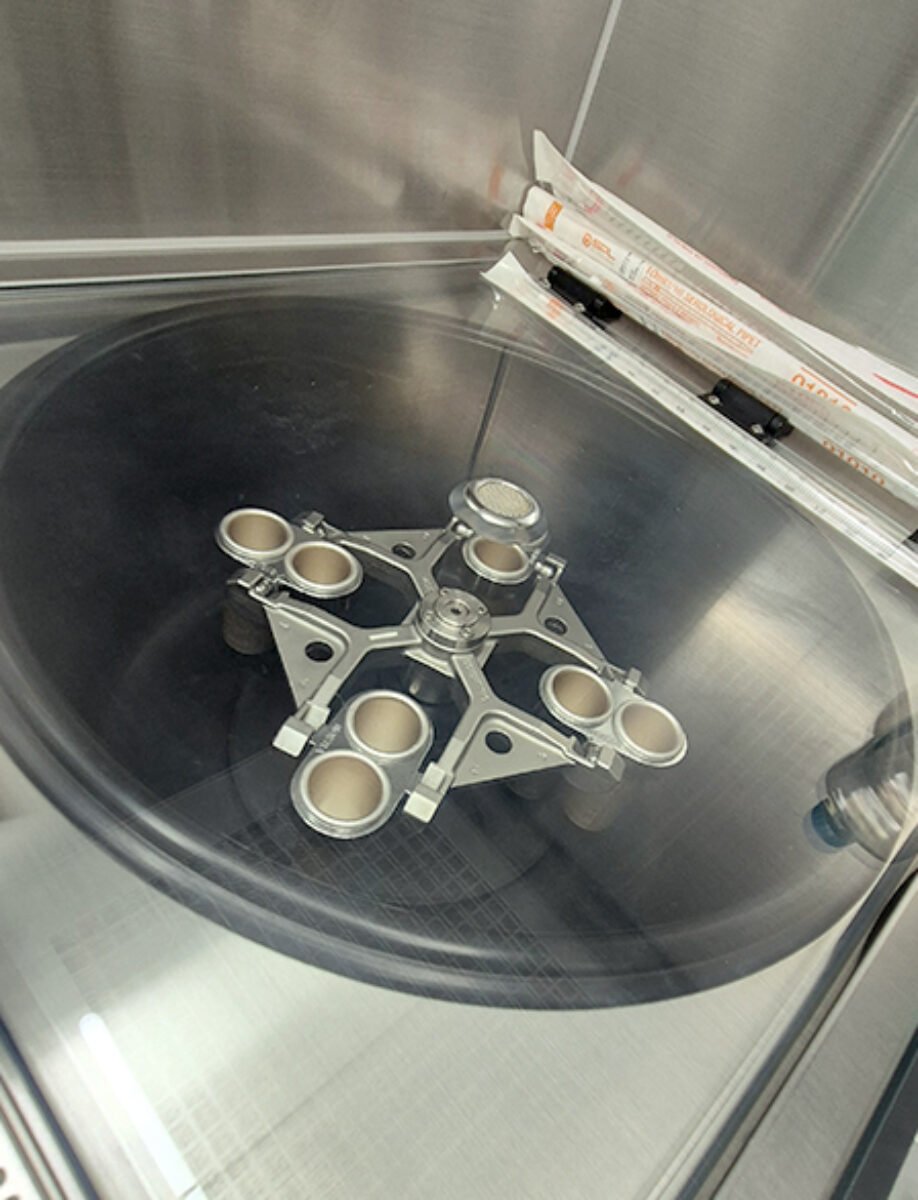
SVF is obtained by centrifuging harvested adipose tissue to separate the cells into layers according to weight.
The SC301 Research Center is used according to its purpose 원심분리기We share them. One is installed inside a sterile workbench to reduce the risk of contamination, and the other processes various samples by swapping buckets according to tube size.
This process SVF specialist researcher with over 10 years of experienceThis is carried out manually according to this protocol. It is handled by a researcher, not a nurse or nursing assistant.
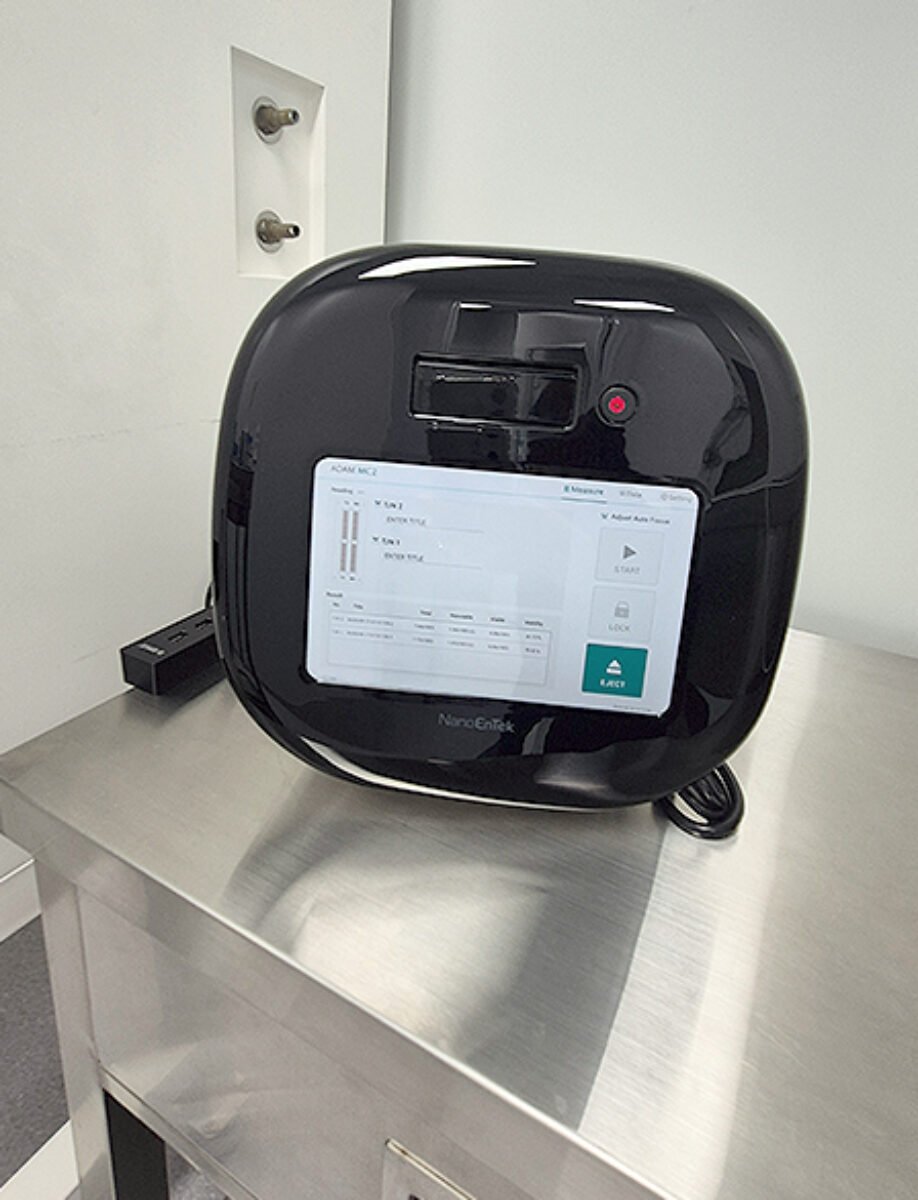
04 · ADAM Cell Counter
Answer "How many went in?" with a number.
How is the number of SVF cells measured?
SC301 Clinic measures the actual number of SVF cells injected and their survival rate for each surgery using the ADAM cell counter.
The number of cells injected in a single dose in disclosed breast stem cell (SVF) fat grafting cases is Approximately 6,800 million to 9,900 millionIt was. It varies depending on the amount and condition of the harvested fat.
These measured values accumulate to become graft survival data. Volume changes before and after surgery 3D Precision Check of Graft Survival RateCheck separately.
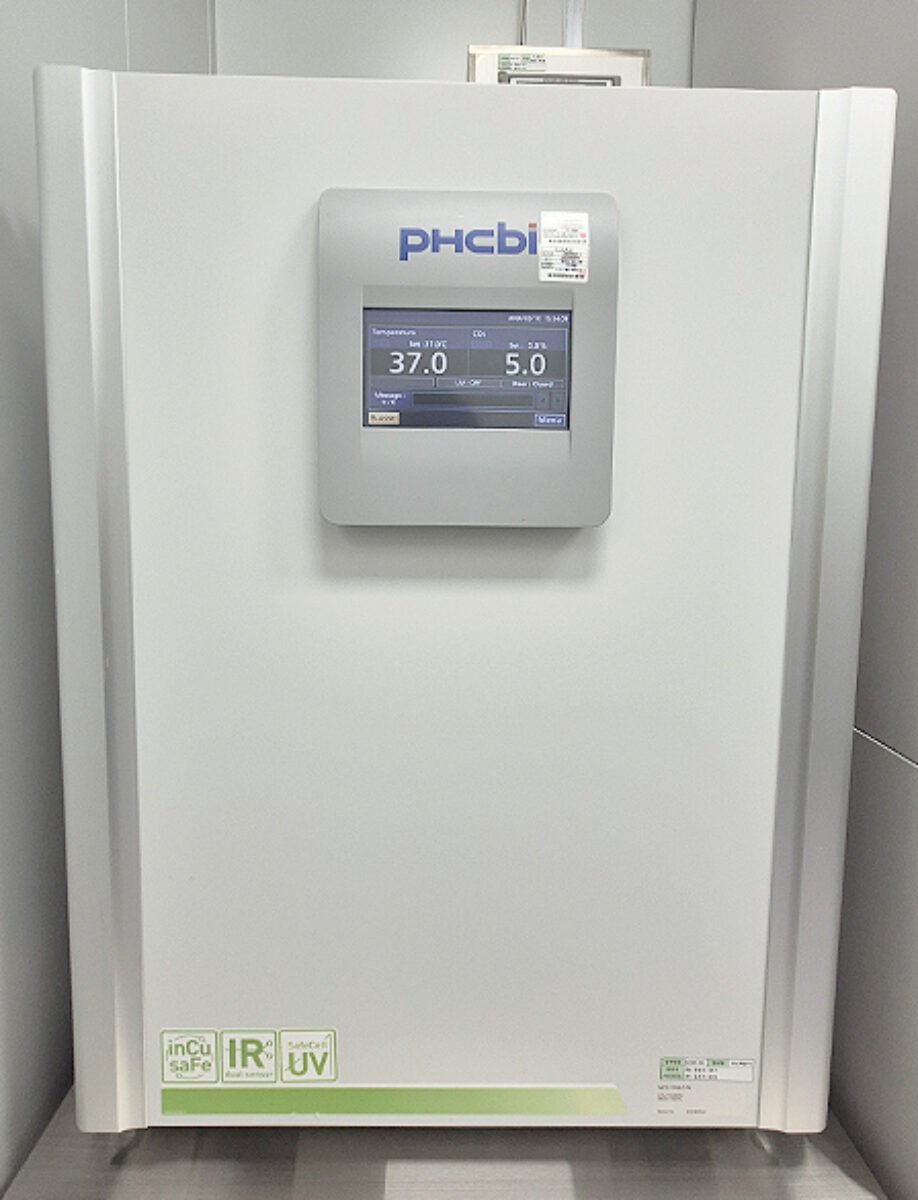
05 · CO₂ Incubator
The environment where cells reside
What role does a CO₂ incubator play?
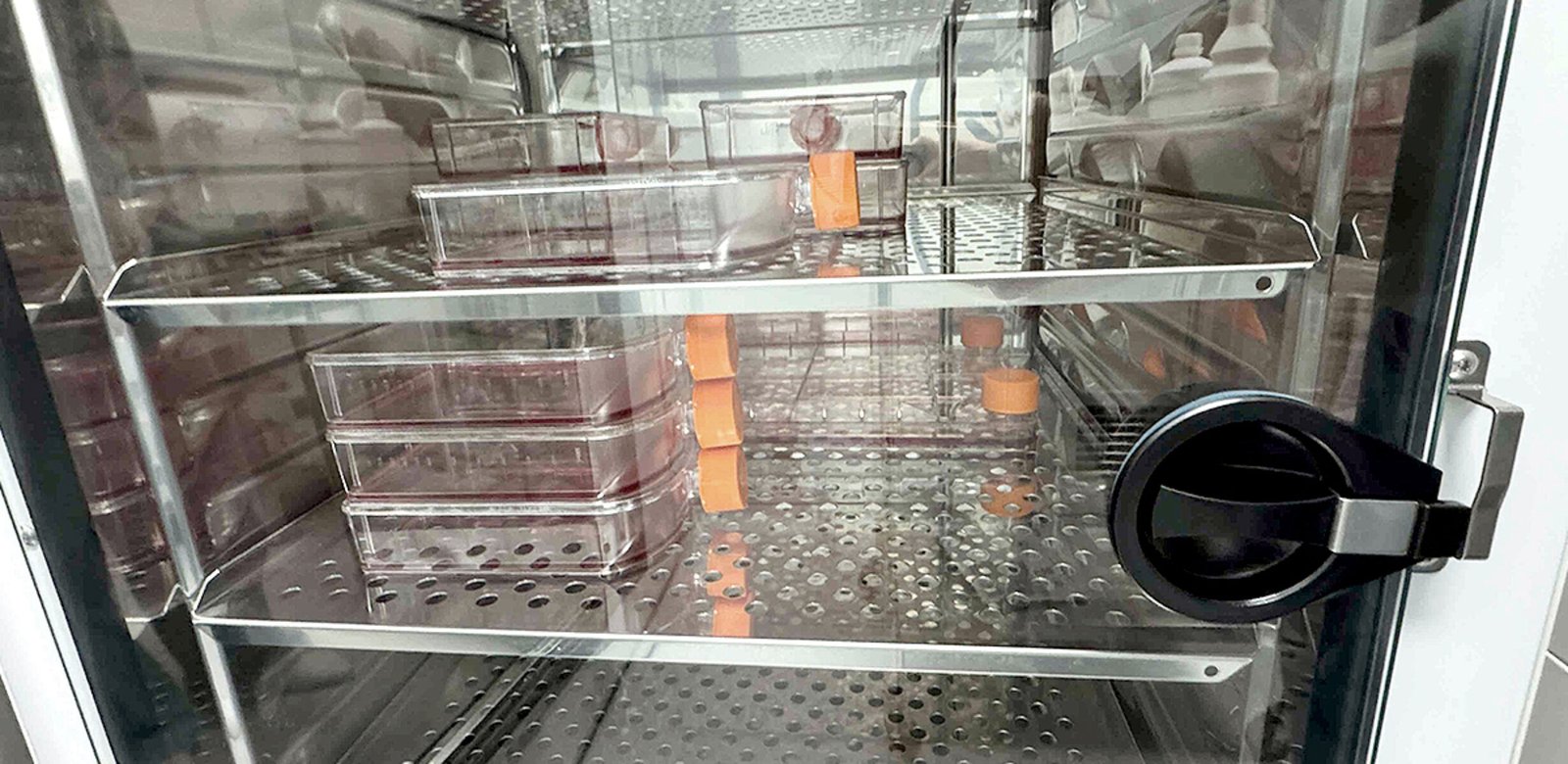
A CO₂ incubator is equipment that constantly maintains conditions similar to the inside of the human body, such as a temperature of 37℃ and 5% carbon dioxide.
PHCbi CO₂ incubatorIt is designed to prevent contamination with a copper alloy inner wall (inCu saFe), IR sensor, and SafeCell UV function.
Cell research is conducted in a flask on the inner shelf.
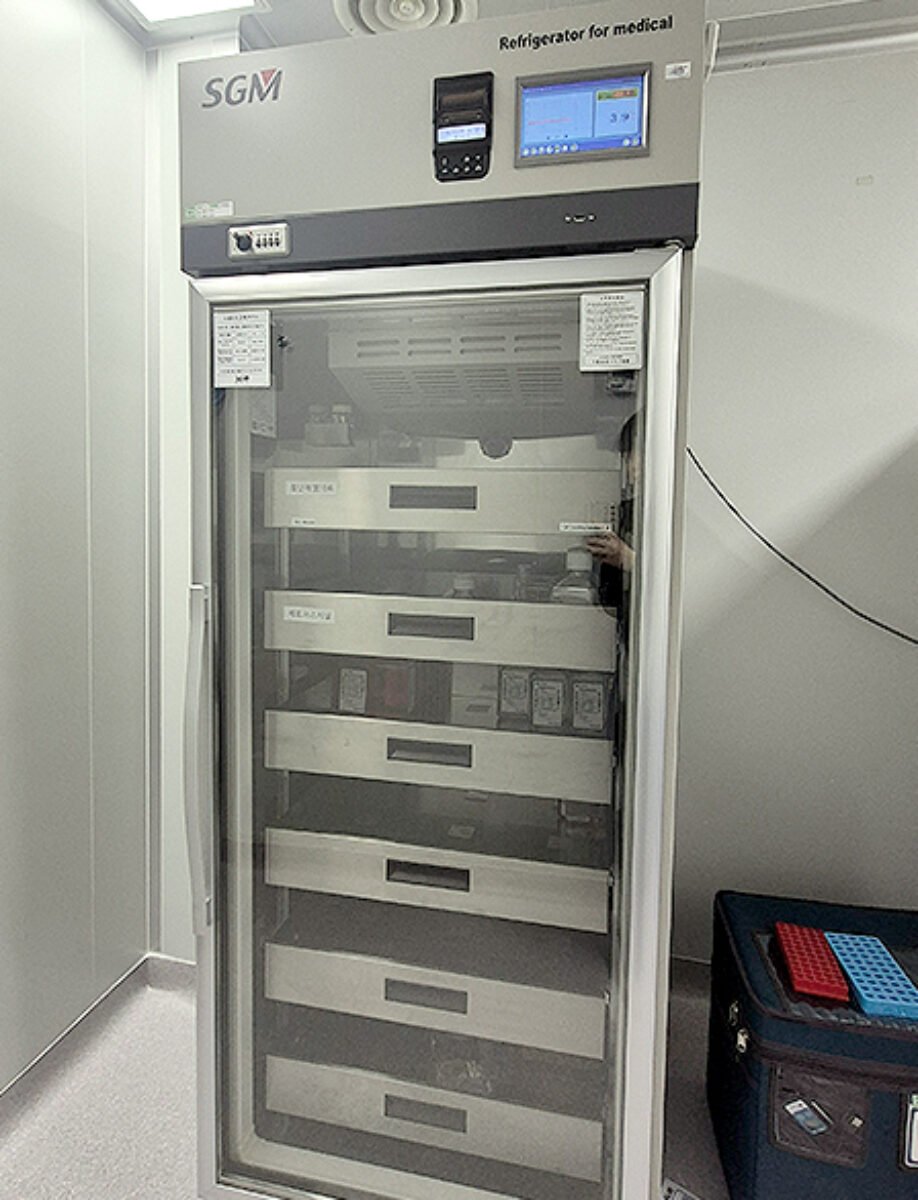
06 · Medical Refrigerator
A refrigerator that keeps a temperature record
How should research reagents be stored?
Reagents and materials used in the research are stored in a medical refrigerator that continuously records the temperature.
The difference from a regular refrigerator is recordIt continuously checks the internal temperature on the display and prints the temperature record using the top printer.
Manage items by dividing them into drawers.
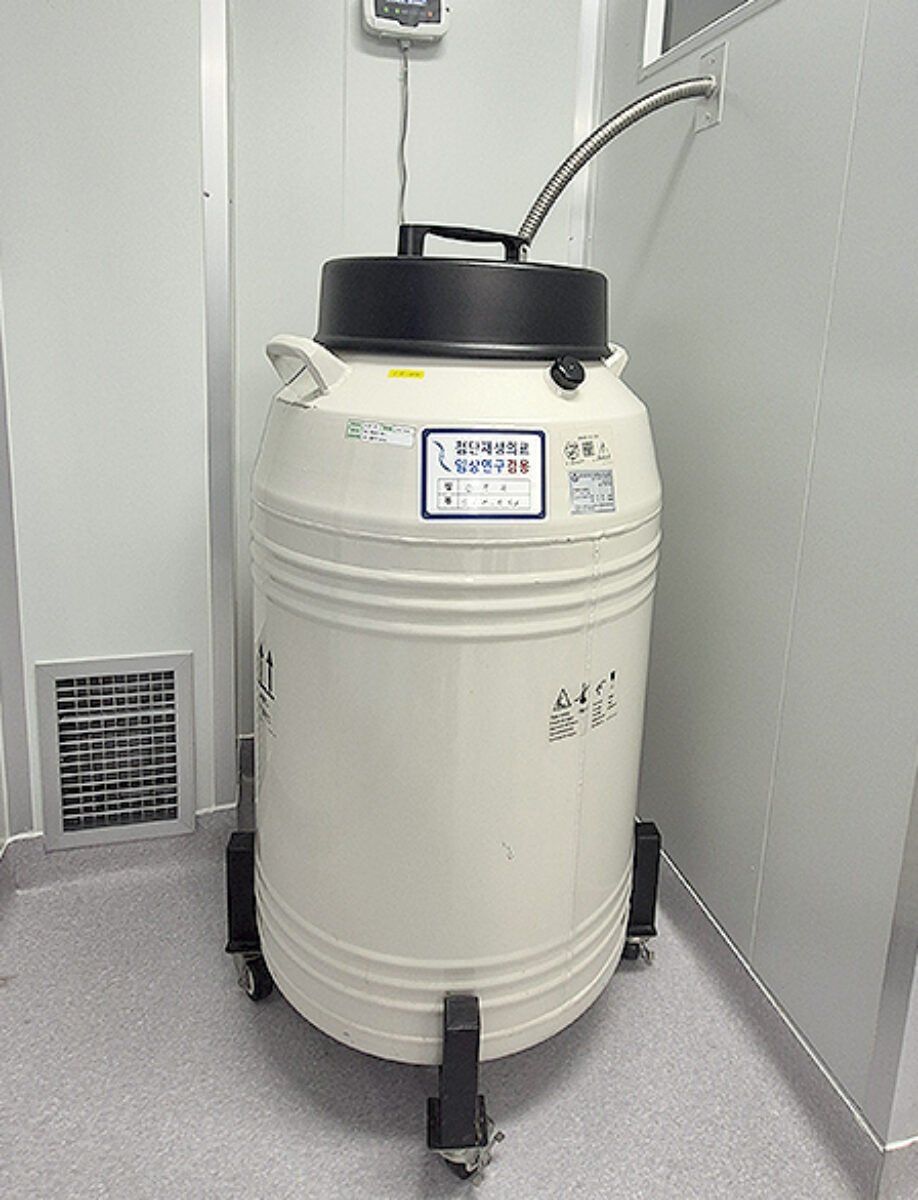
07 · LN2 Tank
Cell banking at minus 196 degrees
At what temperature are stem cells (SVF) stored (cell banking)?
Stem cells (SVF) are stored (cell banking) at cryogenic temperatures in liquid nitrogen (LN2) tanks at minus 196 degrees.
The separated SVF can be stored at this temperature and retrieved for use when needed. In the tank Dual-use for advanced regenerative medicine clinical research There is a label attached.
SC301 Clinic stores stem cells (SVF) (cell banking) Free storage for 1 yearWe will do it for you. For more details Cell Banking GuideYou can see it at.
( Certification )
Stem Cell Research Center Official certification and authorization
Just because you have the equipment does not mean you can handle cells anywhere.
( 01 )
Advanced Regenerative Medicine Institutions · Cell Processing Facilities
We have received designation as an advanced regenerative medicine institution and approval for a cell processing facility from the Ministry of Health and Welfare and the Ministry of Food and Drug Safety.
( 02 )
Research and Development Department
It has been recognized by the Ministry of Science and ICT as a dedicated research and development department under the Act on the Promotion of Basic Research and Support for Technology Development. It is operated by research personnel with master's and doctoral degrees in biology.
( Research Process )
The engraftment data How do you conduct research?
The work of the research center does not end on the day of surgery. Since 2007, we have continued the following process.
- STEP 01
Collection of clinical engraftment data
- STEP 02
Quantification and Analysis of Graft Survival Data
- STEP 03
Writing a thesis
- STEP 04
Publication in an academic journal
Average engraftment rate 77.48% — Published in Annals of Plastic Surgery (2023, SCI-indexed) · Published in an Oxford journal in 2020 · 3 patents related to fat grafting
( FAQ )
Stem Cell Research Center Frequently Asked Questions
Are SVF and stem cells the same thing?
SVF (Schemovascular Fraction) is a bundle of cells isolated from adipose tissue that contains adipose-derived stem cells. Although they were previously referred to simply as "stem cells," the correct term is SVF. The stem cells in SVF are not pluripotent cells capable of transforming into any type of cell in the body; current research focuses on their role in facilitating angiogenesis and supporting the tissue environment at the transplant site.
What equipment is available at the SC301 Clinic Stem Cell Research Center?
We are equipped with more than 10 types of SVF-related equipment, including cleanrooms, pass boxes, centrifuges for SVF separation, ADAM cell counters, CO₂ incubators, medical refrigerators, and minus 196 degree LN2 (liquid nitrogen) tanks.
Who separates the SVF?
It is performed manually according to protocols by SVF specialists with over 10 years of experience, rather than by nurses or nursing assistants. The research center is operated by master's and doctoral-level researchers with backgrounds in biology.
How do I check the number of SVF cells being injected?
The ADAM Cell Counter measures the actual number of SVF cells injected and their survival rate for each surgery. In publicly disclosed cases of breast stem cell (SVF) fat grafting, the number of cells injected per session ranged from approximately 68 million to 99 million, varying depending on the amount and condition of the harvested fat.
How and for how long are stem cells (SVF) stored (cell banking)?
The separated SVF is stored at cryogenic temperatures in a liquid nitrogen tank at minus 196 degrees and retrieved for use when needed. SC301 Clinic stores cell banking data for free for one year.
What certifications has the stem cell research center received?
We have been designated as an advanced regenerative medicine implementing institution and licensed for cell processing facilities by the Ministry of Health and Welfare and the Ministry of Food and Drug Safety, and have been recognized as a research and development department by the Ministry of Science and ICT.
Where did the average engraftment rate of 77.48% come from?
This is the average value published in the SCI-indexed international academic journal *Annals of Plastic Surgery* (2023), based on an analysis of stem cell (SVF) fat graft survival data accumulated by SC301 Clinic since 2007. An individual's survival rate varies depending on their constitution and fat condition.
( Closing )
The results are available only in the operating room.
It is not decided
Clean zone air, centrifuge rotation, cell counter numbers, and even liquid nitrogen temperature.
Every stage the cells pass through before surgery affects the outcome.
The SC301 Clinic Stem Cell Research Center is a place that manages and records each step one by one.
※ Results may vary depending on the individual, and side effects such as swelling, bruising, fat necrosis, and infection may occur after surgery.
SC301 Clinic · 3rd–4th Floors, B1, Chan & Chan Tower, 611 Yeongdong-daero, Gangnam-gu, Seoul · 1-minute walk from Exit 2 of Bongeunsa Station (Line 9)


