


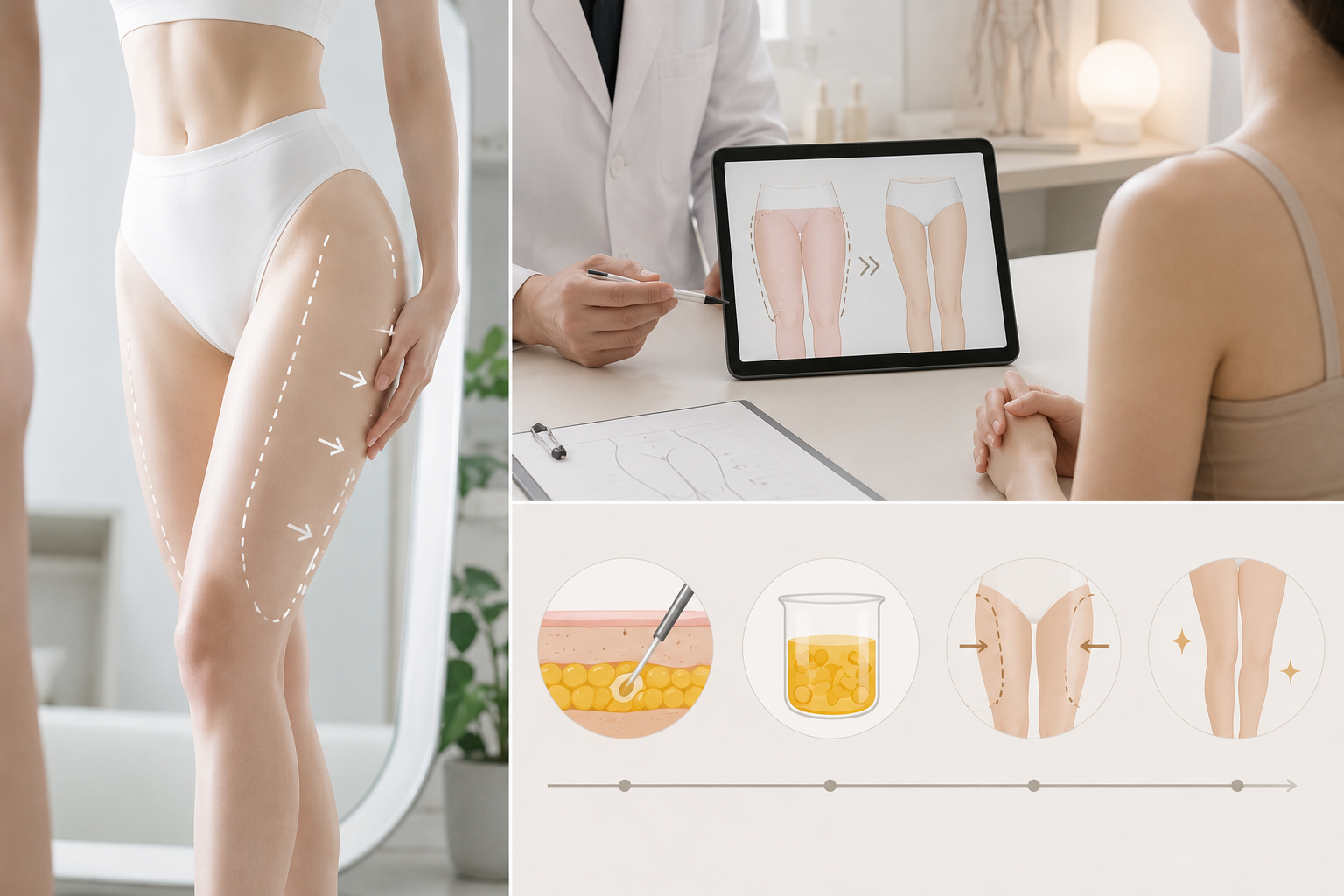
Thigh liposuction is a procedure where personalized planning is crucial, as fat accumulation patterns vary by area, such as the inner, outer, and front thighs. Excessive fat removal can lead to adhesions, making proper volume control and post-operative compression and massage management essential. Additionally, the use of ultra-fine cannulas (2–3 mm) can help minimize skin damage and the burden of recovery. The extracted fat can be utilized for volume enhancement on the face or other areas through SVF (superficial Vessel Fluid) transplantation, and there is also an option to freeze and store the fat for a certain period (cell banking) rather than making an immediate decision. Results vary depending on individual constitution and post-operative care.
What is thigh liposuction?
Thigh liposuction is a procedure that removes excess fat accumulated in the thighs to create a slim and balanced overall leg line. The goal is not simply to remove a large amount of fat, but rather a delicate plan tailored to your body shape and skin elasticity.
Concerns by Body Area
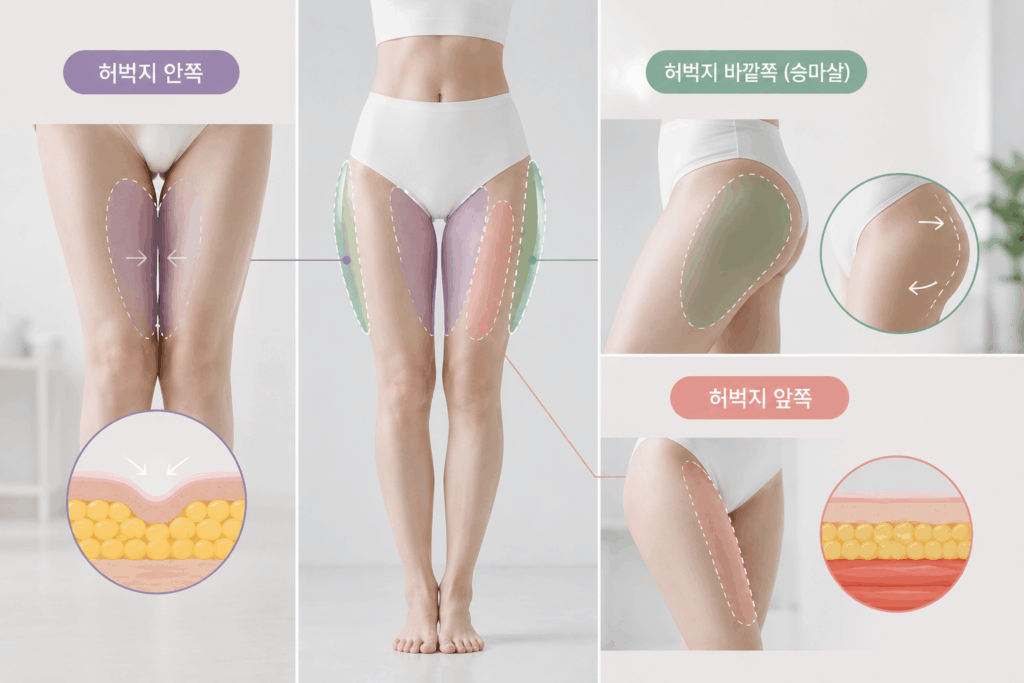
The pattern and approach to fat accumulation in the thighs vary depending on the area.
| region | Characteristic |
| inner thighs | Areas subject to friction while walking require careful adjustment due to thin skin. |
| outer thigh (saddlebags) | Connected to the pelvic line, it has a significant impact on the lower body silhouette. |
| front of the thigh | Muscle and fat develop together; simple liposuction alone may not be sufficient for improvement. |
Since characteristics vary by body part, it is important to identify the area you are most concerned about and the cause together during the consultation.
The key to determining results: controlling fat volume
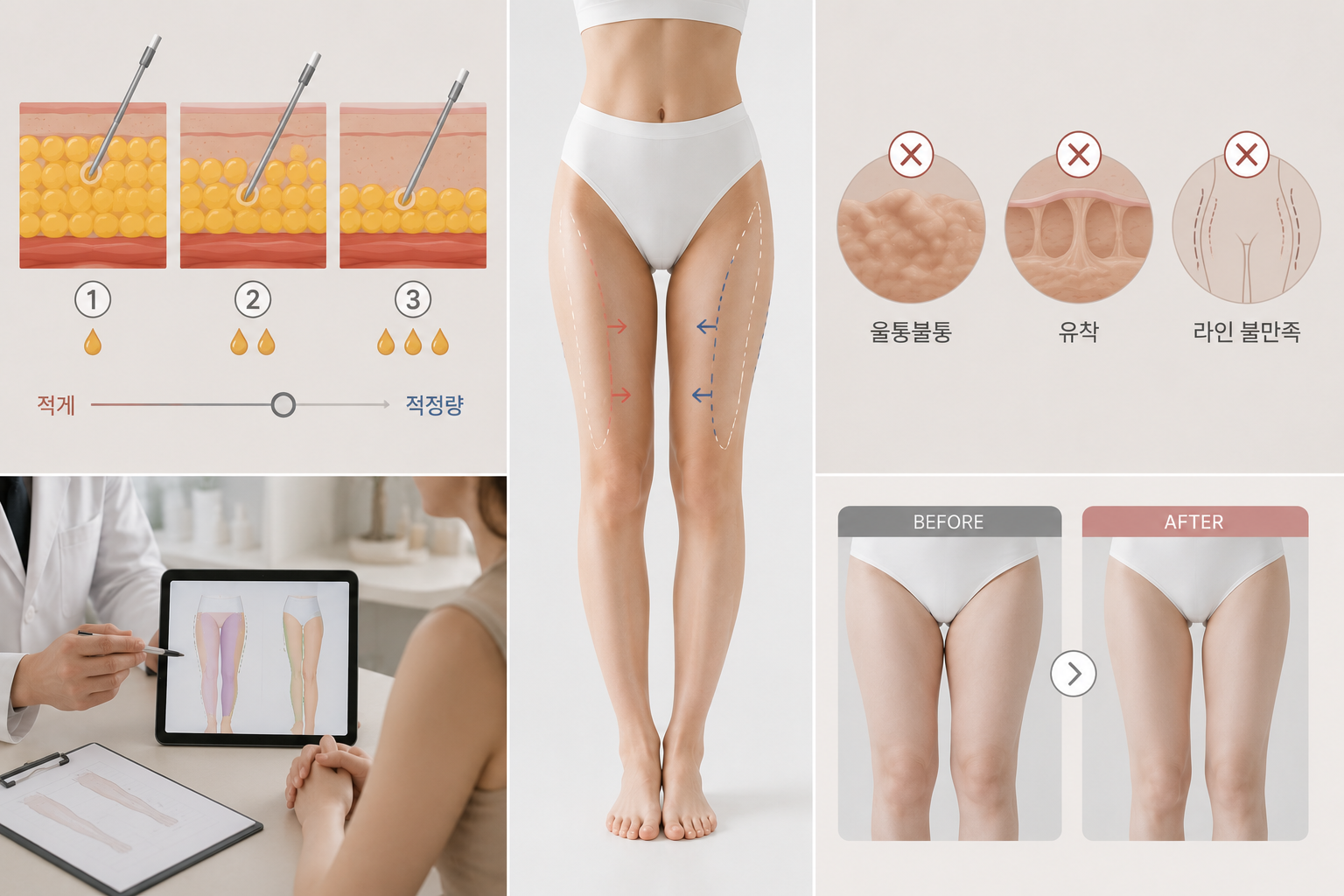
The most important factor in thigh liposuction is determining how much and how to remove the fat. Removing too much can result in an uneven appearance, cause 'adhesion' where the skin and tissue stick together, and lead to a shape different from what you expected.
Causes and Prevention of Adhesion
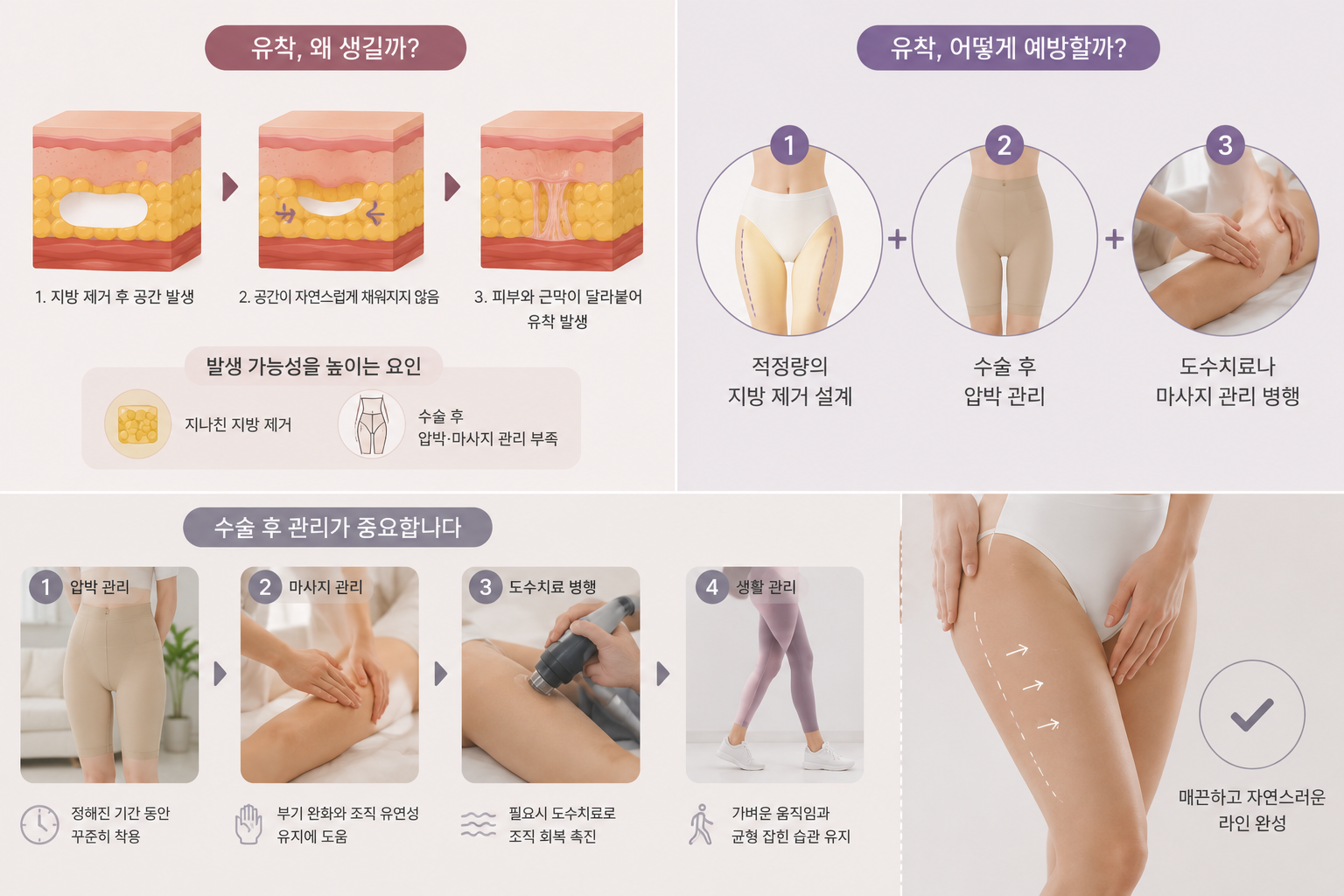
Adhesion is a phenomenon that occurs when the space left after fat removal fails to fill naturally, causing the skin and fascia to stick together. The likelihood of this occurring increases if excessive fat is removed or if post-operative compression and massage care are insufficient.
To prevent adhesions, it is helpful to design a plan for removing an appropriate amount of fat, combine it with compression management for a set period after surgery, and, if necessary, manual therapy or massage care.
The Importance of Equipment Selection
A tube called a cannula is used for liposuction, and the SC301 utilizes an ultra-fine cannula (2–3 mm). Thin cannulas can help reduce the burden of bruising and swelling, minimize skin damage, and make the recovery process smoother.
Flow by recovery period
| Time | flow |
| Week 1 | During the period when swelling and bruising are prominent, focus on wearing compression garments and rest. |
| 2 weeks to 1 months | As the swelling gradually subsides, the lines begin to become visible. |
| 1~3 months | Tissue stabilization combined with adhesion prevention management (massage, etc.) |
| 3~6 months | The time when the final line and result become relatively clear |
Utilization of extracted fat
The extracted fat is not simply discarded but can be utilized to improve volume in other areas. It can be used for facial volume enhancement and body contouring, and an option to proceed with stem cell (SVF) fat grafting is also provided.
Cell banking system
If it is difficult to decide on immediate transplantation, you may consider a cell banking service that stores fat-derived SVF components free of charge for a certain period. They are safely stored at minus 196 degrees Celsius and can be retrieved and utilized when needed.
SeeCell banking is a storage service for future use, and storage itself does not guarantee the effectiveness of any specific procedure. Whether and how a procedure will be performed at the time of utilization will be determined through a separate consultation.
Things to check during consultation
- Is it designed considering the characteristics of each part of your thigh (inner, outer, and front)?
- Is there a standard for the appropriate amount of fat to remove to prevent adhesions and a post-treatment plan?
- What procedure do you follow if you want to use the extracted fat on other parts of your body?
- What are the free storage period for cell banking and the storage conditions (costs, etc.) thereafter?
Frequently Asked Questions
Q. Can I lose weight from my thighs all at once?
A. The amount of fat that can be removed at a time may be limited to ensure safety and results, and the procedure may be divided into multiple sessions depending on body type and goals.
Q. If adhesions form, can they be reversed?
A. Mild cases may improve with massage or manual therapy, but depending on the severity, additional care or procedures may be necessary, so an accurate diagnosis is the priority.
Q. Is it mandatory to use the SVF from cell banking?
A. That is not the case. Storage is an optional service, so you can decide whether to use it if you deem it necessary.
Introduction of the surgeon
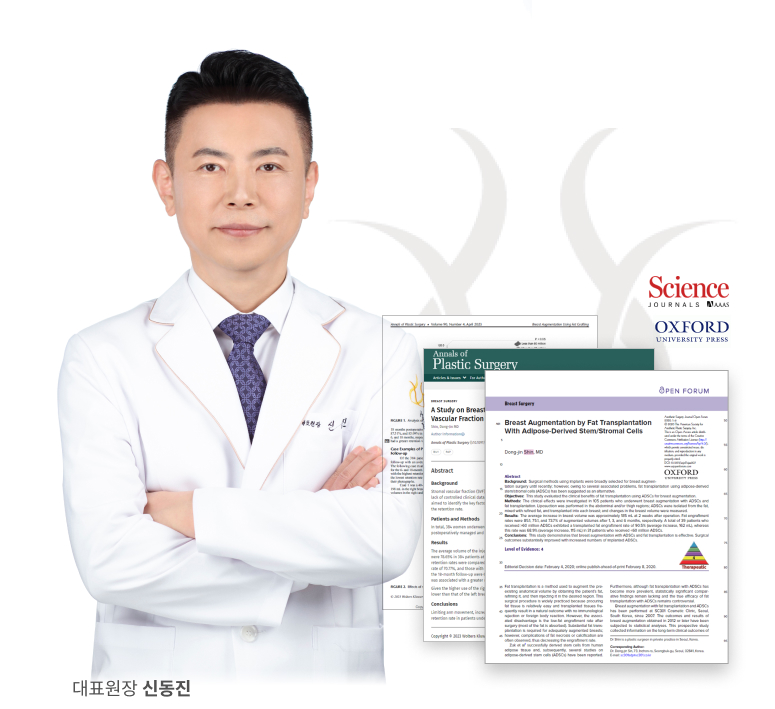
This article was written based on the standards of Chief Director Shin Dong-jin, who has accumulated 19 years of clinical experience in the field of SVF-related procedures. He served as the President of the Korean Society of Stem Cell Plastic Surgery for 10 years and maintains a principle of performing a maximum of only 2 to 3 surgeries per day.
This content is for informational purposes only, and treatment results and recovery periods may vary depending on individual constitution, skin condition, and lifestyle. Please confirm an accurate diagnosis and eligibility for the procedure through an in-person consultation.
Member SC301 · Chan & Chan Tower, 611 Yeongdong-daero, Gangnam-gu, Seoul (77-9 Samseong-dong) · 1-minute walk from Exit 2 of Bongeunsa Station (Line 9)
https://blog.naver.com/sc301guide – SC301 Naver Seongchelin Guide Blog


