


Almost no one has perfectly identical breasts. While most people have subtle differences, significant variations can be bothersome in daily life and affect self-confidence.
Today is Uneven breasts (chest asymmetry) For those of you who are concerned about this, I will explain how the degree of asymmetry is classified and what is truly important in orthodontic design.
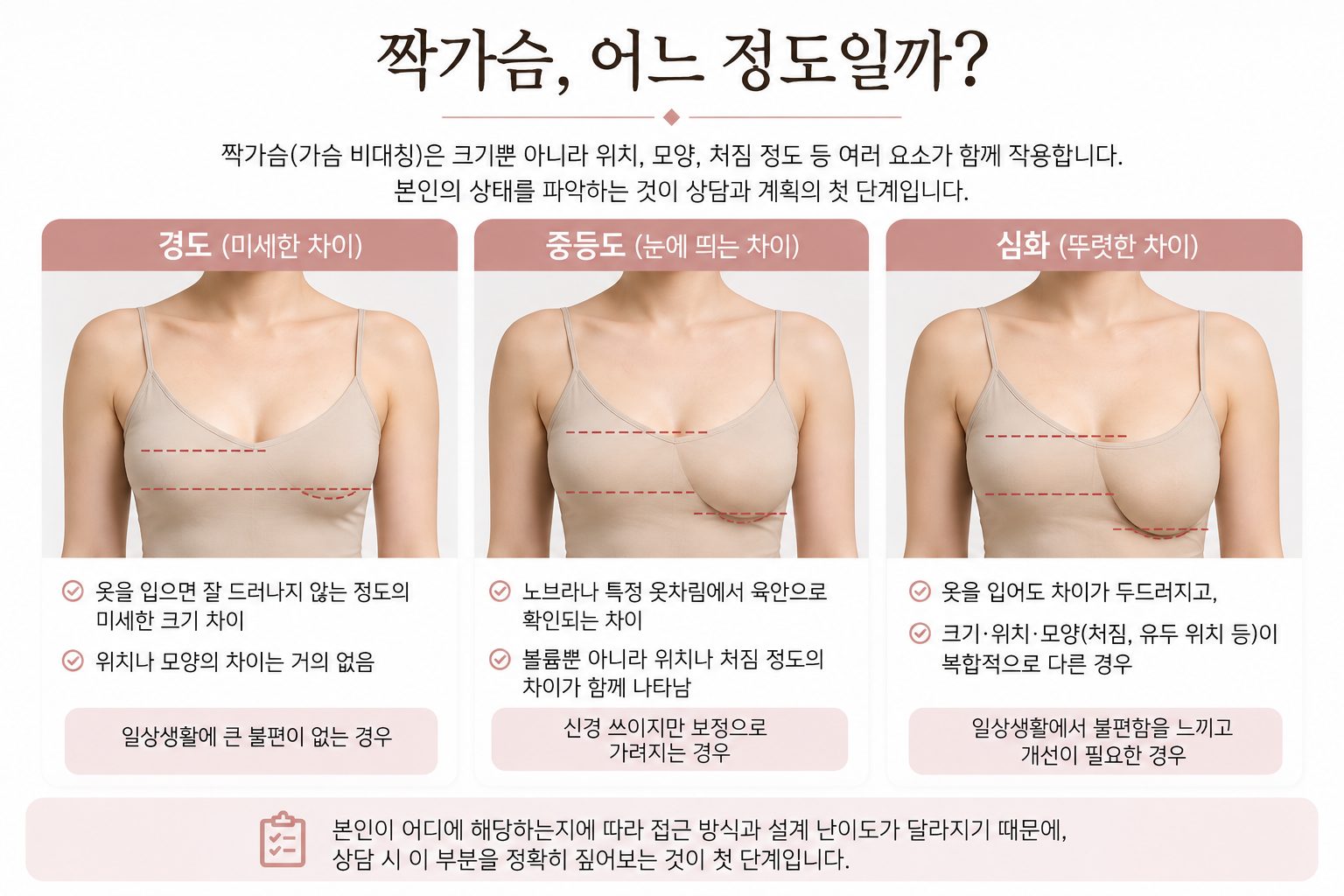
How severe is my uneven chest?
When discussing asymmetry, it is easy to think only of differences in size, but in reality, various factors are at play. Here is a general classification that you can refer to during consultations.
Hardness: A subtle difference in size that is not easily visible when wearing clothes
moderate: Differences visible to the naked eye when going braless or wearing specific clothing, cases where differences in position or degree of sagging appear together as well as volume.
Deepening: Cases where the difference is noticeable even when wearing clothes, and there are complex differences in size, position, and shape (sagging, nipple position, etc.)
Since the approach and design difficulty vary depending on where you fall, the first step during the consultation is to accurately identify this aspect.
Why is fat grafting more suitable than implants for correcting breast asymmetry?
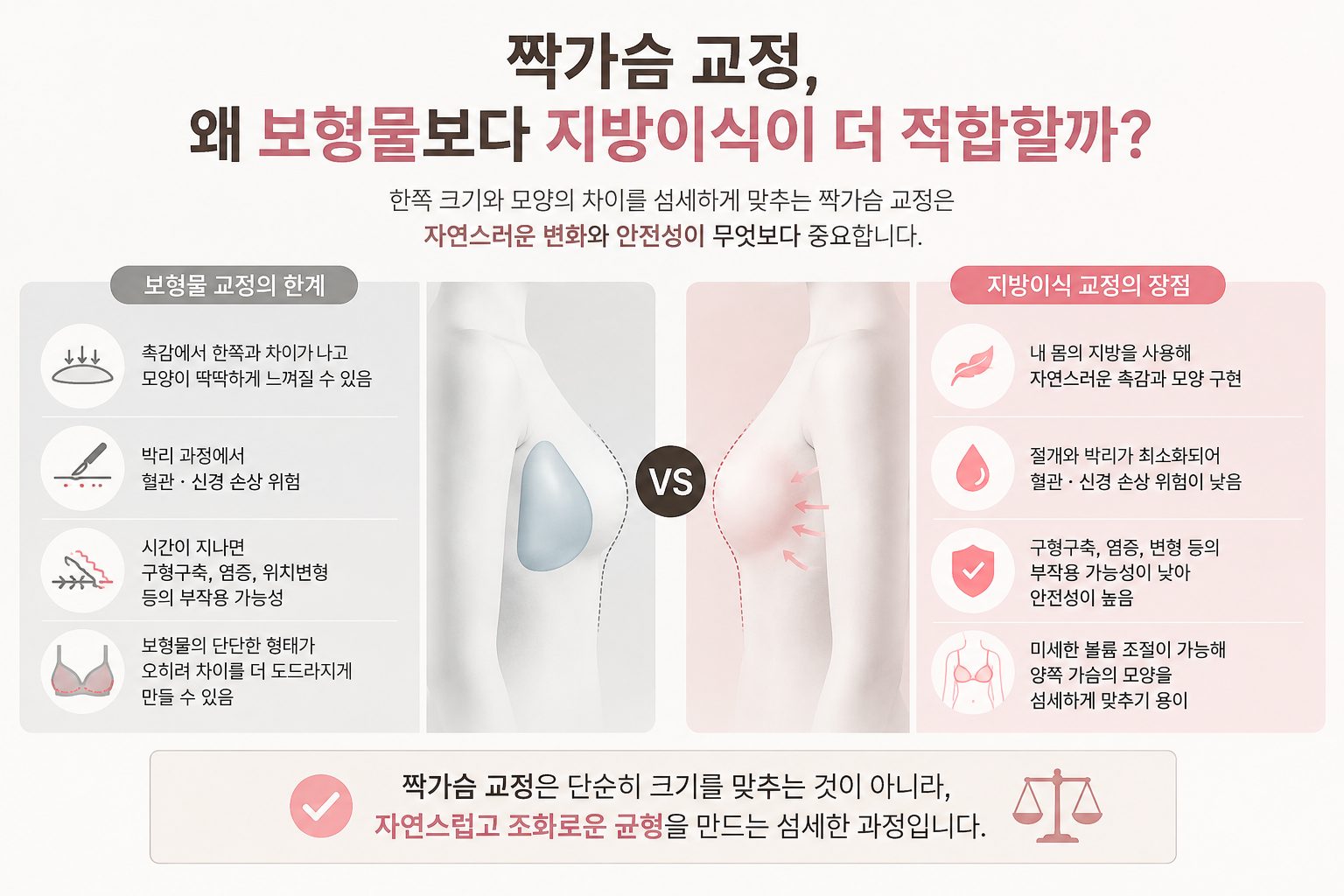
When it comes to correcting asymmetrical breasts, it is easy to think, "Can't I just match the size of one side with implants?" However, in reality, that is not the case.
The implants
● There is a difference in touch compared to one side and
● The shape may feel hard and
● There is a risk of blood vessel and nerve damage during the dissection process
● As time passes Capsular contracture, inflammation, displacement There is a possibility of side effects such as the back.
Especially in the correction of asymmetrical breasts where the shape of both breasts must be delicately matched, the implants hard formThere are also cases where it actually makes the difference more pronounced.
Therefore, many people seek fat grafting for more natural and softer results, but this leads to another problem. That is. Graft survival rate.
Why graft survival rate is particularly important in asymmetry correction
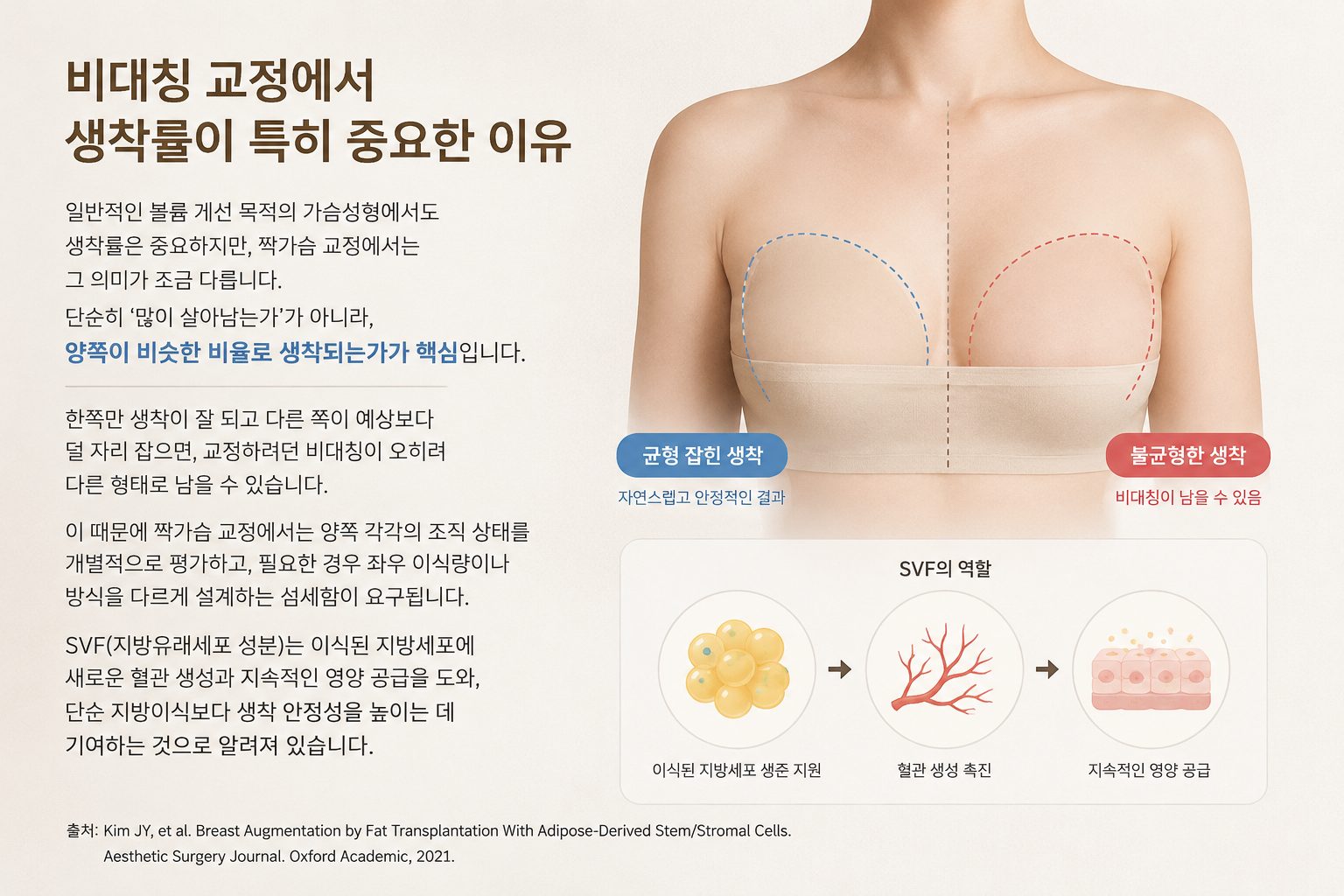
Even in breast augmentation aimed at general volume improvement Graft survival rateIt is important, but its meaning is slightly different in breast asymmetry correction.
It is not simply about 'how many survive,' but, Do both sides engraft at a similar rate?That is the key point. If the graft takes root well on only one side and settles less than expected on the other, the asymmetry intended to be corrected may instead remain in a different form.
For this reason, in breast asymmetry correction Tissue conditions of each sideEvaluate individually, and if necessary Left and right transplant amountDelicacy is required to design the method differently.
SVF(Adipose-derived cell components) new to transplanted fat cells blood vessel formationand Continuous nutritional supplyIt is known to help improve engraftment stability compared to simple fat grafting.
SC301 is an evaluation calculated based on over 9,000 casesbacterial engraftment rate 77.48%SCI-level International academic journal Annals of Plastic SurgeryIt is listed and publicly available. (The engraftment rate may vary depending on individual constitution, lifestyle, and the condition of the left and right tissues.)
Asymmetry Correction Design Proceeds Like This

Design is a really important factor in breast correction.
SC301 is available through pre-operative consultation Skeletal structure, skin elasticity, chest shape, body shape characteristics After thoroughly analyzing the back, we first complete a custom design that ensures both sides appear harmonious.
Since fat grafting requires injection tailored to each individual's breast shape, the key is to individually design the following four elements for both sides.
The real purpose is not simply to increase the size, but to adjust both breasts so that they are naturally balanced.
Good questions to check during consultation
● Your Degree of asymmetryWhether it accurately diagnoses (mild/moderate/severe)
● Whether to evaluate the condition of the left and right tissues individually and design them differently
● How you plan to apply the four elements—location, volume, angle, and floor—differently
● Is there a follow-up plan in case of a difference in graft survival speed between the left and right sides?
Wait, don't just believe the word 'stem cells'.
When consulting about breast asymmetry correction PRPThere are places that guide you as if it were a stem cell, so caution is required. PRPis a method using platelet-rich plasma, Adipose-derived cell components (SVF)It is different in nature from the function of aiding blood vessel formation and tissue adaptation.
Especially in cases requiring precise left-right balance, such as correcting asymmetry, it is important to clearly verify what ingredients are actually being used.
Frequently Asked Questions
Q. Is it possible to correct my severely asymmetrical breasts with fat grafting?
A. Since the approach may vary depending on the degree of asymmetry and the amount of fat available for harvesting, it is accurate to confirm feasibility and the direction of the plan through a precise diagnosis.
Q. Is it possible to use SVF on only one side and receive regular fat grafting on the other?
A. The approach may be designed differently depending on the condition of the left and right tissues; however, since this varies by individual condition, it is necessary to confirm through consultation.
Q. Can the difference in breast asymmetry reappear over time even after correction?
A. Even after engraftment has stabilized, subtle changes may occur due to various factors such as weight fluctuations or aging, so regular follow-up monitoring can be helpful.
Introduction of the surgeon

This article is about the new [Name] who has established the field of stem cell (SVF) breast augmentation.Dongjin, Chief DirectorThis was written based on clinical standards (19th year, over 9,000 cumulative procedures performed). Served as President of the Korean Society of Stem Cell Plastic Surgery for 10 years, and Up to 2–3 cases per dayWe maintain the principle of performing only surgeries.
As I organize

Breast asymmetrical correction surgery is not simply about increasing volume, but rather about both breasts Harmonyand NaturalnessThis is much more important.
✔️ Yours Degree of asymmetryWhether it was accurately diagnosed
✔️ Is the design considered individually for the condition of the left and right tissues?
✔️ Location, amount, angle, and layerWhether to apply differences in minute detail down to that point
✔️ Have you checked exactly what ingredients are being used?
I recommend that you verify these four points through a consultation.
SC301 strives for the most natural and balanced results based on proven protocols and extensive clinical experience.
If you are concerned about chest asymmetry, find the most suitable solution with the SC301!
Procedure results and engraftment rates may vary depending on individual constitution, fat condition, and the state of the left and right tissues. The information above is for reference only, so please confirm an accurate diagnosis through an in-person consultation.
That has been the Seongchelin Guide!

Frequently Asked Questions
How severe is my uneven chest?
When discussing asymmetry, it is easy to think only of differences in size, but in reality, multiple factors are at play. Here is a general classification that can be referenced during a consultation: Mild: Subtle size differences that are not easily visible when wearing clothes. Moderate: Differences visible to the naked eye when going braless or wearing certain outfits; cases where differences in position or the degree of sagging are present along with volume.
Why is fat grafting more suitable than implants for correcting breast asymmetry?
When it comes to correcting breast asymmetry, it is easy to think, "Wouldn't it be enough to just match the size of one side with an implant?" However, in reality, that is not the case. Implants may ● feel different from one side in terms of touch ● feel hard in shape ● carry a risk of blood vessel or nerve damage during the dissection process ● and there is a possibility of side effects such as capsular contracture, inflammation, and displacement over time.


