


Joint study by 6 domestic university hospitals — A multi-center Phase 2 RCT comparing two intravenous injections of autologous adipose-derived stem cells (AtMSC) with a placebo over 16 weeks in 114 patients with moderate to severe atopic dermatitis.
SC301 Clinic · Stem Cell Research Series · Single Paper Based · Intravenous Injection of Adipose-derived Stem Cells (AtMSC)
Original paper information:
Seok J, Kim SY, Lee WG, Shin MK, Lee DH, Seo YJ, Cho S, Park KY, Son SW, Lee SH, Seo JS, Seo SJ.
“Efficacy and safety of autologous adipose-derived stem cells in subjects with moderate to severe atopic dermatitis: A multicenter, randomized, single-blind, placebo-controlled, phase 2 trial”
Stem Cell Research & Therapy. 2025;16:671.
doi: 10.1186/s13287-025-04763-y. PMID: 41331725. ClinicalTrials.gov NCT04137562.
Affiliation: Joint research by 6 domestic institutions including Chung-Ang University, Kyung Hee University, Seoul National University, Chungnam National University, Seoul Boramae Hospital, and Korea University Ansan Hospital
Atopic Dermatitis: Treatment Options Have Increased, But Limitations Remain
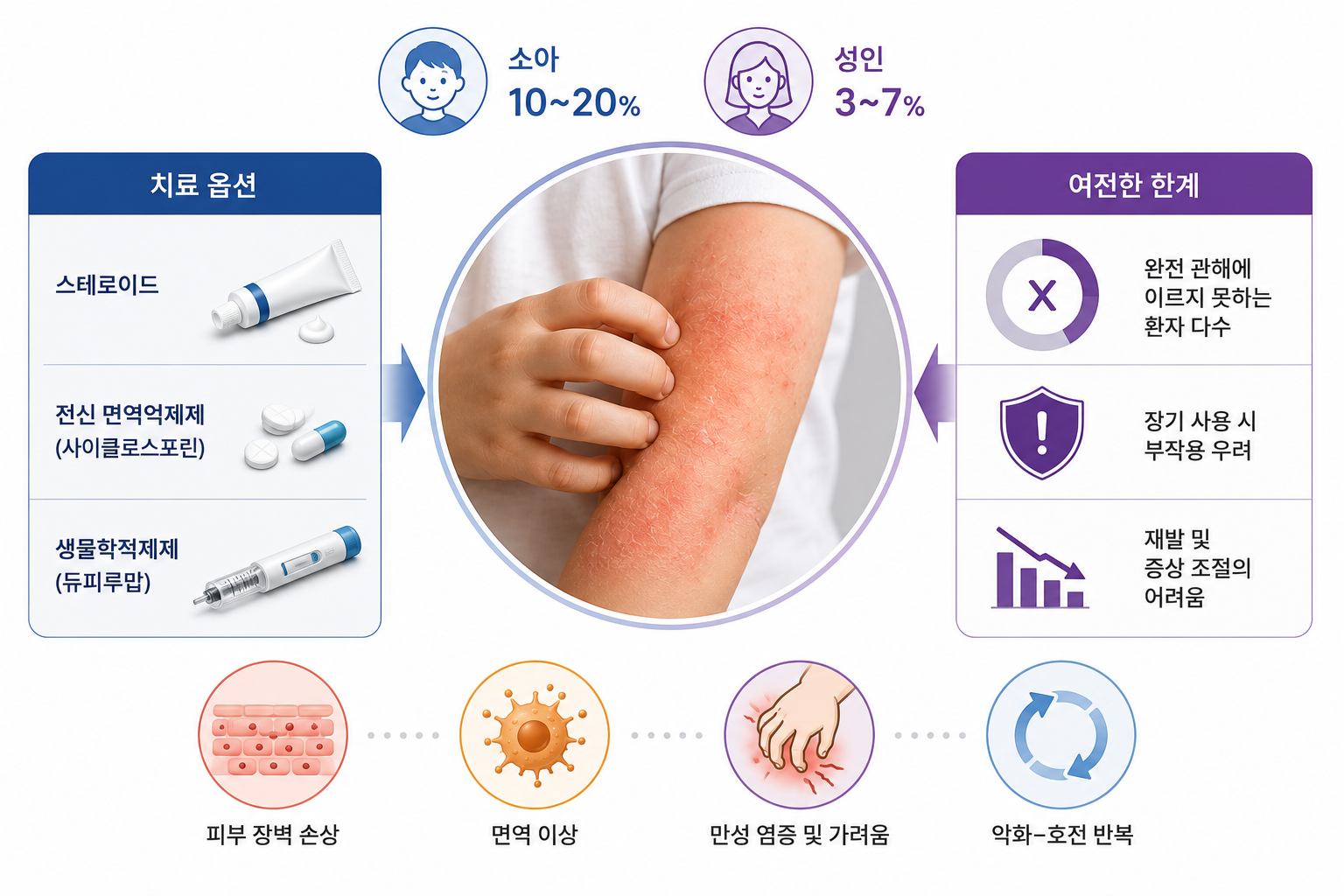
Atopic dermatitis (AD)It is a chronic inflammatory skin disease known to affect 10–20% of children and 3–7% of adults. Moderate to severe patients are treated with systemic immunosuppressants such as steroids and cyclosporine, or biological agents such as dupilumab, but There are still many patients who do not achieve complete remission, and concerns regarding side effects from long-term use remain.
Mesenchymal stem cells (MSCs) have garnered attention as potential treatments for atopic dermatitis due to their immunomodulatory capabilities that regulate the activity of T cells, B cells, and natural killer cells. Although their efficacy has already been reported multiple times in animal models, Large-scale clinical data on humans was lacking. This study is designed to fill that gap and, in the authors' words, is “the first large-scale Phase 2 study on this subject.”
If stem cells cultured from autologous fat are administered intravenously twice at 4-week intervals, how much will the severity of atopic dermatitis differ after 16 weeks compared to the placebo group? Six university hospitals in Korea investigated this on 114 subjects.
Study Design — Multicenter placebo-controlled Phase 2 trial
| item | Contents |
| Research Design | Multicenter, single-blind, placebo-controlled Phase 2 RCT (NCT04137562) |
| Target patients | 114 patients aged 19–70 with moderate to severe atopic dermatitis (SCORAD > 20) (59 in treatment group and 55 in placebo group) |
| Method of administration | 1.0 × 10⁸ autologous adipose-derived stem cells (AtMSCs) intravenously, twice at 4-week intervals (placebo group received normal saline) |
| Blind test method | Participants and independent evaluators blind (wearing blindfolds during medication) |
| Evaluation Criteria | EASI (Eczema Severity), SCORAD, Physician Assessment of Global Averages (IGA) — 4-week intervals up to 16 weeks |
| Additional analysis | ELISA measurement of blood inflammation biomarkers (TARC, IL-4, IL-5, IL-13, IL-31, etc.) |
The treatment group [removed] fat from the hospital Cells were isolated by collagenase enzyme treatment and then subcultured five times.We used the AtMSCs that were ordered. We administered them after confirming cell characteristics using surface markers (CD73·CD90·CD105 positive, CD34·CD45 negative).
After 16 weeks — Significant difference compared to placebo
Key Results
At the 16-week mark EASI-75(The achievement rate (75% or greater reduction in eczema severity) was 23.7% for the treatment group and 7.3% for the placebo group, showing a significant difference.It showed (p=0.016). EASI-50 Achievement rates were 50.9% in the treatment group vs. 14.6% in the placebo group (p<0.001).The gap was larger. SCORAD scores and physician comprehensive evaluation (IGA) also improved in the same direction.
1
EASI Total Score — Started to diverge significantly from the placebo group starting at week 8
The change in total EASI score was significantly greater in the treatment group than in the placebo group at 8 weeks (p=0.017), 12 weeks (p=0.015), and 16 weeks (p<0.001). The mean decrease at 16 weeks was Treatment group -9.26 points, placebo group -2.54 points.
2
TARC biomarker — significantly reduced in the treatment group
A blood biomarker closely associated with the severity of atopic dermatitis TARC(CCL17) The levels decreased significantly more in the treatment group at the 16-week mark.(p=0.012). However, no significant differences were found in other Th2 cytokines such as IL-4, IL-5, IL-13, and IL-31.
3
Adverse reactions were at a similar level to the placebo group.
Treatment-related adverse events (TEAEs) occurred in 28.8% of the treatment group and 21.8% of the placebo group. There was no statistically significant difference. Most of the symptoms were mild (headache, dizziness, nausea, etc.), and There were no serious adverse events (SAEs) or life-threatening incidents.
XNUMX
Response rate similar to existing biological agents
Although it is not a direct comparative clinical trial, the literature reports that the 16-week EASI-75 achievement rates are 43.3% for dupilumab, 33.2% for tralokinumab, and 48% for baricitinib. The 23.7% of the AtMSC treatment group is lower than this, but represents a significant response rate as a distinct treatment mechanism.is rated as
Comparison of 16-Week EASI-75 Achievement Rates with Existing Biological Agents (For reference only, not a direct comparison)
| cure | EASI-75 Achievement Rate | Remarks |
| AtMSC (this study) | 23.7 % | Intravenous injection, 2 times |
| Dupirumab + Steroid | 43.3 % | Literature Report |
| Tralokinumab | 33.2 % | ECZTRA 2, literature reported values |
| Baricitinib 4mg + Steroid | 48 % | Literature Report |
※ This is a simple comparison of figures from different studies and is not the result of a direct head-to-head comparative clinical trial.
Why do intravenously injected stem cells work on dermatitis?
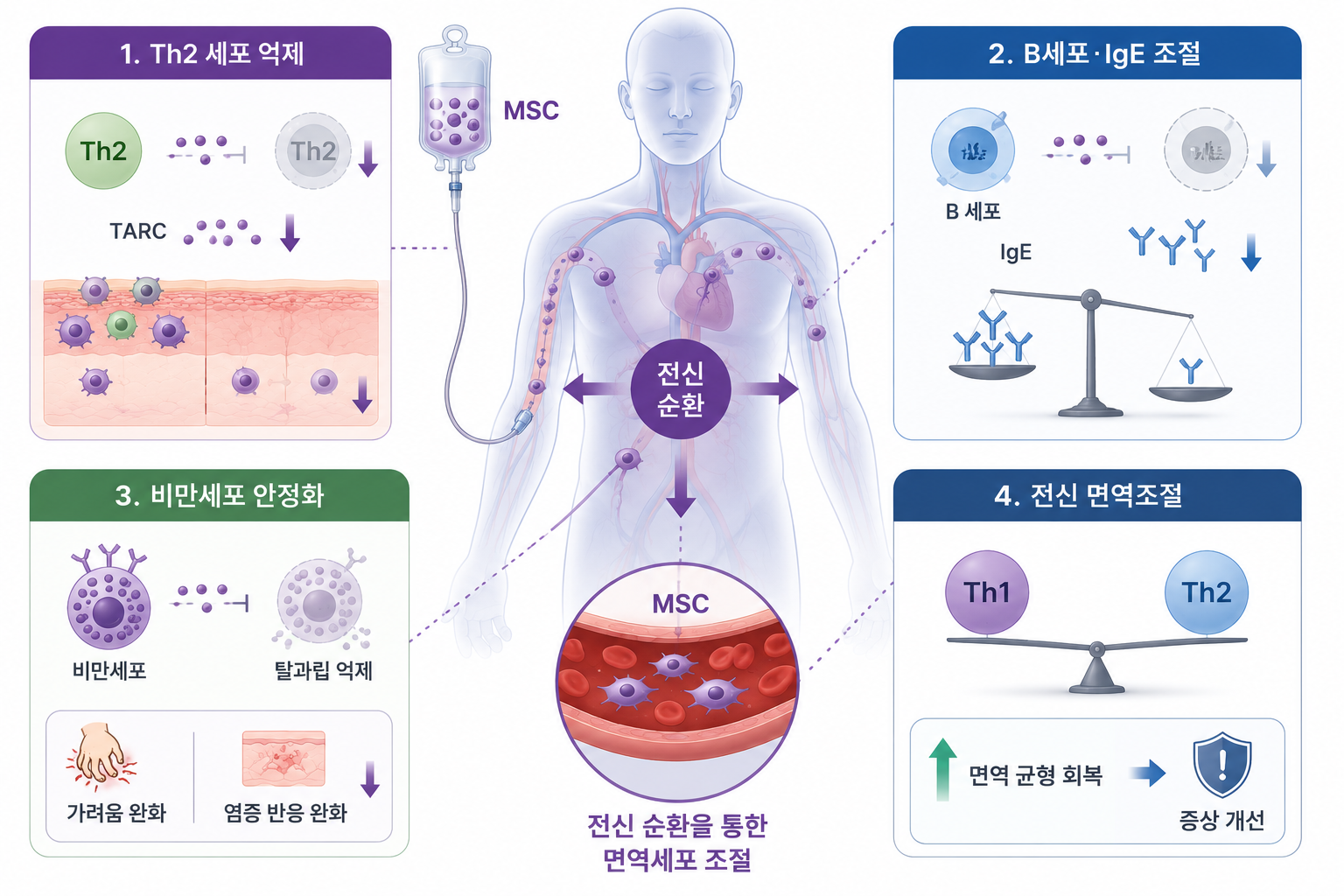
Atopic dermatitis is an inflammatory disease caused by the overactivation of the Th2 immune response. MSCs are not localized Regulates the immune cells themselves through systemic circulationWe approach it in this way.
Th2 cell inhibition
It is presumed to reduce Th2 cell infiltration into the skin through the reduction of TARC.
B cell and IgE regulation
Mechanism of B-cell maturation inhibition and IgE production reduction confirmed in animal experiments
mast cell stabilization
Contributes to the alleviation of itching and inflammatory responses by inhibiting mast cell degranulation
Systemic immune regulation
It is characterized by regulating systemic immune balance rather than localized lesions.
Limitations of this paper — what the research team honestly revealed
This study Single-blind design (only participants and evaluators are blind, examiners are unblinded)However, it was not a complete double-blind study. IL-17 and IFN-γ levels involved in the pathology of atopic dermatitis were not measured, and The follow-up period was also short at 16 weeks, so long-term persistence or recurrence rates could not be confirmed. The research team announced that they are planning a double-blind Phase 3 trial.
What this study says — Potential as a new treatment option
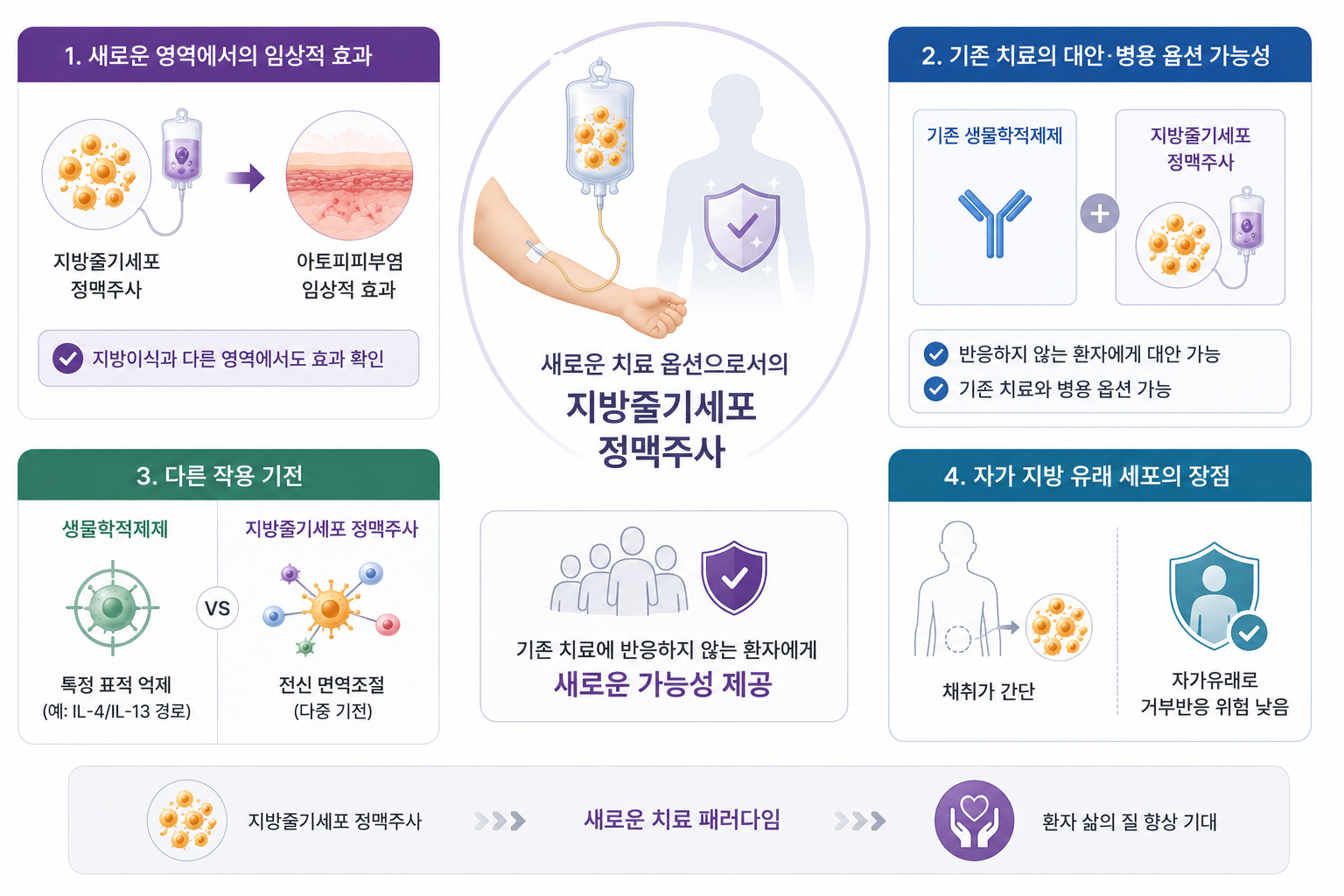
The significance of this study is The fact that intravenous injection of adipose stem cells demonstrated clinical efficacy in atopic dermatitis, a field entirely different from fat grafting.is. Although the response rate is lower compared to existing biological agents, An alternative or combination option for patients who do not respond to conventional treatment due to a different mechanism of action.There is a possibility that this will happen.
The authors argue that autologous fat-derived cells are better than bone marrow-derived cells. Since collection is simple and it is autologous, the risk of rejection is also expected to be low.It was mentioned that it is possible. However, this is strictly a Phase 2 result, and a Phase 3 confirmatory trial is required for actual clinical application.
The conclusion reached by the paper
In patients with moderate to severe atopic dermatitis, intravenous autologous adipose-derived stem cells (AtMSC) Significant improvement in EASI, SCORAD, and IGA compared to placebo, and showed The incidence of adverse events was no different from the placebo group, indicating a favorable safety profile.I did.
The research team concluded that AtMSC could be a promising option applicable to the treatment of chronic inflammatory diseases, and Follow-up studies, including double-blind Phase 3 trials, are needed.He stated that
Stories from SC301 Clinic
This study is distinct from the local SVF injections (fat grafting, scars, hair loss) we have previously introduced—by culturing cells and injecting them intravenously throughout the body, it demonstrates that the scope of adipose stem cell research is expanding to include systemic immune diseases such as atopic dermatitis.
However, this method is still in Phase 2 and is not an officially approved treatment in Korea. Further Phase 3 confirmatory studies and regulatory procedures are required before it can be applied in clinical practice.
SC301 Clinic continuously examines various areas where SVF/ADSC research is expanding, and Providing information that accurately conveys the current level of evidenceI will continue.
https://blog.naver.com/sc301guide – Naver Seongchelin Guide Blog
– Previous post


