


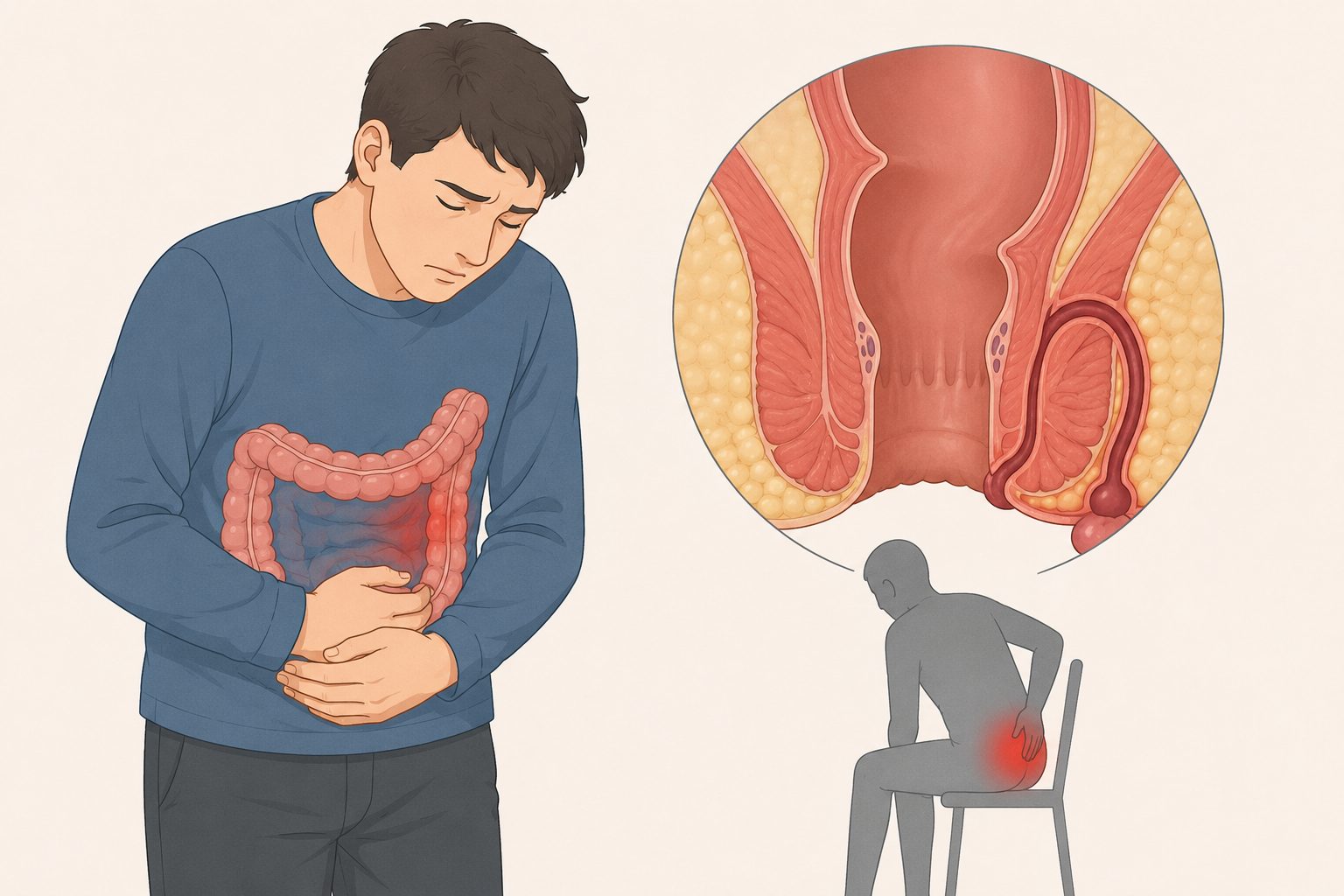
Research team at Gemmelli University Hospital in Italy — injected SVF into 10 patients with complicated perianal fistulas caused by inflammatory bowel disease and confirmed the clinical and radiological cure rates after 6 months.
SC301 Clinic · Stem Cell Research Series · Single Paper Based · Direct Injection into SVF Fistula Site
📄 Original paper information:
Potenza AE, Nachira D, Sacchetti F, Trivisonno A, Pugliese D, Boškoski I, Caudullo G, Minordi LM, Larosa L, Caprino P, Scaldaferri F, Sofo L, Porziella V.
“Effectiveness of Autologous Emulsified Stromal Vascular Fraction Tissue Injection for the Treatment of Complex Perianal Fistulas in Inflammatory Bowel Diseases Patients: A Pilot Study”
Therapeutic Advances in Gastroenterology. 2024;17:17562848241263014.
doi: 10.1177/17562848241263014. PMID: 39247671.
Affiliation: University Hospital of Agostino Gemelli, Rome (Fondazione Policlinico Universitario A. Gemelli IRCCS)
Complex perianal fistula
Complications that plague Crohn's disease patients for a long time
Complex perianal fistulaIt is a complication that significantly reduces quality of life, known to affect up to 28% of Crohn's disease patients within 20 years of diagnosis. Since the success rate of existing treatments is not very high, Nearly half of patients suffer from chronically active fistulas or experience recurrence.do.
Mesenchymal stem cell (SVF) therapy has shown interesting results, but The complexity and cost of cultured cell production limit widespread use.This study verified whether utilizing SVF obtained directly from fat without a culture process could be a simpler and cheaper alternative.
If SVF is injected into perianal fistulas in patients with Crohn's disease or ulcerative colitis who did not respond well to conventional treatment, how much will they have healed after six months? An Italian research team investigated this on 10 subjects.
Study Design — 2-Stage Procedure and 6-Month Follow-up
After 6 months — 83% clinically and 50% imaging healed
Key Results
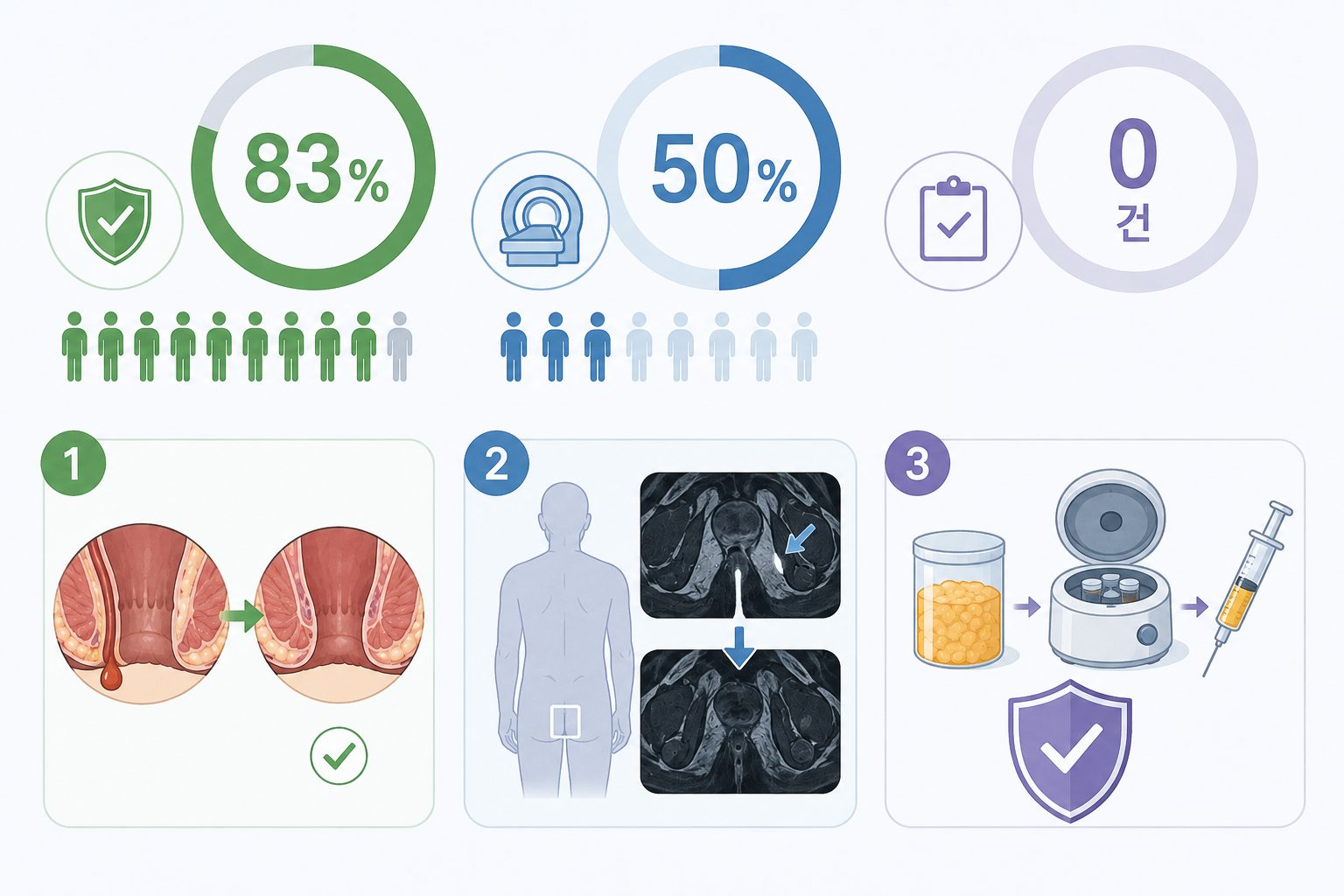
Of a total of 12 procedures (2 out of 10 patients required additional procedures due to recurrence or multiple fistulas) Clinical healing (closure of external opening) was confirmed in 10 cases (83%).That's it. However, confirmed by MRI Radiological healing (complete disappearance of fistula duct) was 6 cases (50%)It stopped there. No treatment-related adverse reactions were reported.
83 %
Clinical cure rate (10/12 cases)
50 %
Radiological cure rate (6/12 cases)
0 건
Treatment-related adverse reactions
1
Clinical healing (visible healing) was high at 83%.
The external opening is blocked "Clinical cure," where there is no longer any discharge, occurred in 10 out of 12 cases (83%)It was confirmed. It shows that the patient experiences significant symptom improvement.
2
The "complete" healing seen on the MRI was only half the level.
Even though it looks like it has healed on the outside, "Radical healing," where the fistula duct itself completely disappeared via MRI, occurred in 6 out of 12 cases (50%).It stopped there. This suggests that there may be a difference between visible recovery and actual tissue-level recovery.
3
There were no treatment-related adverse reactions.
In the entire process of fat harvesting and SVF injection No treatment-related adverse reactions were reported. There are also advantages in terms of cost and time, as the procedure can be performed on the same day without a culture process.
Why is SVF involved in fistula treatment?
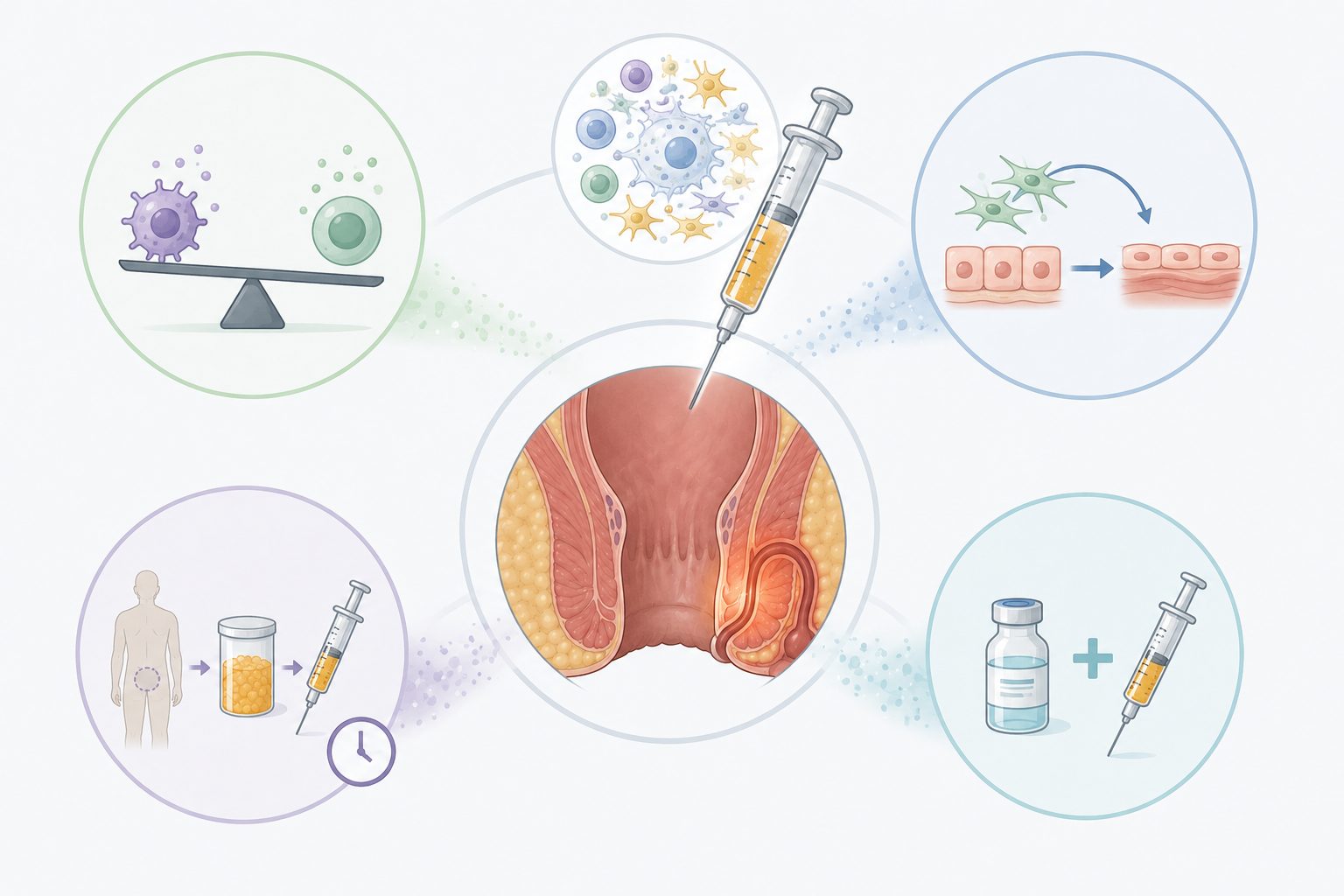
The core issue with Crohn's disease-related fistulas is that the normal tissue healing process is disrupted due to chronic inflammation. The cells included in the SVF are Involved in regulating this inflammatory environment itselfIt is presumed that...
Immunomodulatory action
The immunomodulatory ability of mesenchymal stem cells alleviates the chronic inflammatory environment
Organizational regeneration support
It is presumed to promote the regeneration and closure of tissues surrounding the fistula duct.
Culture-free convenience
Same-day collection and injection are possible without the need for an extension process.
Combination with existing treatments
Used as an add-on option for patients undergoing biological agent treatment
Limitations of this paper — what the research team candidly revealed
This study A very small-scale pilot study without a control group of 10 people (12 cases)is. Because all patients were using biological agents together, It is difficult to clearly distinguish whether the improvement effect is solely due to SVF.
The fact that the radiological cure rate (50%) was lower than the clinical cure rate (83%) also demonstrates that it is difficult to judge success based solely on apparent improvement.
What this study says — the potential for convenient and affordable alternatives
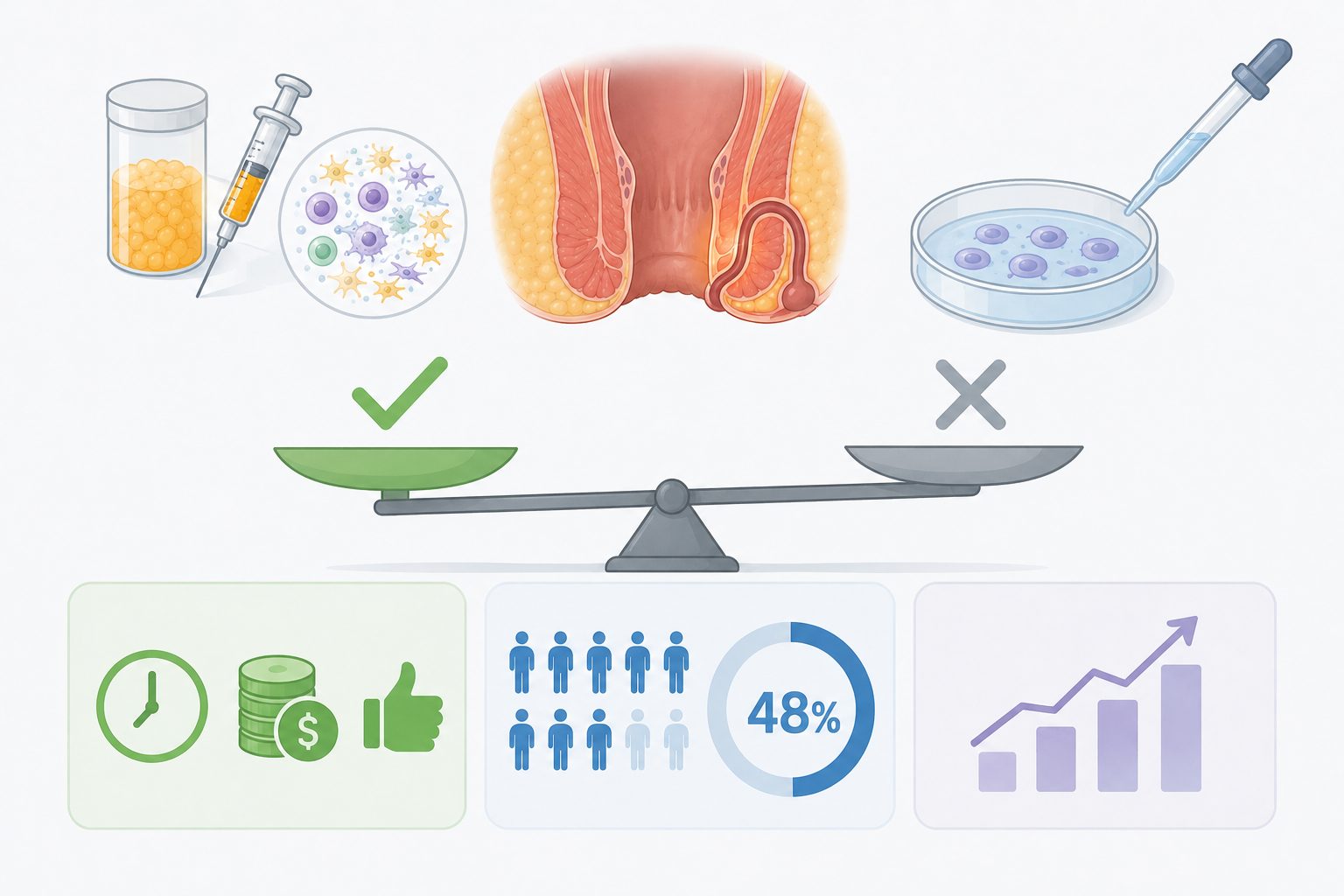
The significance of this study is The fact that SVF, which is simpler and cheaper than cultured cell therapy, showed preliminary efficacy even in difficult-to-treat Crohn's disease-related fistulas.In a meta-analysis integrating other studies published around the same time, the complete cure rate of adipose-derived cell therapy including SVF was reported to be around 48%, showing a trend that is generally consistent with the results of this study.
but The gap between clinical and radiological healingThis provides an important implication that "symptoms appear to be improving" and "actually being completely cured" can be different. Verification through large-scale controlled studies remains the next task.
The conclusion reached by the paper

In the treatment of complicated perianal fistulas caused by inflammatory bowel disease, SVF injections are Clinical cure rate 83%, radiological cure rate 50%showed, There were no treatment-related adverse reactions.
The research team concluded that autologous SVF could be an effective, safe, and affordable add-on therapy, and stated that a large-scale follow-up study with a control group is necessary.
Stories from SC301 Clinic

Although this study is also far removed from the field of cosmetics that we primarily focus on, we would like to introduce it as an interesting example demonstrating that adipose stem cell research is expanding into the completely different realm of intestinal diseases.
In particular, the implication of this study—that "apparent healing" and "complete healing" can differ—clearly demonstrates that the results of any procedure must be examined from multiple perspectives. With this balanced perspective, SC301 Clinic Providing evidence-based informationI will continue.

Frequently Asked Questions
Why is SVF involved in fistula treatment?
The core issue with Crohn's disease-associated fistulas is that the normal tissue healing process is disrupted by chronic inflammation. Cells contained in SVFs are presumed to be involved in regulating this inflammatory environment itself. Regarding immunomodulatory action, the immunomodulatory capabilities of mesenchymal stem cells are presumed to alleviate the chronic inflammatory environment and support tissue regeneration, promoting the regeneration and closure of tissues surrounding the fistula duct.


