



breast augmentationAs you look into it, there is a word that you keep coming across at some point. It is. Graft survival rate.
"They say the graft survival rate is high, but what exactly does that mean?" "Why do the numbers given by different hospitals differ?"
It's a surgery that looks similar. Result satisfactionThe reason for the divergence is, mostly this Difference in survival rateIt starts from here. In this article, rather than focusing on the numbers themselves, I will step-by-step examine 'why only some of the transplanted fat remains' and summarize what you need to check when comparing hospitals.
Why isn't all transplanted fat left?
Autologous fat breast augmentationsilver harvested from the abdomen or thighs, etc. Your own fatThis is a method of implanting into the breasts. It is a highly preferred surgery because it allows you to expect a natural feel and lines without implants.
However, there is a point that needs to be addressed here. The fact that not all transplanted fat remains intact.
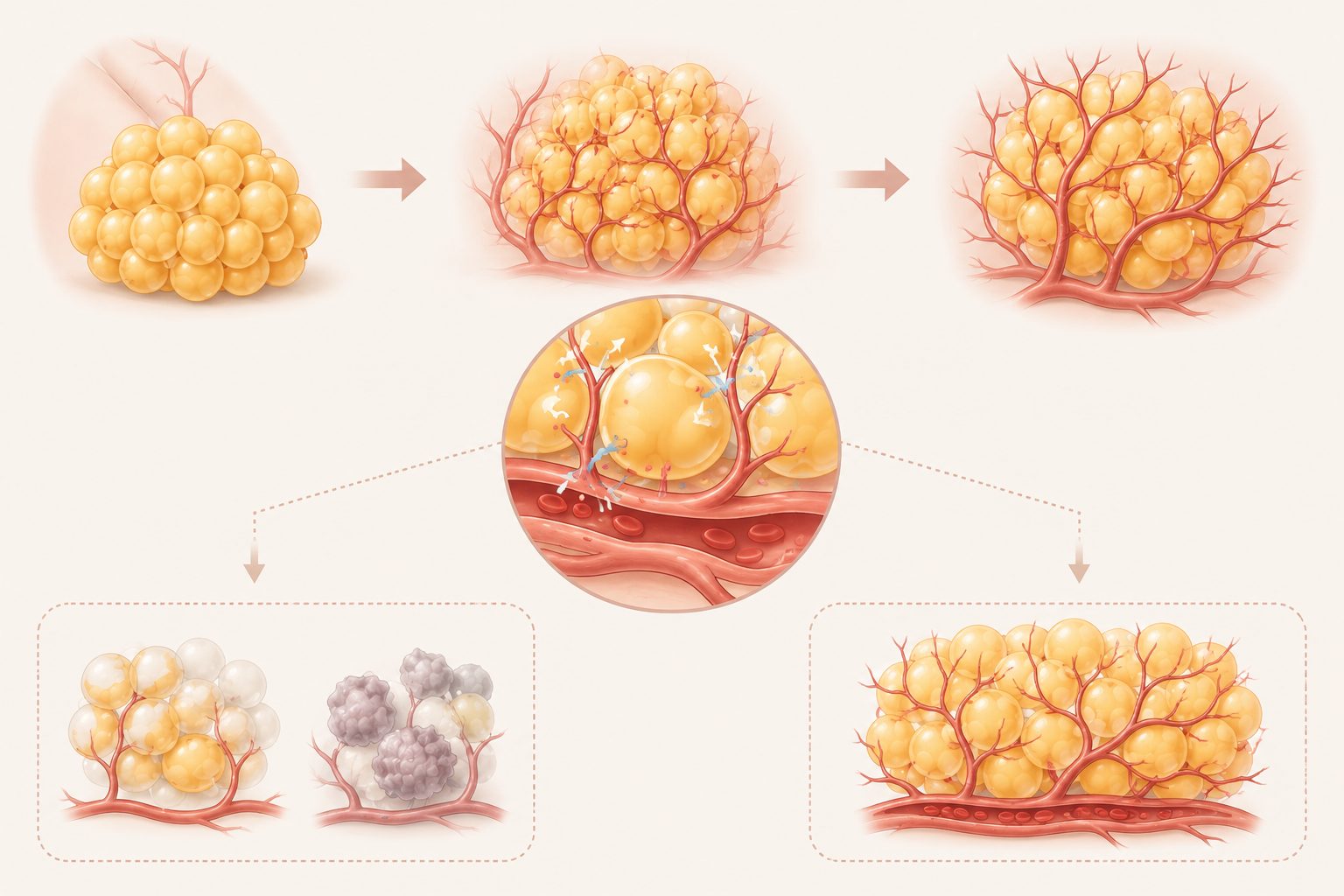
For transplanted fat cells to survive, new blood vessels must extend from surrounding tissues to supply nutrients and oxygen. Fat that fails to establish this blood flow connection may be absorbed or harden over time, which can make it difficult to maintain volume. In other words, Graft survival rateIn the end How much fat met new blood vessels and survivedIt is an indicator representing.
Why do hospitals report different figures for graft survival rates?

There is one point to address here. Graft survival rateIt may be calculated differently depending on the measurement time, measurement method (whether imaging measurement such as ultrasound or MRI is performed), and the number of cases used as a standard.
So when comparing hospitals, simply Graft survival rate OO%It is important not to look only at the number, but to check the following together.
● Based on the number of cases the figure was calculated
● What the measurement method is (self-observation vs. objective image measurement)
● Whether the data has undergone third-party verification, such as academic papers
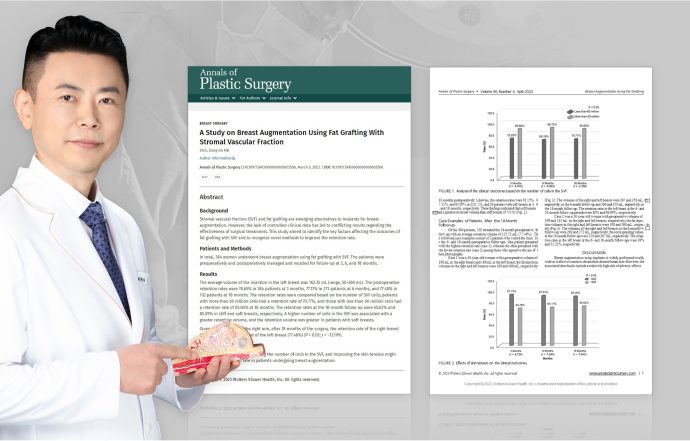
SC301 is Over 9,000 casesCalculated based on Average engraftment rate 77.48%We have published and released this in the SCI-indexed international academic journal *Annals of Plastic Surgery*. (Engraftment rates may vary depending on individual constitution and lifestyle.)
The principle by which SVF helps the engraftment rate

To compensate for these limitations, recently Stem cell (SVF) breast augmentation (breast fat grafting) The method is often mentioned together.
SVF는 Adipose-derived cell componentsThis means that this component contains elements involved in blood vessel formation and recovery around the transplanted fat, and thus the previously explained blood flow connectionIt plays a role in helping to make this happen more smoothly.
SC301 appropriately adds adipose-derived cell components to refined fat in micro-units Even transplantationThis method is used. This approach can reduce the amount of fat absorbed after transplantation and have a positive effect on volume maintenance, and can also help relatively lower the likelihood of the fat clumping or hardening.
Would the results be the same if only SVF were available? — The real variable is the 'preparation process'

However, the important point is, Stem cell (SVF) breast augmentationThe point is that just because you say that, it does not necessarily mean the same result will be obtained.
Another key factor affecting the survival rate is Pre- and Post-Surgery Management Processis. Because both stem cells and fat cells are obtained from the patient's own fat. condition of fat The itself is very important. quality of fatIf this is not good, the condition of the cells that can be secured changes, and it inevitably affects the engraftment process after transplantation.
Pre-care — The step of building fat 'quality'
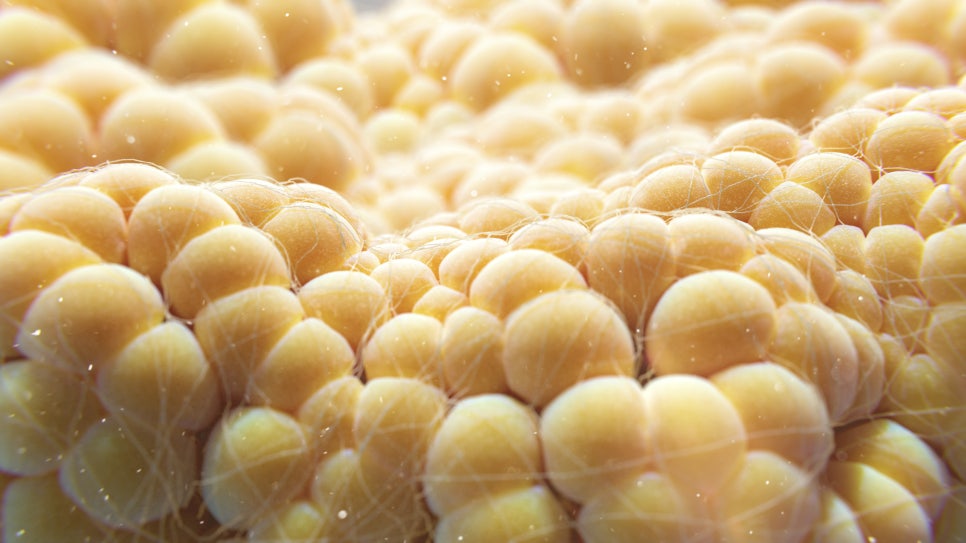
SC301 is not a method of blindly increasing weight, but rather one that considers the condition of fat cells Personalized diet managementWe focus on. Also, preparing the internal chest space Breast careIt helps the transplanted fat spread evenly and settle comfortably.
Post-operative Care — Steps to Support the Recovery Environment
After surgery High-pressure oxygen management Through the back, we support the rapid connection of fat and adipose-derived cell components with blood vessels. Subsequently, personalized dietary and lifestyle management continues, and we monitor the entire recovery process together.
If we compare the variables affecting engraftment by method
I am presenting a new summary: I have compiled a table comparing the variables affecting engraftment in autologous fat grafting and stem cell (SVF) breast augmentation.
Both methods Quality of fatand Pre- and post-managementIt is important to note that [variable] is a common variable that determines the outcome. You can understand SVF as a concept that adds elements supporting angiogenesis to this.
Try asking these questions during the consultation.
● Based on the number of cases and the measurement method is the presented engraftment rate figure based?
● How do you check my body fat condition in advance, and what preparation process do you go through if necessary?
● Is there a management program (such as hyperbaric oxygen) to aid in blood vessel formation after surgery?
● Can I check data regarding graft survival rates through research papers, etc.?
Frequently Asked Questions
Q. If there is a hospital with a 100% graft survival rate, can I trust it?
A. Due to the principles of engraftment, it is realistically difficult for all transplanted fat to remain intact. If extremely high figures are presented, we recommend verifying the measurement method and supporting data together.
Q. If I have a thin build and lack fat, does the graft survival rate decrease?
A. The amount of fat that can be harvested and the survival rate are separate issues. However, since the quality and condition of the fat can affect survival, it is important to verify whether preliminary inspections and preparation processes are conducted if necessary.
Q. By how much does the engraftment rate increase if SVF is added?
A. It is difficult to make a definitive generalization regarding the specific extent of increase, as it can vary depending on the individual's fat condition, treatment site, and aftercare process. It is more accurate to understand SVF as playing an auxiliary role in aiding blood vessel formation.
Introduction of the surgeon
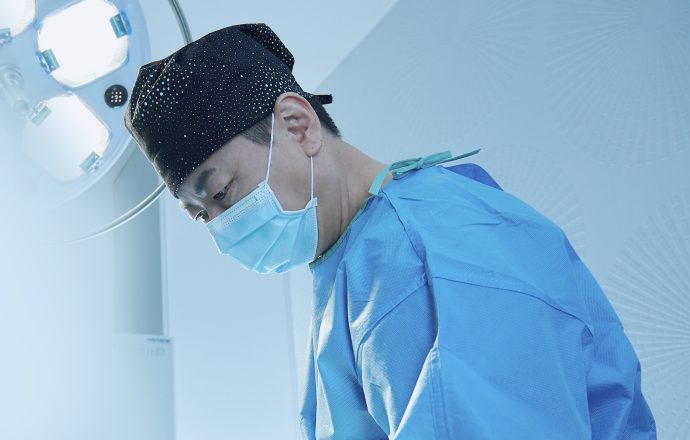
This article has established the field of stem cell (SVF) breast augmentation. Chief Director Shin Dong-jin (19 years of experience, over 9,000 procedures performed)It was written based on clinical standards. He served as the President of the Korean Society of Stem Cell Plastic Surgery for 10 years, and Up to 2–3 cases per dayWe maintain the principle of performing only surgeries.
Managing the survival rate as a 'system'
SC301 does not view SVF Cheongdam breast augmentation as just a simple procedure. Clinical data accumulated over many yearsBased on this, we have established a management system designed as a single flow from preliminary preparation to surgery and post-operative care.
This process and approach is International academic journal (SCI)It is also introduced, and the factors affecting the graft survival rate are continuously Analysis and SupplementationWe are doing.
It is okay to take your time looking into it before making a decision.
청담 breast augmentationIt is by no means a choice that should be decided in a hurry.
✔️ Whether you have verified the basis for the presented engraftment rate (number of cases, measurement method)
✔️ Is there a preliminary preparation process tailored to your fat condition?
✔️ Is there a management program to help with blood vessel formation after surgery?
✔️ Whether the relevant materials can be objectively verified
It is not too late to make a decision after looking into these four points a little more, comparing them, and fully understanding them.
Take your time browsing through other articles in the SC301 Seongchelin Guide and organize the questions you had one by one. As your understanding deepens, anxiety about your choices will decrease, and your satisfaction will naturally increase.
Graft survival rates and treatment results may vary depending on individual constitution, fat condition, and lifestyle. The information above is for reference only, so please confirm an accurate diagnosis through an in-person consultation.
This has been the SC301 Seongchelin Guide.


Frequently Asked Questions
What is the fat graft survival rate?
For transplanted fat cells to survive, new blood vessels must extend from surrounding tissues to supply nutrients and oxygen. The engraftment rate is ultimately an indicator of how much fat meets new blood vessels and survives.
Why isn't all the transplanted fat left?
Fat that is not sufficiently connected to the bloodstream may be absorbed or harden over time, which can make it difficult to maintain volume.
Why do graft survival rates vary from hospital to hospital?
The engraftment rate can be calculated differently depending on the measurement time, the measurement method (whether imaging such as ultrasound or MRI is used), and the number of cases used as a standard. It is important to verify how many cases the figure is based on, whether the measurement method is self-observation or objective imaging measurement, and whether the data has undergone third-party verification, such as through academic papers. SC301 Clinic publishes an average engraftment rate of 77.48%, calculated based on approximately 9,000 cases, in the SCI-indexed international journal *Annals of Plastic Surgery*.
What role does SVF play in engraftment?
SVF stands for adipose-derived cell component. This component contains elements involved in the formation and recovery of blood vessels around transplanted fat, playing a role in facilitating smoother blood flow connections.
If there is a hospital with a 100% graft survival rate, can I trust it?
Due to the principles of engraftment, it is realistically difficult for all transplanted fat to remain intact. If extremely high figures are presented, we recommend verifying the measurement method and supporting data together.
If I have a thin build and lack fat, does the graft survival rate decrease?
The amount of fat that can be harvested and the survival rate are separate issues. However, since the quality and condition of the fat can affect survival, it is important to verify whether preliminary inspections and preparation processes are conducted if necessary.
By how much does the engraftment rate increase if SVF is added?
It is difficult to make a definitive generalization regarding the specific extent of increase, as it can vary depending on the individual's fat condition, treatment site, and aftercare. It is more accurate to understand SVF as playing an auxiliary role in aiding blood vessel formation.
Are the results the same for all stem cell (SVF) breast augmentations?
That is not the case. Another key factor affecting the engraftment rate is the pre- and post-operative management process. Since both stem cells and fat cells are obtained from the patient's own fat, the condition of the fat itself is crucial; if the quality of the fat is poor, the quality of the cells obtained will also differ. Even with the same SVF, the outcome can vary depending on the proficiency in handling the harvesting, purification, and injection processes. Therefore, at SC301 Clinic, Chief Director Shin Dong-jin, who has performed over 9,000 cumulative procedures, oversees the entire process.
What preparations are made before surgery?
Rather than blindly focusing on weight gain, we concentrate on personalized dietary management that considers the condition of fat cells. Additionally, through breast pocket management to prepare the internal space, we help transplanted fat spread evenly and settle comfortably. SC301 Clinic focuses on personalized dietary management that considers the condition of fat cells, rather than simply aiming for weight gain.
How should I ask about the graft survival rate during the consultation?
Ask how the presented engraftment rate is based on the number of cases and measurement methods, how your fat condition is assessed beforehand and what preparations are taken if necessary, whether there is a management program to aid in blood vessel formation after surgery, and whether data related to the engraftment rate can be verified through research papers or other sources.


