



Hello, this is SC301 Seongchelin Guide 😊
If you are considering breast augmentation using your own fat
Graft survival rateThe word,
You've probably heard of it at least once.
Surgery involving the transplantation of only fat without stem cells
Even if it looks okay at first
Over time, fat is absorbed or
Because it can clump together tightly
It is difficult to achieve consistent satisfaction.
In that case, which hospital should I choose?
Can we expect natural results?
Today, we will discuss what makes a difference in the survival rate.
I will summarize the key elements for you.
Breast Fat Grafting: Why Is the Survival Rate Key?

Autologous fat breast augmentation is
Fat is harvested from the abdomen or thighs, etc.
Breast implantation method.
Without implants
You can expect a natural texture and volume.
It is a surgery preferred by many people.
However, the simple fat grafting method has insufficient blood supply.
The survival rate Cases where it remains at 10~20%There is also.
In other words, most of the added fat
Inside the body absorbed or necroticIt means it can be.
As a result, it is difficult to obtain the desired volume,
There may also be situations where additional surgery is required.
Stem Cell (SVF) Fat Grafting: What Makes It Different?
Stem cell (SVF) breast augmentation is
Fat-derived cellular components
Transplanted together with refined fatThis is the method.
Stem cells are Differentiate into vascular endothelial cells
Angiogenesis and tissue regenerationHelp
The transplanted fat receives blood flow
It creates an environment where you can settle in well.
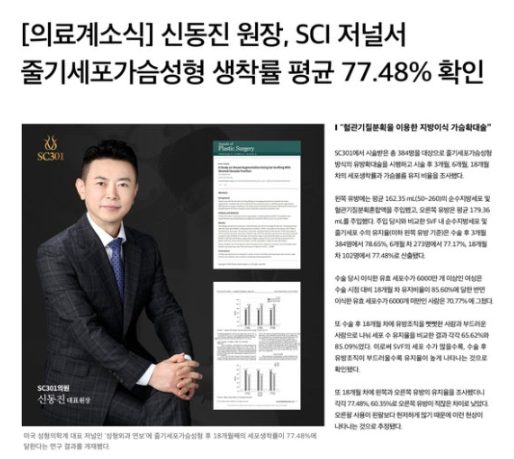
Based on these principles,
SC301 has an average engraftment rate of stem cell (SVF) breast augmentation.
Compared to simple fat grafting It can be nearly three times higherof
It has been reported through an article in an international academic journal.
Stem cells help form stable blood flow
Because it induces fat cells to settle properly,
It can have a positive effect on maintaining volume,
Fat absorption or clumping may also be reduced.
Many people prefer it.
The Importance of 'Preparation' to Increase Graft Survival Rate
However, just because stem cells are used
Good results do not always come out.
Another important factor affecting the survival rate is
as soon as Pre- and Post-Surgery Management.
Stem cells and fat cells are
Because it is extracted from the patient's body fat,
The condition of the fat itself can have a significant impact on the survival rate.
If the quality of the fat is poor
It is difficult to secure enough healthy cells, and
Even during the process of settling in after transplantation
This is because it can have an impact.
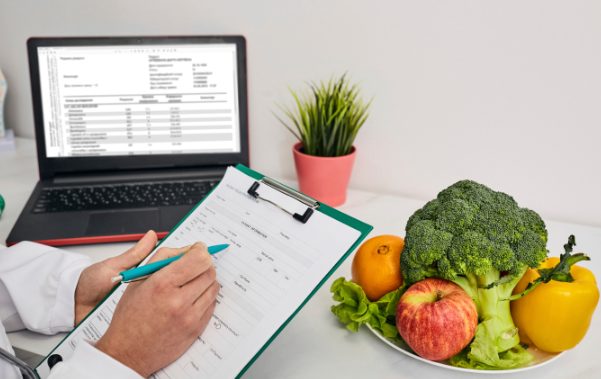
1️⃣ Pre-diet and breast management
In SC301, to secure healthy fat cells
We provide personalized meal plans.
Instead of blindly gaining weight,
Improve the 'quality' of fat cellsI focus on doing it.
Also, preparing the space within the chest Breast careThrough the
The transplanted fat is evenly distributed and
We help you settle in well.

2️⃣ Post-operative Hyperbaric Oxygen and Dietary Care
After surgery Oxygen chamber for 2 weeksThrough the
Stem cells and fat cells
It helps to connect quickly with blood vessels.
after For six months
1:1 Personalized Diet Program을 통해
Supports continuous recovery and maintenance of results.
Data-based graft survival rate management system
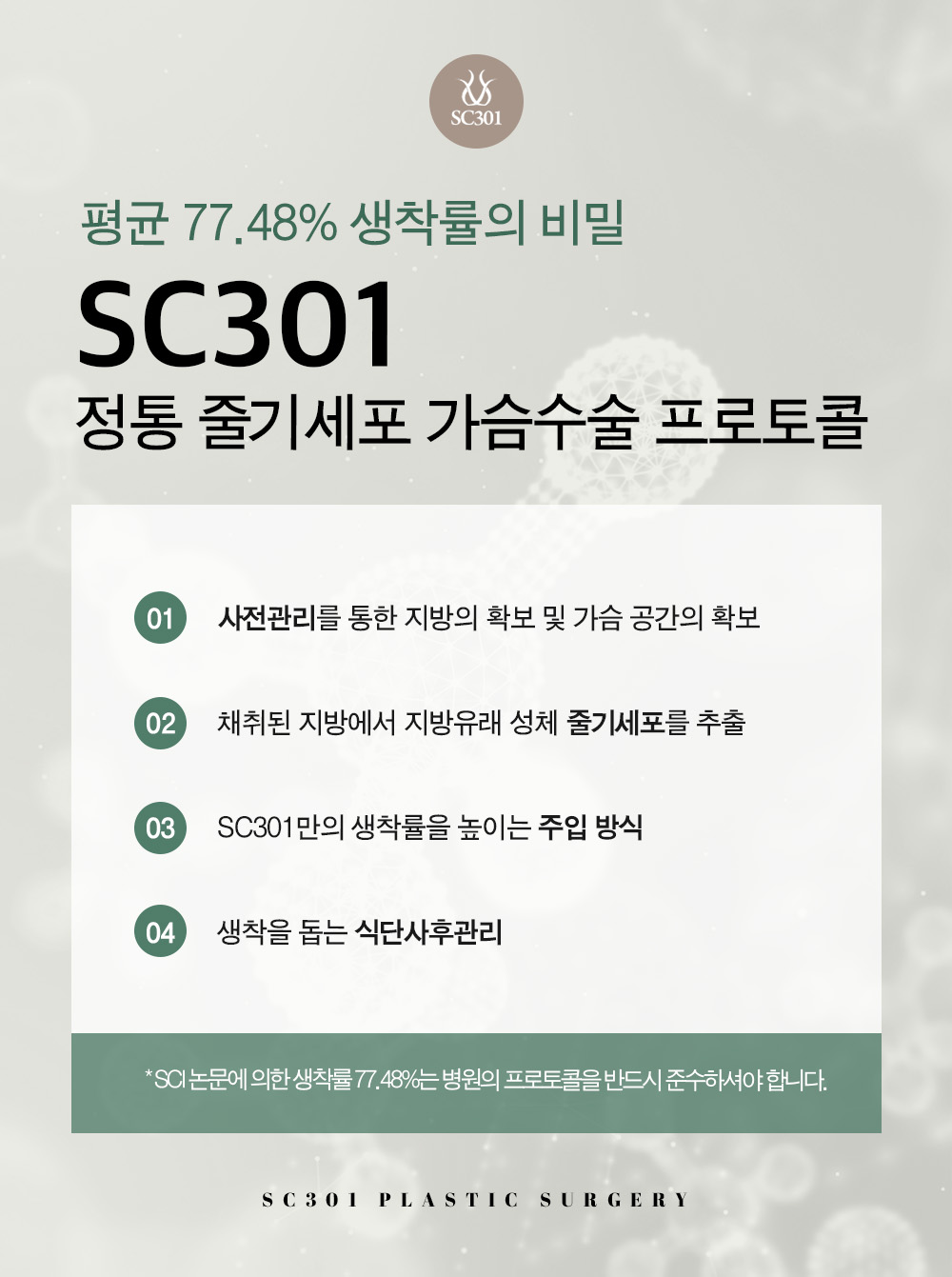
SC301 is stem cell (SVF) breast augmentation
simple Not a 'procedure', but a 'system' Approach.
Over 8000 clinical dataBased on
From diet and procedures to management
We have established a systematic protocol.
In addition, SC301's stem cell (SVF) treatment system
Listed in SCI international academic journalshas been,
Various factors affecting the survival rate
We have scientifically analyzed and improved it.
Stem cell (SVF) breast augmentation is
It is not completed by technical skill alone.
From basic preparation to post-operative recovery
Every process must be precisely designed
Only then can natural and long-lasting results be achieved.
Are you considering breast augmentation?
It is okay if you do not make a decision in a hurry.
Please take your time browsing through other posts on the SC301 blog as well,
Try to resolve your questions one by one.
I fully understand
If you decide carefully
It will be a choice that will keep you satisfied for longer.
#SC301 #SC301Clinic #SC301BreastAugmentation #SC301StemCells #SC301BreastFatGrafting #StemCellSVFBreastAugmentationSC301 #AutologousFatBreastAugmentation #SC301EngraftmentRate #StemCellSVFBreastAugmentation #StemCellSVFFatGrafting #FatGraftingBreastAugmentation #StemCellSVFFatGraftingBreastAugmentation #SC301StemCellSVFBreastAugmentation #SC301BreastAugmentationReviews #StemCellSVFBreastSurgery #BreastFatGrafting #NaturalBreastAugmentation #BreastAugmentationConcerns #BreastAugmentationInfo #HowToIncreaseEngraftmentRate #HyperbaricOxygenManagement #SC301ProcedureReviews #StemCellSVFPlasticSurgery #SC301BreastAugmentationCost #FemalePlasticSurgery #SC301ClinicReviews #AntiAgingClinic #SC301StemCellSVFPlasticSurgery #SC301PlasticSurgeryReviews #NaturalBreastSurgery

Frequently Asked Questions
Breast Fat Grafting: Why Is the Survival Rate Key?
Autologous fat breast augmentation is a method in which fat is harvested from areas such as the abdomen or thighs and transplanted into the breasts. It is a surgery preferred by many because it allows for a natural feel and volume without implants. However, with simple fat grafting methods, the survival rate of the transplanted fat can be as low as 10–20% due to insufficient blood supply. In other words, most of the injected fat
Stem Cell (SVF) Fat Grafting: What Makes It Different?
Stem cell (SVF) breast augmentation is a method of transplanting fat-derived cellular components along with purified fat. Stem cells differentiate into vascular endothelial cells, promoting angiogenesis and tissue regeneration to create an environment where the transplanted fat can receive blood flow and successfully take root. Based on this principle, SC301 [represents] the average engraftment rate of stem cell (SVF) breast augmentation.


