


BreastfeedingMany people say that after finishing, the feeling of relief is short-lived, and they feel a sense of unfamiliarity every time they stand in front of a mirror.
I definitely lost weight again, but my breasts are still sagging.
"lactation I thought it would naturally return to normal once it was over, but it remains the same even after time has passed.
I hear this kind of story very often. Today, I will examine the principles behind why such changes occur, explain when is the best time to look into solutions, and outline the available options.
Why do breasts stay the same even after breastfeeding ends?
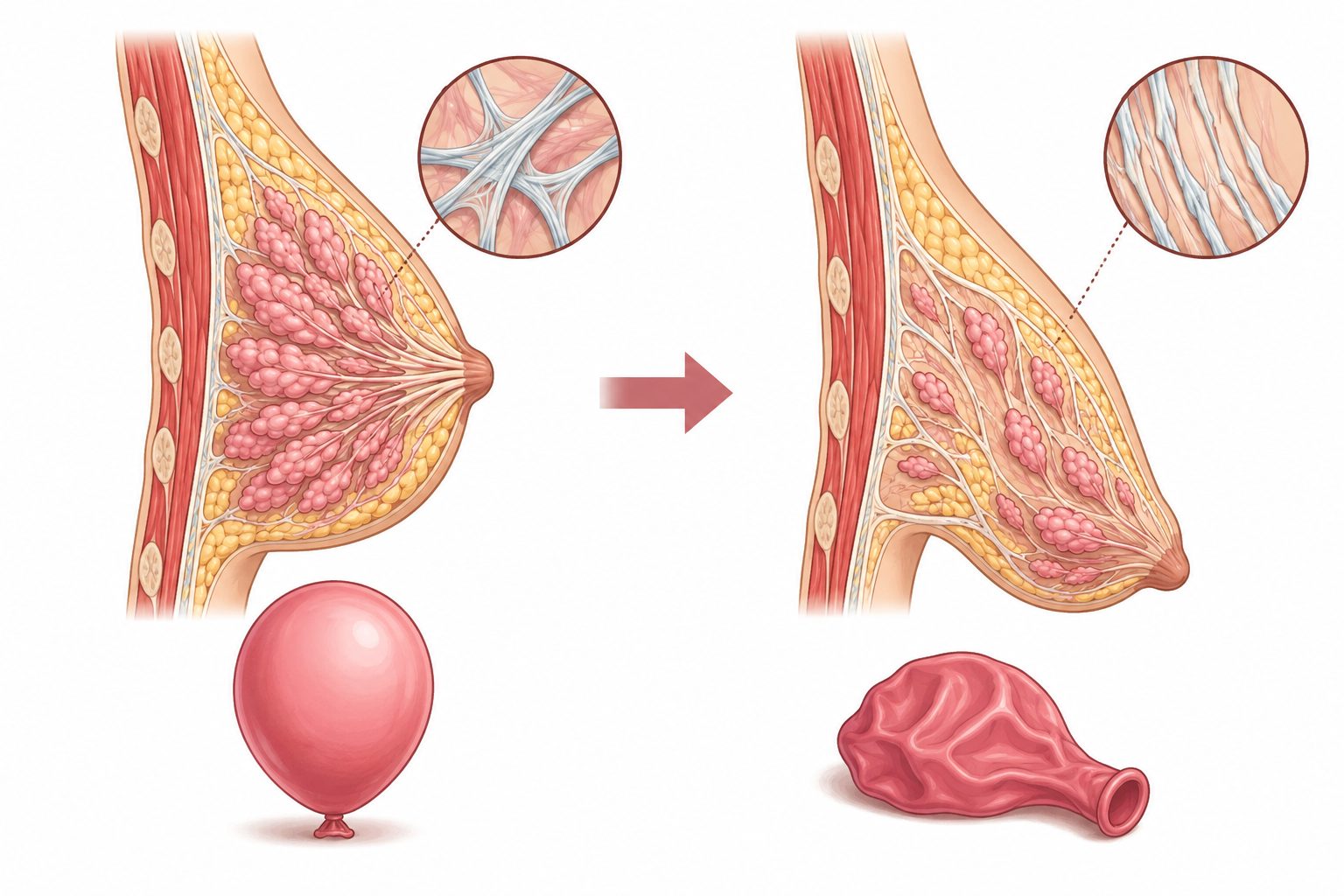
During childbirth and breastfeeding mammary tissueAs this develops, the chest Skin tissueand 쿠퍼인대It also increases together.
Stem cell (SVF) breast augmentation
The problem is that while the mammary glands shrink back down after breastfeeding ends, the stretched skin and ligaments do not return to their original state.
To put it simply, it is similar to how the surface of a balloon becomes wrinkled after being blown out. The contents inside (mammary gland tissue) have shrunk, but the outer surface (skin and ligaments) remains in a stretched state. Therefore... The breasts are sagging downwards Changes resulting in a loss of elasticity will occur.
When would be a good time to consider this after breastfeeding has ended?
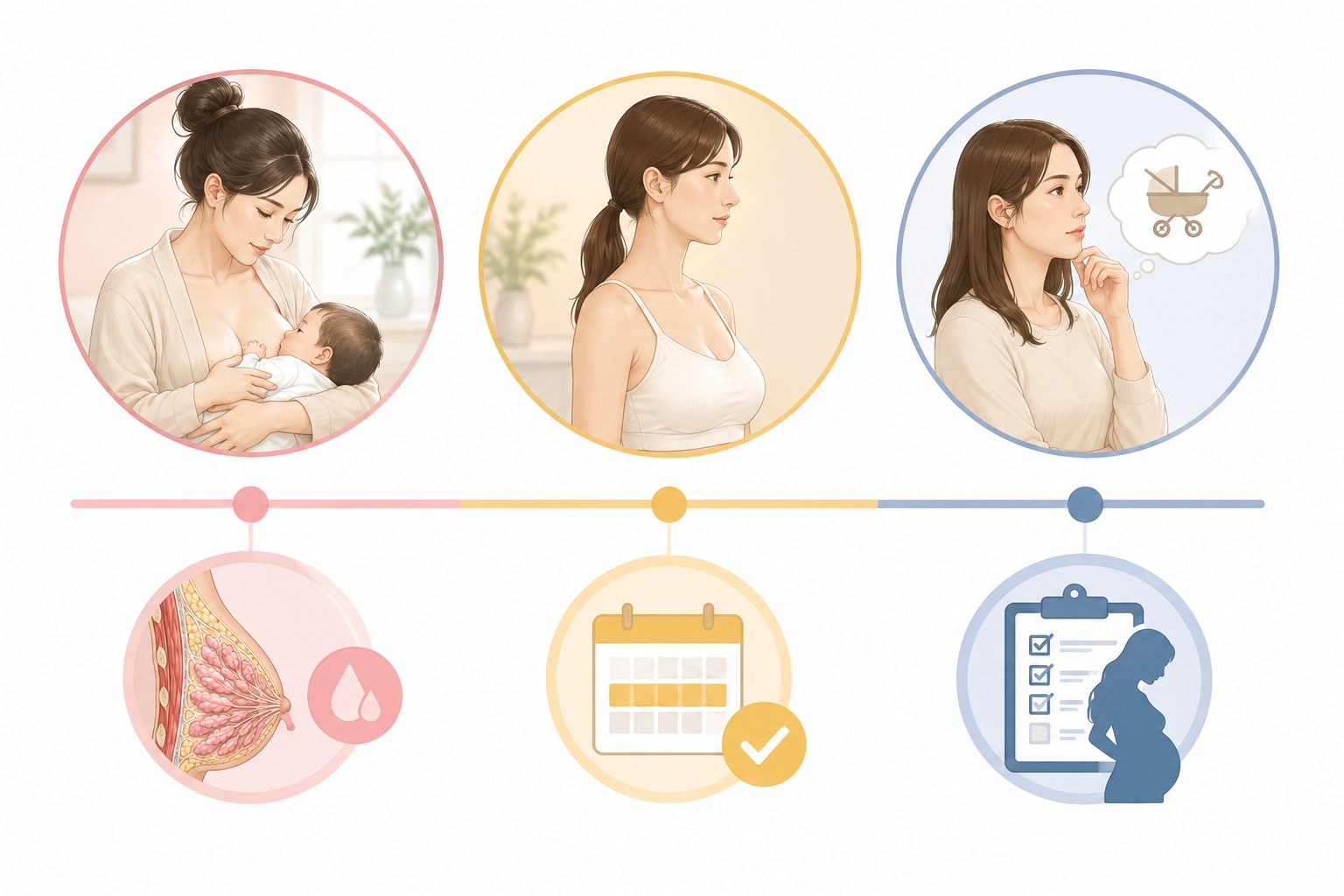
One of the frequently asked questions in counseling is "Can I find out right now, or should I wait a little longer?".
The general flow you can refer to is as follows.
● Immediately after breastfeeding endsDue to hormonal changes and the fact that mammary gland tissue has not yet fully stabilized, it may be difficult to accurately assess the condition of the tissue.
● 3 to 6 months after breastfeeding endsIt is referred to as the time when the mammary gland tissue stabilizes to some extent, allowing for a more accurate assessment of the actual remaining sagging and volume.
● If you are planning an additional pregnancyIf you plan to become pregnant or breastfeed in the future, tissue changes may occur again, so it is recommended to share your plans during the consultation in advance.
Of course, this is a general guideline, and the exact timing should be determined after having your recovery status diagnosed directly.
Stem cell (SVF) breast augmentation
Is only the merchant class necessary, or is volume also needed?
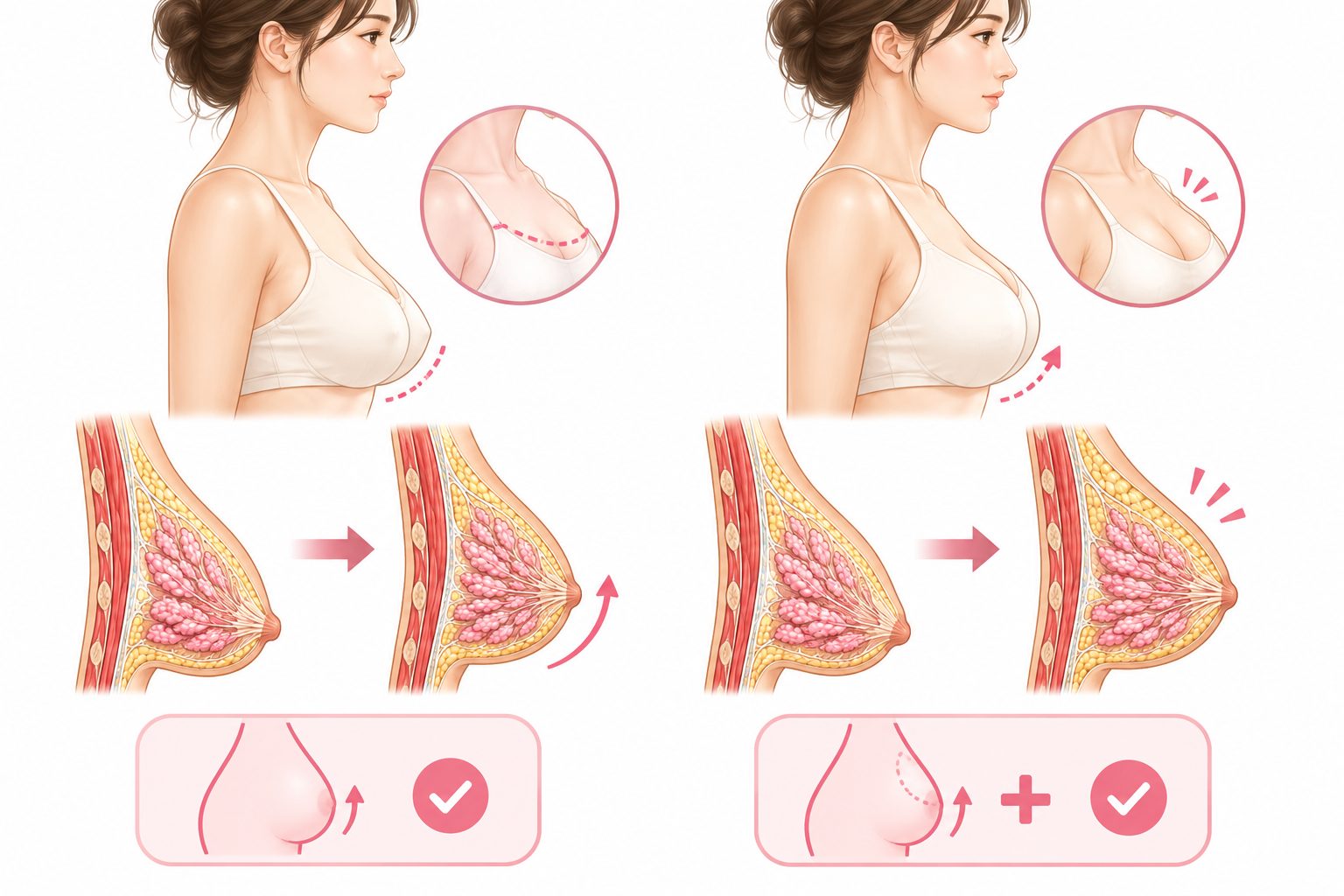
In such cases Breast lift surgeryThrough this, you can tighten sagging skin and restore its shape. Also Degree of saggingDepending on the style you want, additional volume enhancement may be necessary.
To briefly introduce a standard you can use to gauge it yourself,
● There is sagging, but the overall volume itself is not lacking → A lifting-centered approach may be considered first.
● If sagging is accompanied by a lack of upper chest volume → Consider both a facelift and volume enhancement.
While an accurate judgment is made through direct diagnosis, the consultation becomes much easier if you determine which side you are closer to beforehand.
Implants or fat grafting, which is right for me?
Aside from breast lift surgery methods, representative examples implant surgeryand Fat grafting method이 있습니다.
Characteristics of implants It is characterized by a fixed shape, making it difficult to delicately fill in only the desired areas. Also, external substancesBecause this is included Old model Caution is required as there is a possibility of the same side effects.
Characteristics of fat grafting Using your own body's fat cells is highly advantageous for creating a natural feel and soft lines. It demonstrates even greater benefits when partial supplementation is needed, such as in cases of insufficient upper chest volume. Above all Custom designThe biggest appeal is that this is possible.
However, the survival rate of simple fat grafting is 20 ~ 30% There is also a disadvantage that the fat may not settle well or may disappear due to the low degree.
How does SVF address this problem?
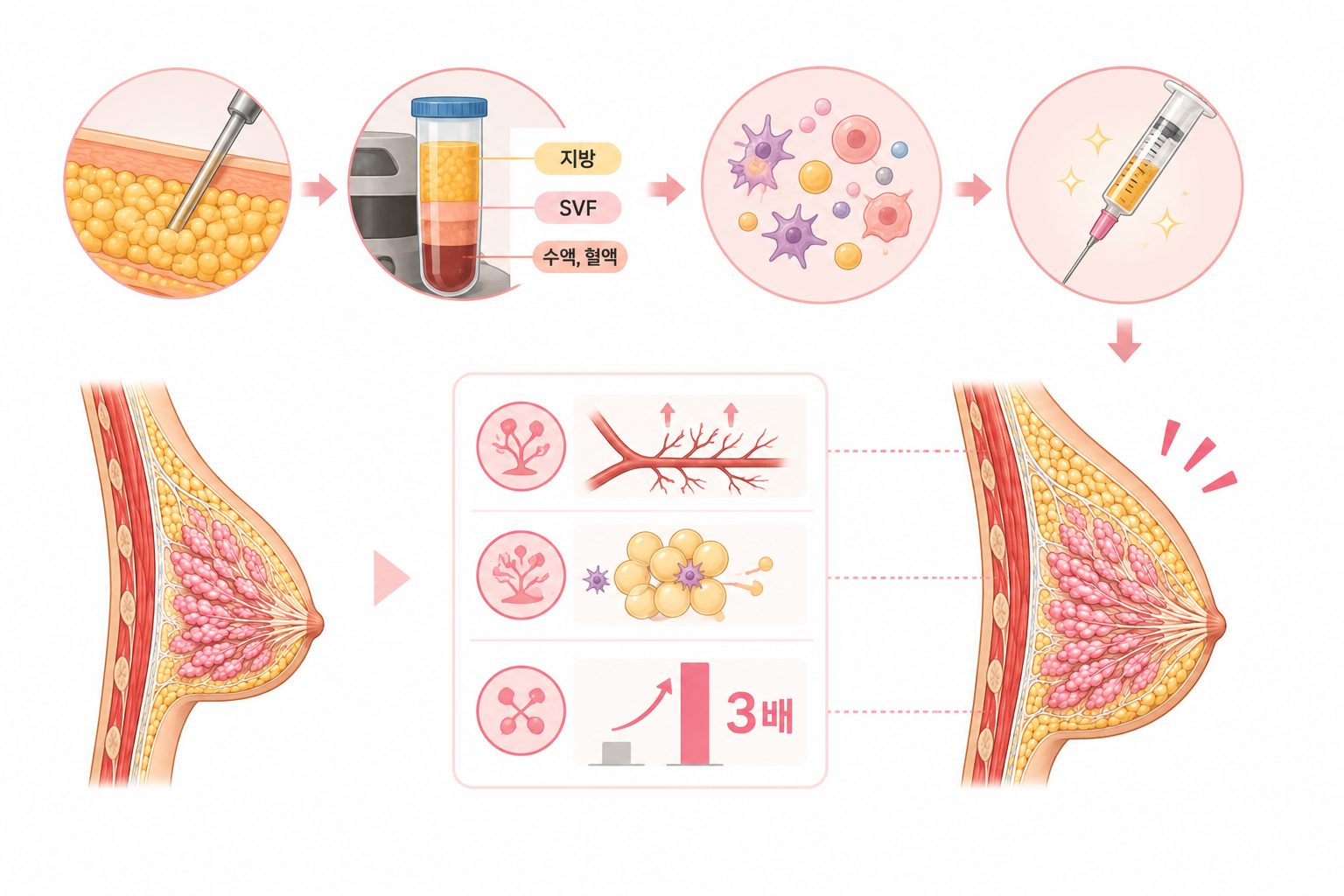
here Graft survival rate issueWhat solves it is SVF This is a breast lift surgery.
It is a method of injecting adipose-derived cell components (SVF) extracted from fat together with high-purity fat, and this SVF component is
● Blood vessel formationpromote
● Helping fat cells survive well in new locations
● Compared to simple fat grafting, the engraftment rate About 3 times It raises it close.
This reduces the risk of necrosis and allows the results to be maintained more stably.
SC301 is based on over 9,000 real-world data points Average engraftment rate 77.48%We have published and released these results in the SCI-indexed international academic journal *Annals of Plastic Surgery*. (The graft survival rate may vary depending on individual constitution and lifestyle.)
Things that are good to organize in advance before a consultation
● The period between the end of breastfeeding and the present.
● Whether to pursue further pregnancy and breastfeeding plans
● Whether the problem you feel is mainly sagging or includes a lack of volume
● History of usual weight changes
Frequently Asked Questions
Q. Is it okay to receive counseling immediately after I stop breastfeeding?
A. While consultation and diagnosis are available at any time, accurately assessing the condition may be difficult before the tissue has fully stabilized, so the timing of surgery is often discussed separately.
Q. Can I have the surgery now even if I plan to get pregnant in the future?
A. It is possible, but it is advisable to consider in advance that tissue changes may occur again due to future pregnancy and breastfeeding, and to share your plans during the consultation.
Q. Is fat grafting alone really insufficient?
A. Simple fat grafting has a low survival rate, so repeated procedures are sometimes necessary. By utilizing SVF in conjunction, we can approach the issue by improving the stability of engraftment.
Introduction of the surgeon

This article has established the field of stem cell (SVF) breast augmentation. Chief Director Shin Dong-jin (19 years of experience, over 9,000 procedures performed)It was written based on clinical standards. He served as the President of the Korean Society of Stem Cell Plastic Surgery for 10 years, and Up to 2–3 cases per dayWe maintain the principle of performing only surgeries.
to finish
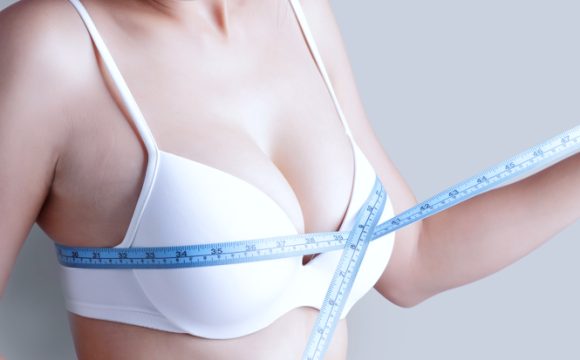
Breast sagging can occur due to various reasons, including childbirth, dieting, body shape, genetic factors, and lifestyle habits. However, there is no need to ignore your current concerns.
By checking the exact cause and current condition with SC301, you can fully regain a natural and elastic line.
If you are concerned about changes in your breasts after childbirth, we recommend that you calmly determine the right timing and method for your body through a professional consultation at SC301.
Procedure results and engraftment rates may vary depending on individual constitution, tissue condition, and lifestyle. The information above is for reference only, so please confirm an accurate diagnosis through an in-person consultation.
This has been the Seongchelin Guide.

Frequently Asked Questions
Why do breasts stay the same even after breastfeeding ends?
During childbirth and breastfeeding, as mammary gland tissue develops, the skin tissue and Cooper's ligaments of the breast also stretch. The problem with stem cell (SVF) breast augmentation is that while the mammary glands shrink back after breastfeeding ends, the stretched skin and ligaments do not return to their original state. To use a simple analogy, it is similar to how the surface of a balloon becomes wrinkled after being inflated and then released. The contents inside (mammary gland tissue) have shrunk, but the outer surface (skin and ligaments) remains in a stretched state. Consequently, changes occur where the breasts sag and lose elasticity.
When would be a good time to consider this after breastfeeding has ended?
One of the frequently asked questions during consultations is, "Can I find out right away, or should I wait a little longer?" Here is the general flow to consider: ● Immediately after breastfeeding ends: Since hormonal changes and mammary gland tissue have not yet fully stabilized, it may be difficult to accurately assess the tissue condition.
Is only the merchant class necessary, or is volume also needed?
In such cases, a breast lift can tighten the sagging skin and correct the shape. Additionally, depending on the degree of sagging or the desired style, further volume enhancement may be necessary. To provide a simple guideline you can use to assess this yourself: ● There is sagging, but the overall volume is sufficient → A lifting-focused approach may be considered first.
Implants or fat grafting, which is right for me?
Aside from breast lift surgery, the representative methods include breast implants and fat grafting. Breast implants have a fixed shape, making it difficult to precisely fill only the desired areas. Additionally, caution is required due to the possibility of side effects such as capsular contracture, as foreign materials are introduced. Fat grafting utilizes the body's own fat cells, making it highly advantageous for creating a natural feel and soft lines. It offers significant benefits, particularly when partial supplementation is needed, such as in cases of insufficient upper breast volume. Above all, the greatest appeal lies in the ability to create a customized design.
How does SVF address this problem?
The solution to the issue of engraftment survival rates is the SVF breast lift surgery. This method involves injecting fat-derived cell components (SVF) extracted from fat along with high-purity fat. These SVF components promote blood vessel formation, help fat cells survive in new locations, and increase the engraftment rate by nearly three times compared to simple fat grafting.


