



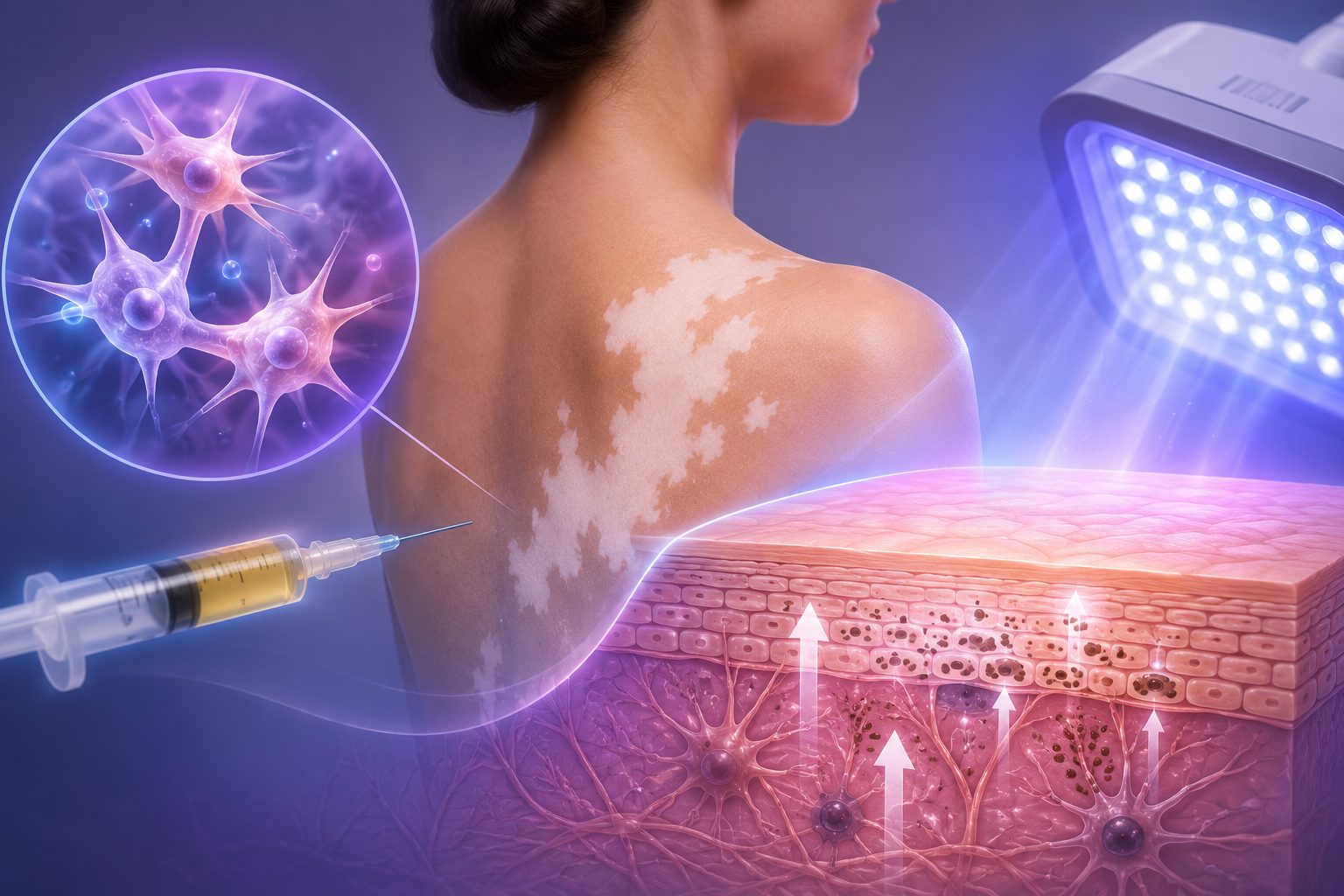
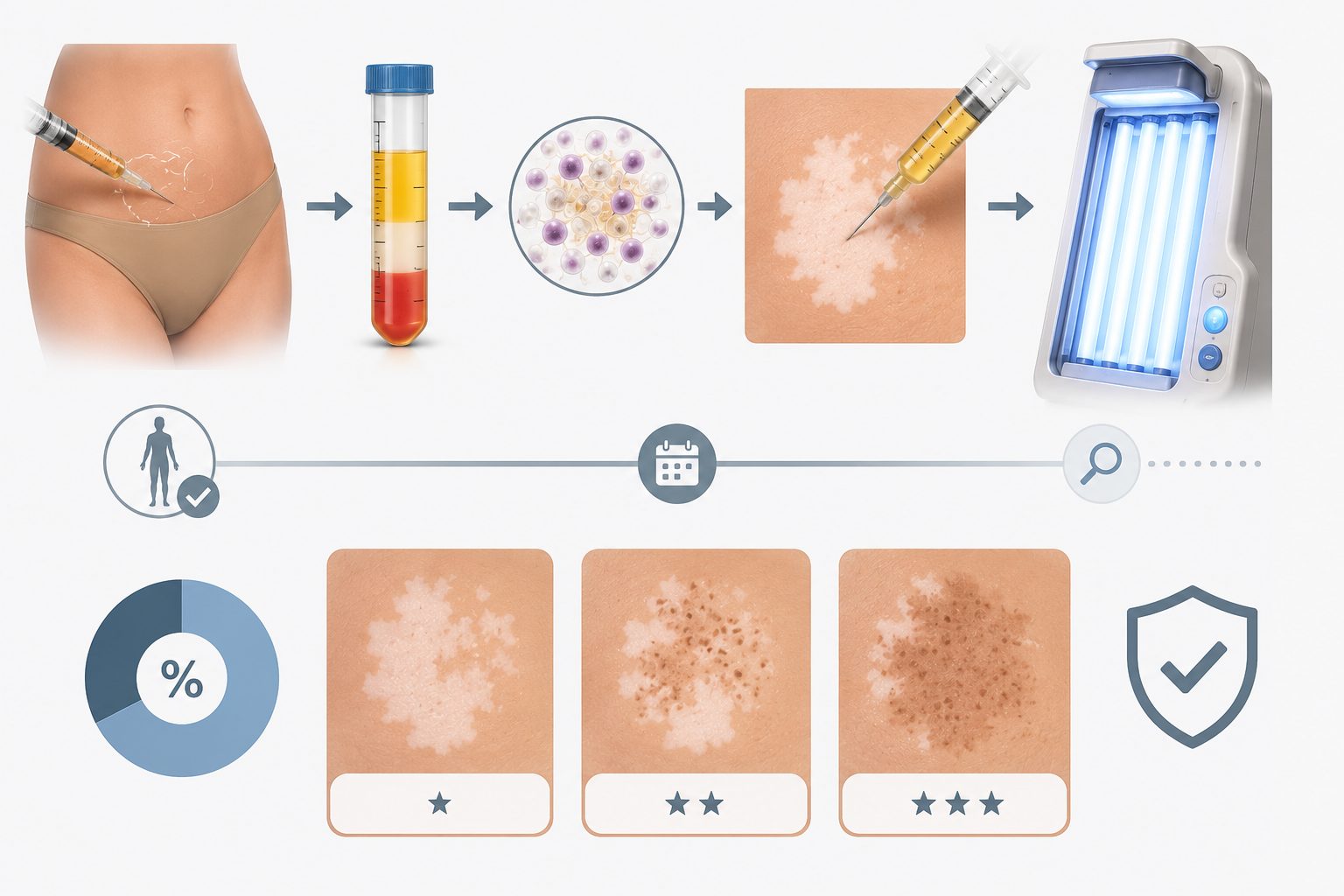
A research team at Tanta University in Egypt injected adipose stem cells into 15 patients with stable vitiligo who did not respond to conventional treatment, and then combined this with phototherapy to check the degree of repigmentation.
SC301 Clinic · Stem Cell Research Series · Based on a Single Paper · Adipose-derived Stem Cell (ADSC) Injection + NB-UVB Phototherapy
Original paper information:
Fahmy DH, Elfar NN, Shaker ESE, Ahmed AY, Mostafa WA, Ibrahim ZA.
“Adipose Derived Stem Cells in the Treatment of Vitiligo”
Journal of Advances in Medicine and Medical Research. 2022;34(23):539-547.
doi: 10.9734/jammr/2022/v34i234890.
Affiliation: Department of Dermatology, Clinical Pathology, and Plastic and Reconstructive Surgery, Faculty of Medicine, Tanta University, Egypt
Finding a New Cell Source for Difficult-to-Treat Vitiligo
VitiligoIt is an acquired disease characterized by the loss of melanocytes, resulting in white spots on the skin, affecting approximately 1–2% of the world's population. Although narrowband ultraviolet B (NB-UVB) phototherapy is widely used as a first-line treatment, There are also quite a few patients who require long-term, repeated exposure and whose response is slow or insufficient.
Adipose-derived stem cells (ADSCs) are known to stimulate the differentiation of surrounding cells by secreting various growth factors. This study ADSCs are injected and NB-UVB is administered concurrently to patients with stable vitiligo who did not show sufficient improvement with conventional treatment.When doing so, we checked whether repigmentation actually occurred.
If adipose stem cells are injected into vitiligo patients who did not respond to conventional treatment and phototherapy is continued, will their color return? An Egyptian research team investigated this over three months on 15 subjects.
Study Design — Single-group prospective clinical study
Reference to the level of evidence
This study Single-arm prospective clinical study without a control groupIn other words, the "ADSC+NB-UVB group" and the "NB-UVB alone group" were not directly compared, but only changes before and after treatment were observed. The results should be interpreted in light of the fact that the level of evidence is lower than that of a randomized controlled trial.
After 3 months — Repigmentation confirmed in more than half

Key Results
Of the 15 people in total The median repigmentation rate is 60%It was. As for the degree of improvement 26.6% responded "Excellent," and 33.3% responded "Good."It showed. 53.3% of patients experienced no side effects at all, and the rest were mild.
1
Median repigmentation 60% — Response even in patients resistant to prior treatment
These patients Cases that did not respond sufficiently to existing treatment (primarily NB-UVB alone)Considering that, a median repigmentation of 60% is a notable figure.
2
Approximately 60% gave an "excellent" or "good" response.
When the degree of improvement is divided into grades Excellent 26.6% + Good 33.3% = Approx. 60%[Name] experienced meaningful improvement. The rest are reported to have had limited responses.
3
More than half experienced no side effects at all.
patient's 53.3% experienced no side effects, andThe remaining patients also experienced only minor side effects, so the overall safety profile was good.
Why do adipose stem cells participate in melanocyte regeneration?
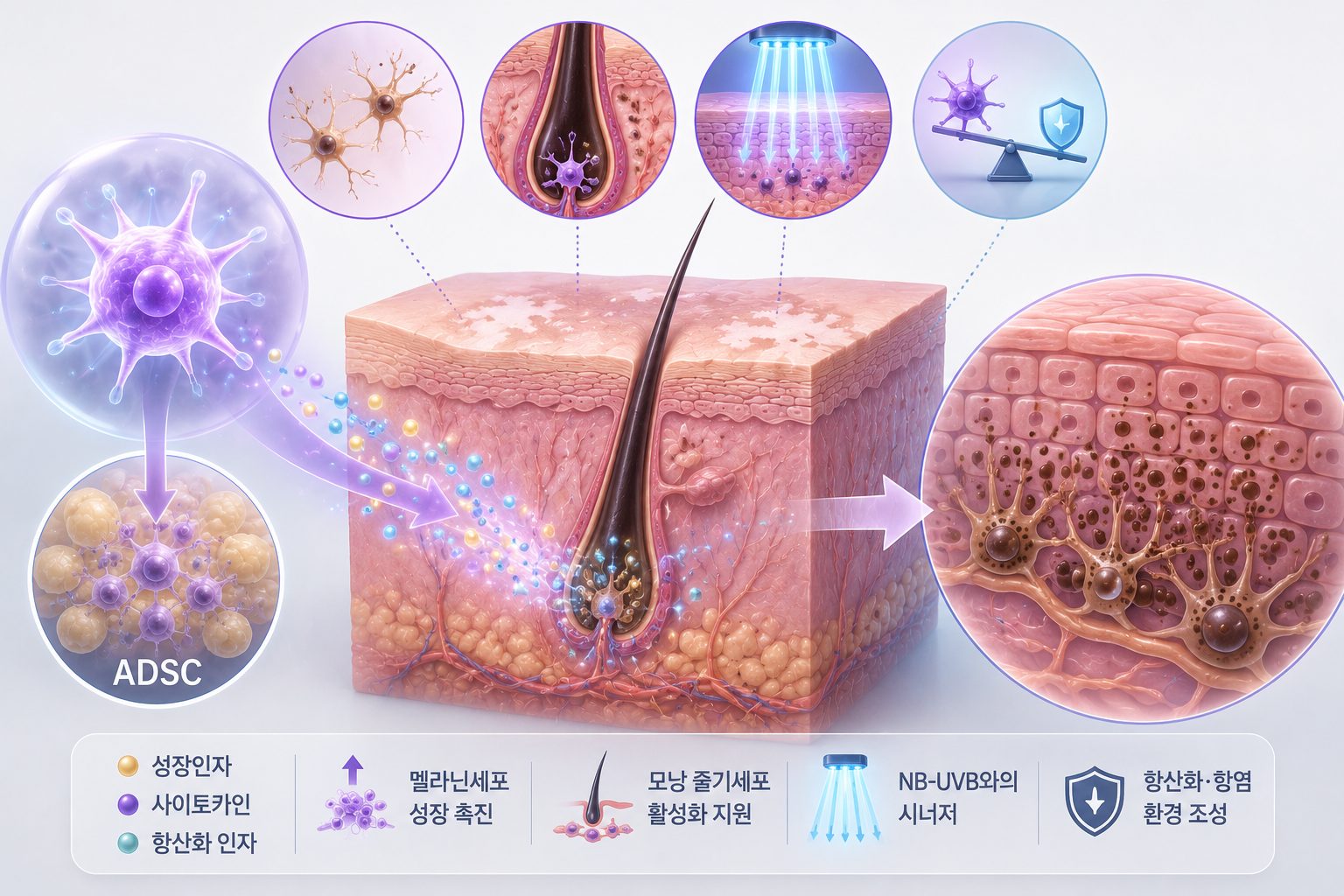
Repigmentation in vitiligo begins as melanocyte stem cells remaining deep within the hair follicles divide and migrate.
ADSC is required for this process The role of supplying growth factorsIt is presumed that...
Promotes melanocyte growth
Growth factors secreted by ADSCs support melanocyte proliferation and differentiation
Support for hair follicle stem cell activation
Estimated to contribute to improving the migration environment of melanocyte precursors beneath the hair follicle.
Synergy with NB-UVB
A method in which ADSCs assist in the migration of melanocytes induced by phototherapy
Creating an antioxidant and anti-inflammatory environment
It is presumed to alleviate the oxidative stress environment involved in the development of vitiligo.
Limitations of this paper — Why you need to know the exact level of evidence
The biggest limitation is A small single-group study of 15 participants without a control groupThe point is that the improvement observed because NB-UVB was used in combination is It is difficult to clearly distinguish whether it is the effect of ADSC or the effect of NB-UVB itself. The follow-up period is also relatively short at three months. A follow-up study with a randomized controlled trial is necessary.
What this study says — Potential new adjuvant options for resistant vitiligo
The significance of this study is The fact that significant repigmentation was observed even in a patient group that did not respond to conventional treatmentThis is noteworthy as it demonstrates the potential of a new adjuvant treatment option, given that vitiligo is a disease with unpredictable treatment responses and significant individual variability.
However, given the clear limitations of being a preliminary study without a control group, There is still insufficient evidence to conclude that ADSC is superior to NB-UVB or is essential....Verification through a randomized controlled trial remains as the next step.
The conclusion reached by the paper
In patients with stable vitiligo who do not respond to conventional treatment, Combined treatment with ADSC injections and NB-UVB resulted in a median 60% repigmentation after 3 months.It led to, and about 60% showed an excellent to good response. Side effects were generally mild.
The research team concluded that ADSCs suggest the potential to become a new alternative for the treatment of vitiligo, and Further verification through randomized studies with a control group is necessary.He stated that
Stories from SC301 Clinic

Vitiligo is a disease where treatment response is difficult to predict and the course varies significantly from patient to patient. This study presents initial evidence that adipose stem cells can serve as an auxiliary alternative even for patients who have not responded sufficiently to conventional treatments.
However, as this is a preliminary study without a control group, SC301 Clinic accurately informs you of the limitations of this level of evidence. Providing information without exaggerationI will continue.


Frequently Asked Questions
Why do adipose stem cells participate in melanocyte regeneration?
Repigmentation in vitiligo begins with the division and migration of melanocyte stem cells remaining deep within the hair follicles. ADSCs are presumed to play a role in supplying the growth factors necessary for this process. The growth factors secreted by ADSCs promote melanocyte growth, supporting melanocyte proliferation and differentiation, and support the activation of hair follicle stem cells.


