


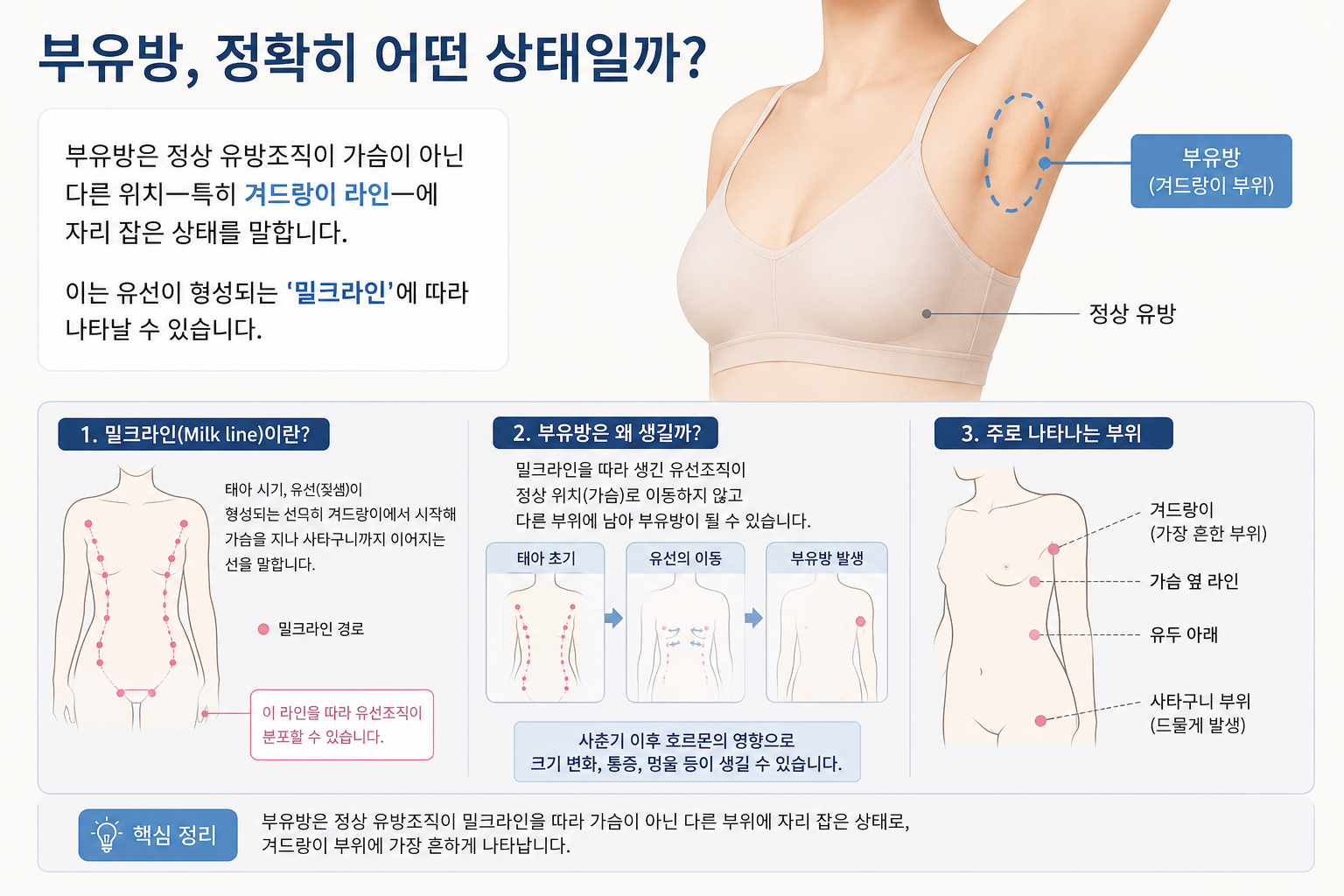
Accessory breasts are a phenomenon in which mammary gland tissue remains in areas such as the armpits along the milk line formed during fetal development. Depending on their composition, they are classified into fat-centered and mammary gland-associated types. When mammary gland tissue is present, precise excision considering blood vessels, lymph, and nerves is required, which differs from the approach of simple liposuction. If the tissue is not sufficiently delineated and removed during the initial surgery, it can lead to recurrence or revision surgery, making accurate diagnosis by experienced medical professionals crucial. If necessary, a method combining accessory breast removal with breast line improvement (stem cell (SVF) breast augmentation) is also considered.
What is a supernumerary breast?
Accessory breasts refer to a condition where normal breast tissue is located in a position other than the chest—particularly along the armpit line. Although they may appear as simple fat on the surface, the approach differs because they may actually contain glandular tissue.
What is a Milkline?
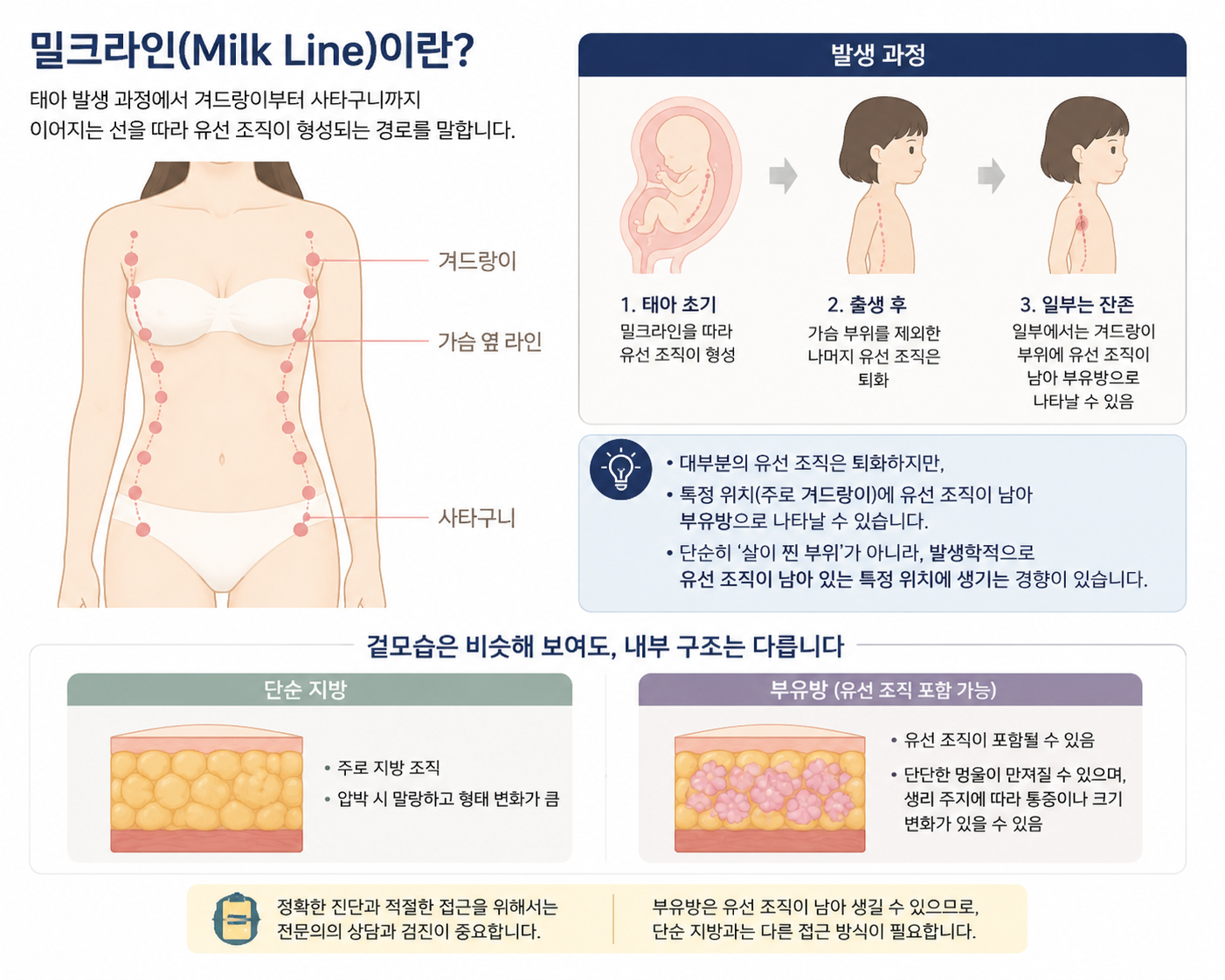
The milk line refers to the pathway along which mammary gland tissue forms during fetal development, extending from the armpit to the groin. In most cases, the traces of mammary glands degenerate in areas other than the chest, but in some instances, mammary gland tissue remains in the armpit area and may appear as an accessory breast.
For this reason, accessory breasts tend to develop not simply in areas where fat has accumulated, but in specific locations where mammary gland tissue remains embryologically.
Distinction between local and streamlined types
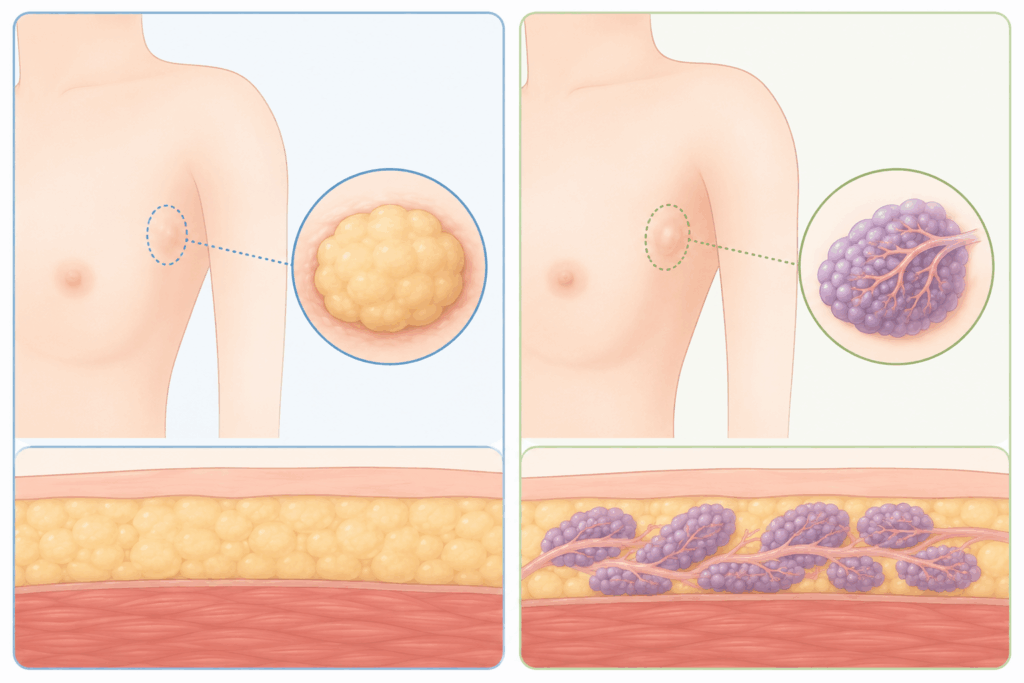
Accessory breasts are often divided into two main types depending on their composition.
| type | Characteristic |
|---|---|
| regionally centered | It is relatively soft upon palpation and tends to have minimal changes according to the menstrual cycle. |
| Type accompanied by mammary tissue | A hard lump is felt upon palpation, and it is often accompanied by swelling or pain before and after menstruation. |
This is a general trend, and since accurate differentiation is sometimes difficult through palpation alone, confirmation through imaging tests such as ultrasound is necessary.
Surgical methods based on tissue composition
Treatment methods vary depending on the composition of the accessory breast.
- If the problem is fat-centered → resolved through liposuction.
- When mammary gland tissue is present → Apply both suction and incision
Breast tissue is intertwined with blood vessels, lymph, and nerves, so if not handled delicately, it can recur or cause inflammation due to unnecessary tissue damage. The key to accessory breast surgery lies in accurately identifying and safely removing the tissue.
SC301 takes an approach that minimizes scarring by using a 2-3mm micro-cannula and alleviates the burden of the recovery process through oxygen chamber management.
Why the initial surgery plan is important
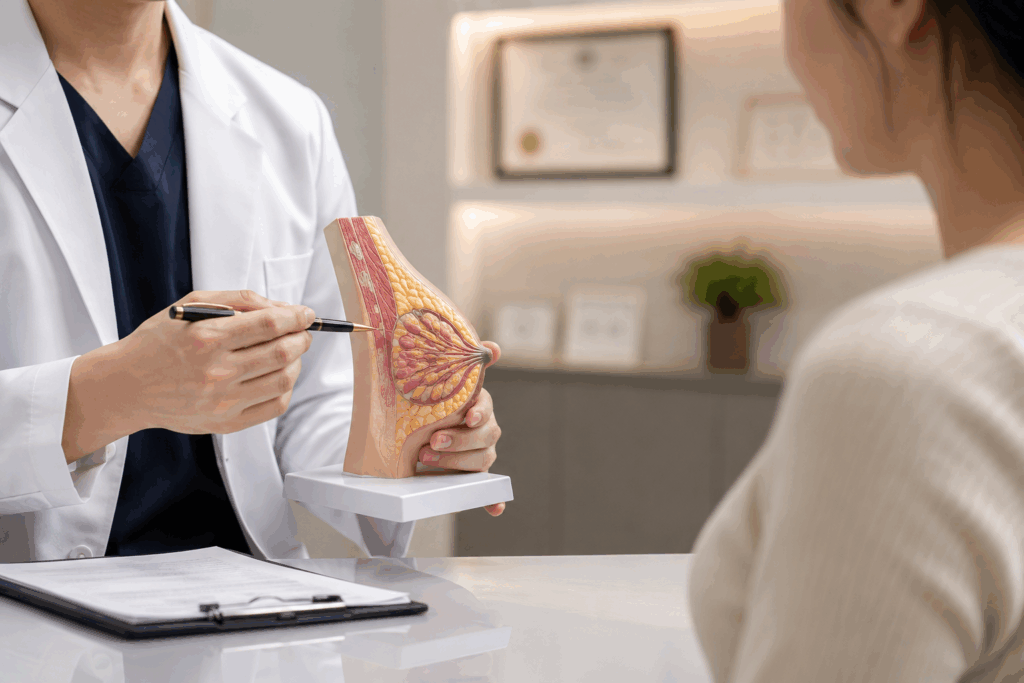
Unlike simple fat removal, accessory breast surgery requires a deep understanding of anatomical structures. If the initial surgery is not sufficiently corrected, revision surgery may be necessary, which significantly increases the difficulty and the burden of recovery. Therefore, it is important to choose a hospital with experienced medical staff and a track record of handling a wide variety of cases from the very beginning.
Combined removal of accessory breasts and improvement of the bust line
If you feel that removing only accessory breasts is insufficient or want to refine your overall silhouette, you can consider a method that performs accessory breast removal and breast volume improvement simultaneously.
Transplanting extracted fat into the breasts allows you to trim unnecessary areas and create three-dimensional lines. Another reason this method is preferred is that, since it does not use implants, it retains the full benefits of your own fat.
SC301 has published and disclosed an average engraftment rate of 77.48%, calculated based on over 9,000 cases, in the SCI-indexed international journal *Annals of Plastic Surgery*. (Results may vary depending on the individual.)
Things to check during consultation
- Whether to distinguish between fatty and glandular types through imaging tests such as ultrasound in addition to palpation
- Whether an excision method that minimizes damage to blood vessels and nerves is used when mammary gland tissue is present
- What is the procedure for simultaneous accessory breast removal and breast line improvement?
- What are the criteria for designing the first surgery to prevent revision surgery?
Frequently Asked Questions
Q. Can accessory breasts disappear with dieting?
A. Even in fat-centered types, the condition often does not disappear completely, and if mammary gland tissue is involved, weight loss alone tends not to lead to improvement. An approach based on an accurate diagnosis is necessary.
Q. Does accessory breast surgery leave significant scarring?
A. Fat-centered types are often treated solely with suction using a micro-cannula, resulting in minimal scarring; however, if mammary gland tissue excision is required, an incision may be necessary, so the procedure varies depending on the individual's tissue condition.
Q. Can accessory breasts recur after removal?
A. If mammary gland tissue is not sufficiently removed during the initial surgery, there is a possibility of recurrence; therefore, it is a crucial point whether accurate tissue differentiation and removal are performed from the beginning.
Introduction of the surgeon
This article was written based on the standards of Chief Director Shin Dong-jin, who has accumulated 19 years of clinical experience in the field of SVF procedures. He served as the President of the Korean Society of Stem Cell Plastic Surgery for 10 years and maintains a principle of performing a maximum of only 2 to 3 surgeries per day.
This content is for informational purposes only, and treatment results and recovery periods may vary depending on individual tissue condition and constitution. Please confirm an accurate diagnosis and eligibility for the procedure through an in-person consultation.
Member SC301 · Chan & Chan Tower, 611 Yeongdong-daero, Gangnam-gu, Seoul (77-9 Samseong-dong) · 1-minute walk from Exit 2 of Bongeunsa Station (Line 9)
https://blog.naver.com/sc301guide – SC301 Naver Seongchelin Guide Blog


