


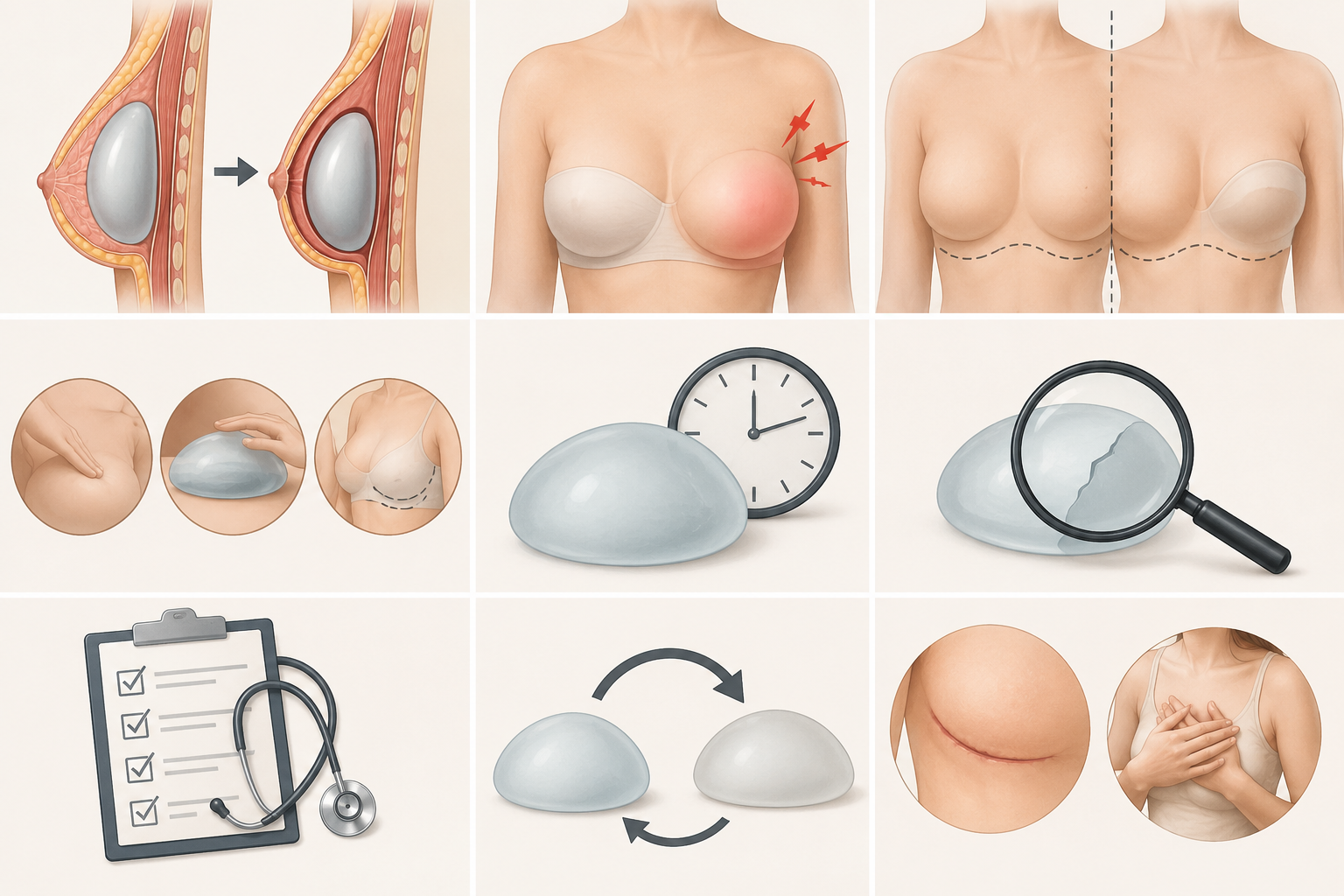
Over time, patients who have undergone breast augmentation with implants may consider removal due to reasons such as capsular contracture, changes in tactile sensation or foreign body sensation, and decreased durability. When undergoing revision surgery following implant removal, an increasing number of patients are choosing Stem Cell (SVF) breast augmentation—which utilizes the patient's own fat and SVF (fat-derived cell components)—as an alternative to reinserting implants. Since it does not use foreign materials, the risk of rejection is lower, and volume and contours can be designed to suit the body type; however, in the case of revision surgery, a precise diagnosis of the existing tissue condition must be performed beforehand. Results may vary depending on the individual's constitution and tissue condition.
The main reasons why people consider implant removal
Old model
Over time following breast implant surgery, the body naturally triggers an immune response. During this process, a membrane tissue called a "capsule" forms around the implant; in some cases, this capsule can gradually thicken and harden. This can lead to the breast becoming hard or painful, and in some instances, the implant may shift, resulting in an unnatural contour. If the symptoms worsen, it may necessitate the removal of both the implant and the capsule.
Dissatisfaction with texture, foreign body sensation, or shape
Over time, there are cases where the texture of the implant feels different from when it was first created. A hard sensation when touched, a feeling of having foreign material inside the body, or changes in shape that differ from the expected line are reasons why people consider revision surgery.
Durability of implants and maintenance burden
Implants are not materials that last permanently. Over time, their durability may decrease, and the possibility of damage or deformation must also be considered. Due to the burden of regular checkups and the potential for future replacement, some patients choose to have their implants removed entirely.
There are limitations to completely restoring breast tissue that has already undergone surgery to its original state, and repeated surgeries can lead to the burden of recovery and concerns about scarring.
Signals at each stage of the spherical construction
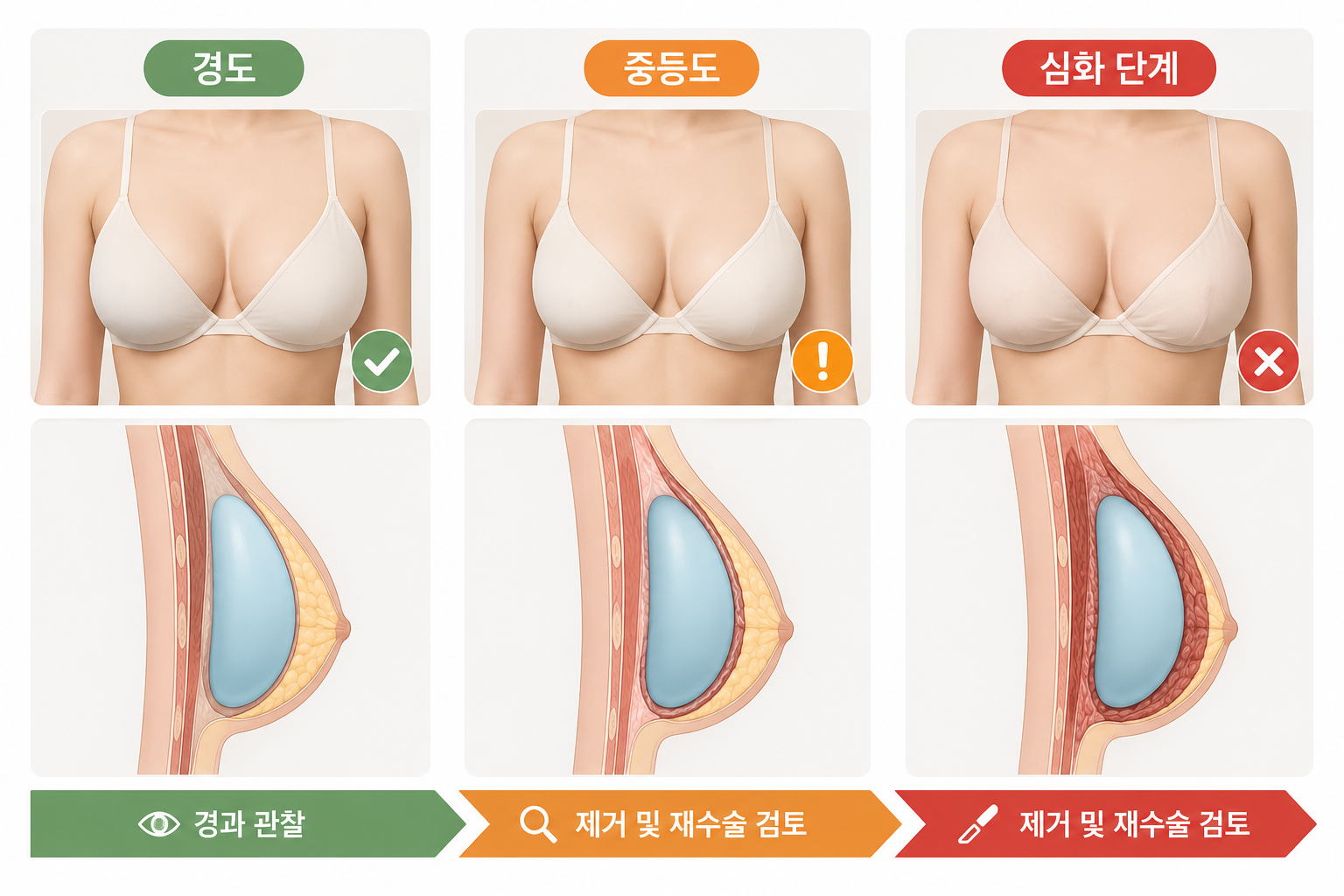
Capsular contracture is often described in stages based on the severity of symptoms.
| step | Characteristic |
| Hardness | The breasts are soft and not significantly different from their natural state. |
| moderate | It feels somewhat firm to the touch, but there is minimal change in appearance. |
| Advanced level | Becomes noticeably hardened and is accompanied by changes in shape or pain |
In mild cases, observation may suffice, but if the condition progresses to a moderate or severe stage, removal or re-surgery is frequently considered. An accurate determination of the stage must be made through an examination by a specialist.
Reasons to Consider Stem Cell (SVF) Breast Augmentation as an Alternative for Revision Surgery
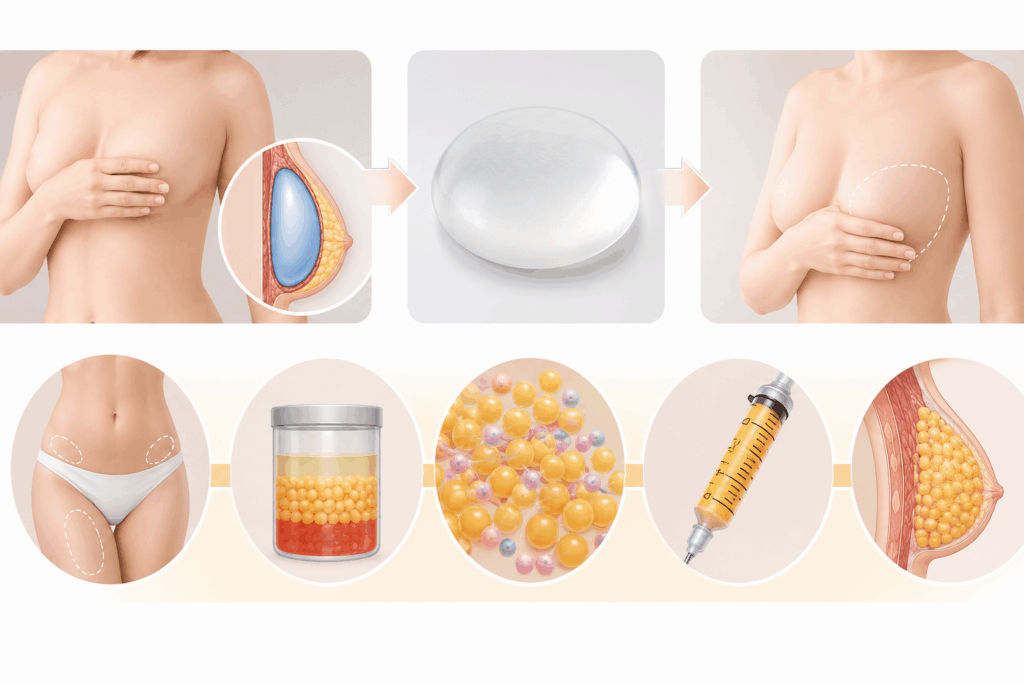
There is a growing number of cases where patients are choosing stem cell (SVF) breast augmentation (breast fat grafting) as an alternative to removing implants and inserting new ones.
Stem cell (SVF) breast augmentation is a method in which fat-derived cell components and purified high-purity fat are separated from fat harvested from areas such as the abdomen or thighs, mixed in appropriate proportions, and then transplanted into the breasts.
Since this method uses the patient's own fat rather than external implants, the texture is relatively natural, volume and lines can be designed to fit the body shape, and the discomfort of a foreign body sensation may be minimal. As fat-derived cell components help the transplanted fat settle stably into surrounding tissues, a relatively high average engraftment rate is reported, and positive results regarding volume maintenance are also being presented.
SC301 has published and disclosed an average graft survival rate of 77.48%, calculated based on over 9,000 cases, in the SCI-indexed international journal *Annals of Plastic Surgery*. (Grafting rates may vary depending on individual constitution and lifestyle.)
For these results, it is important to ensure that the preparation process to secure healthy cells, sophisticated surgical techniques, and post-operative care are carried out together.
Whether to proceed with removal and SVF revision surgery simultaneously
Whether implant removal and stem cell (SVF) breast augmentation are performed on the same day or with a time interval may depend on the condition of the tissue.
- When simultaneous progress is considered: Cases where the capsule condition is relatively good and there are no signs of inflammation
- When proceeding at intervals: Cases where tissue stabilization is required first due to a wide area of capsule removal or signs of inflammation or infection.
Since this assessment is made following a precise diagnosis of an individual's organizational status, it is accurate to verify your specific case through consultation.
Things to check during consultation
- How to diagnose your stage of capsular contracture and capsule condition
- What is the rationale for whether to perform implant removal and SVF grafting simultaneously or separately?
- Since it is a revision surgery, how to check the amount of fat that can be harvested and the condition of the cells
- Whether result indicators such as graft survival rate are presented as objective data
Frequently Asked Questions
Q. Will my breasts return completely to their original state if the implants are removed?
A. It is often difficult to completely restore tissue that has already undergone surgery to its original state. Therefore, a plan for how to refine the volume and lines after removal is also necessary.
Q. Should I consider removal even if the capsular contracture is not severe?
A. That is not necessarily the case. Depending on the severity of the symptoms, observation may be possible in some instances, so it is best to make a decision after receiving an accurate diagnosis of your condition.
Q. Is the engraftment rate of stem cell (SVF) breast augmentation the same for patients who have undergone revision surgery?
A. In the case of revision surgery, the condition of the existing tissue can affect engraftment, so it is difficult to guarantee the same results as the first surgery. A precise diagnosis of the individual's tissue condition is the priority.
Introduction of the surgeon

This article was written based on the clinical standards of Chief Director Shin Dong-jin (19 years of experience, over 9,000 cumulative surgeries performed), who has established the field of stem cell (SVF) breast augmentation. He served as the President of the Korean Society of Stem Cell Plastic Surgery for 10 years and maintains a principle of performing a maximum of only 2 to 3 surgeries per day.
This content is for informational purposes only, and treatment results and engraftment rates may vary depending on individual constitution, tissue condition, and lifestyle. Please confirm an accurate diagnosis and eligibility for the procedure through an in-person consultation.
Member SC301 · Chan & Chan Tower, 611 Yeongdong-daero, Gangnam-gu, Seoul (77-9 Samseong-dong) · 1-minute walk from Exit 2 of Bongeunsa Station (Line 9)
https://blog.naver.com/sc301guide – SC301 Naver Seongchelin Guide Blog


