Joint Research by UCLA Department of Plastic Surgery and USC Department of Physical Therapy — Safety and Validity Study Measuring Pain, Function, and Joint Mobility on Four Standard Scales After Direct Injection of Autologous SVF into the Knee Joint Cavity
SC301 Clinic · Stem Cell Research Series · Latest Research Trends · Single Paper Based · Pure SVF Direct Injection
Original paper information:
Fodor PB, Paulseth SG.
“Adipose Derived Stromal Cell (ADSC) Injections for Pain Management of Osteoarthritis in the Human Knee Joint”
Aesthetic Surgery Journal. 2016;36(2):229–236. doi: 10.1093/asj/sjv135. Epub 2015 Aug 3. PMID: 26238455.
Affiliations: Peter B. Fodor, MD — Assistant Professor, Department of Plastic Surgery, UCLA Medical Center / Stephen G. Paulseth — Adjunct Lecturer, Department of Biomechanics and Physical Therapy, University of Southern California (USC)
Knee osteoarthritis — the most common joint disease
Osteoarthritis (OA) is the most common joint disease worldwide. In particular knee osteoarthritisIt is a condition in which cartilage wears away, causing bones to rub against each other, resulting in pain and a decline in joint function; the incidence rate increases sharply with age. Approximately 12% of the world's population is affected, and the pain and functional limitations significantly reduce the quality of life.
Conventional knee osteoarthritis treatment
● Painkillers/Anti-inflammatory drugs: Pain relief, no cartilage recovery
● Hyaluronic acid injection: Temporary lubricating effect
● Steroid injections: Short-term effect, repeated use causes cartilage damage
● Arthroscopic surgery: Invasive, possibility of recurrence
● Artificial joint replacement surgery: Last resort, long recovery period
Possibility of SVF intra-articular injection
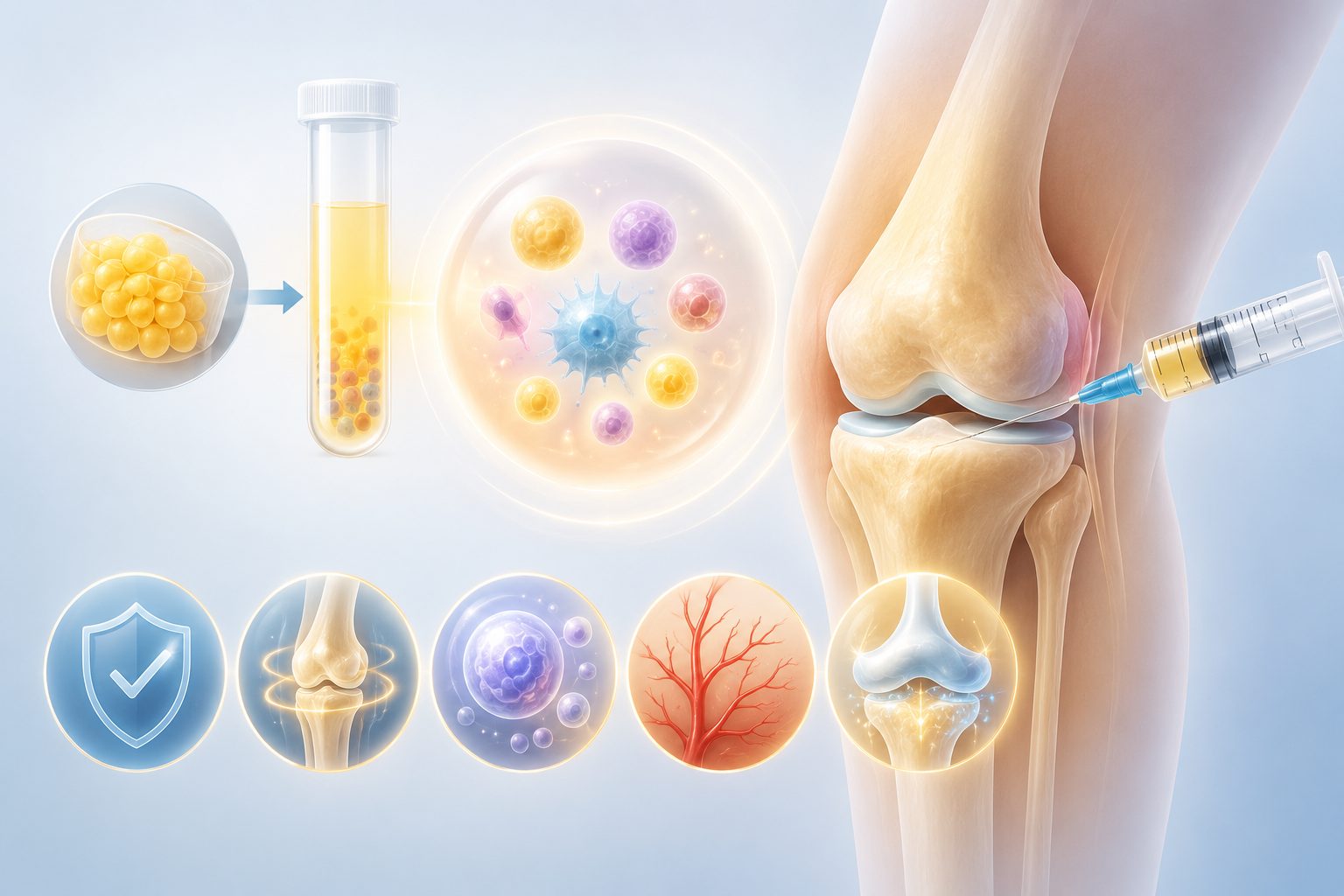
● No risk of immune rejection with autologous cells
● Same-day collection and injection possible
● Expected anti-inflammatory and immunomodulatory effects
● Improved joint nutrient supply through angiogenesis
● Creates a supportive environment for cartilage regeneration
This study originates from this background. Dr. Fodor's team at UCLA's Department of Plastic Surgery found that when SVF extracted from fat was injected directly into the knee joint cavity... Whether it is safe and effective for pain reductionWe systematically evaluated it for the first time.
The purpose of this study is twofold.
Primary: Is intra-articular injection of SVF safe?
twoSecondary: Can we expect it to be effective in reducing pain? — Both answers were positive.
Severity of knee osteoarthritis — Kellgren-Lawrence rating
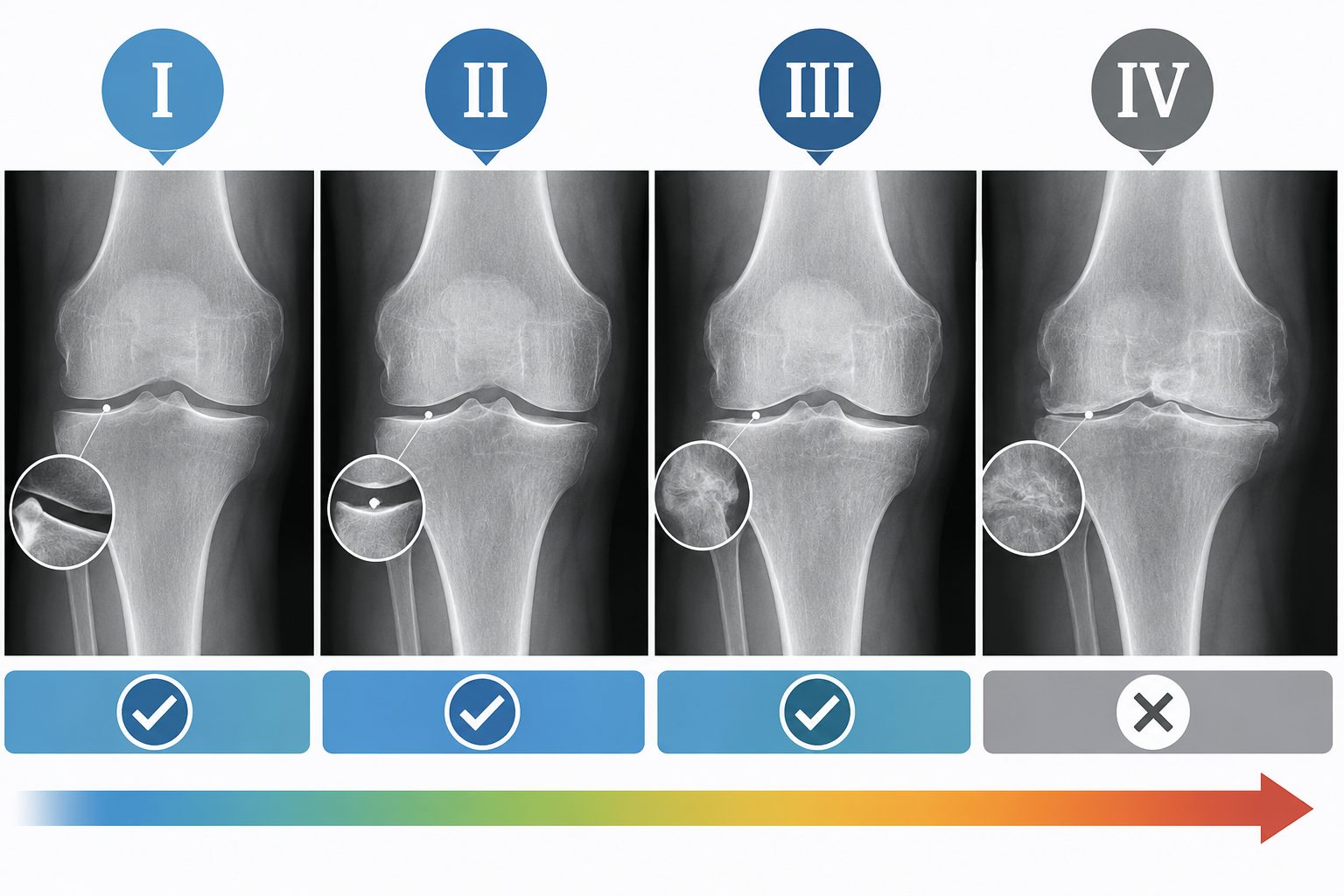
Knee osteoarthritis is based on X-ray images Kellgren-Lawrence (KL) scaleIt is classified as follows. This study included patients of grades I to III.
I
minor
Suspected osteophyte, normal joint space
This study
II
mild
Distinct osteophytes, slight decrease in joint space
This study
III
moderate
Multiple osteophytes, moderate reduction in joint space
This study
IV
severe
Severe reduction in joint space, subchondral bone sclerosis
(Excluding this study)
This study excludes severe (KL IV) patients and those who are still capable of recovery Patients in early to moderate (KL I–III) stagesIt is important to note that it targets [the target]. SVF is applied not to completely reconstruct already severely damaged cartilage, but to protect the remaining cartilage environment and support regeneration.
How the Research Was Conducted — UCLA·USC Joint Safety and Feasibility Study
From SVF Extraction to Injection — Same-Day Procedure
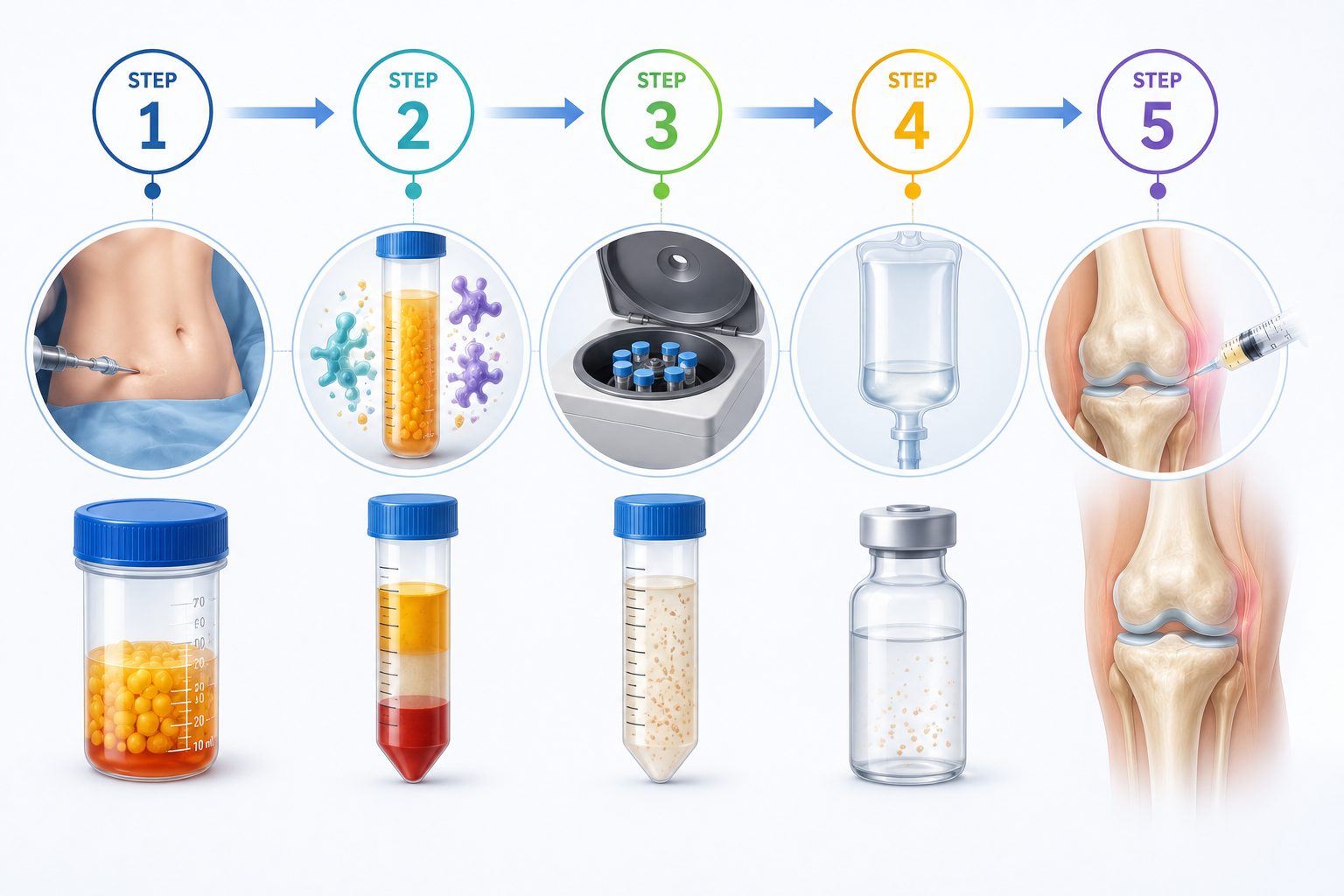
STEP 1
abdominal liposuction
Small amount of fat harvesting
STEP 2
Enzymatic decomposition
Separation of SVF by collagenase treatment
STEP 3
Cell purification
Securing an average of 1,400 million SVF cells
STEP 4
Ringer Jaehyuntak
Mix with 3 mL of lactic acid Ringer's solution
STEP 5
Intra-articular injection
Direct injection into the knee joint
4 standard evaluation tools
VAS (Visual Analog Scale)
Visual Pain Scale
Pain intensity was measured on a 0–10 point scale. This study included patients with a VAS score of 4 or higher. Lower scores indicate less pain.
WOMAC
Western Ontario and McMaster University Osteoarthritis Index
An international standard scale that comprehensively evaluates three areas: pain, stiffness, and physical function.
ROM (Range of Motion)
Joint range of motion
Measures the angle at which the knee can be bent and extended. Decreases with the progression of osteoarthritis; verifies recovery after treatment.
TUG (Timed Up-and-Go)
Time measurement standing and walking tests
Measures the time taken to stand up from a chair, walk 3 meters, and return to a seated position. An indicator of actual functional mobility ability.
After SVF injection — all four indicators improved
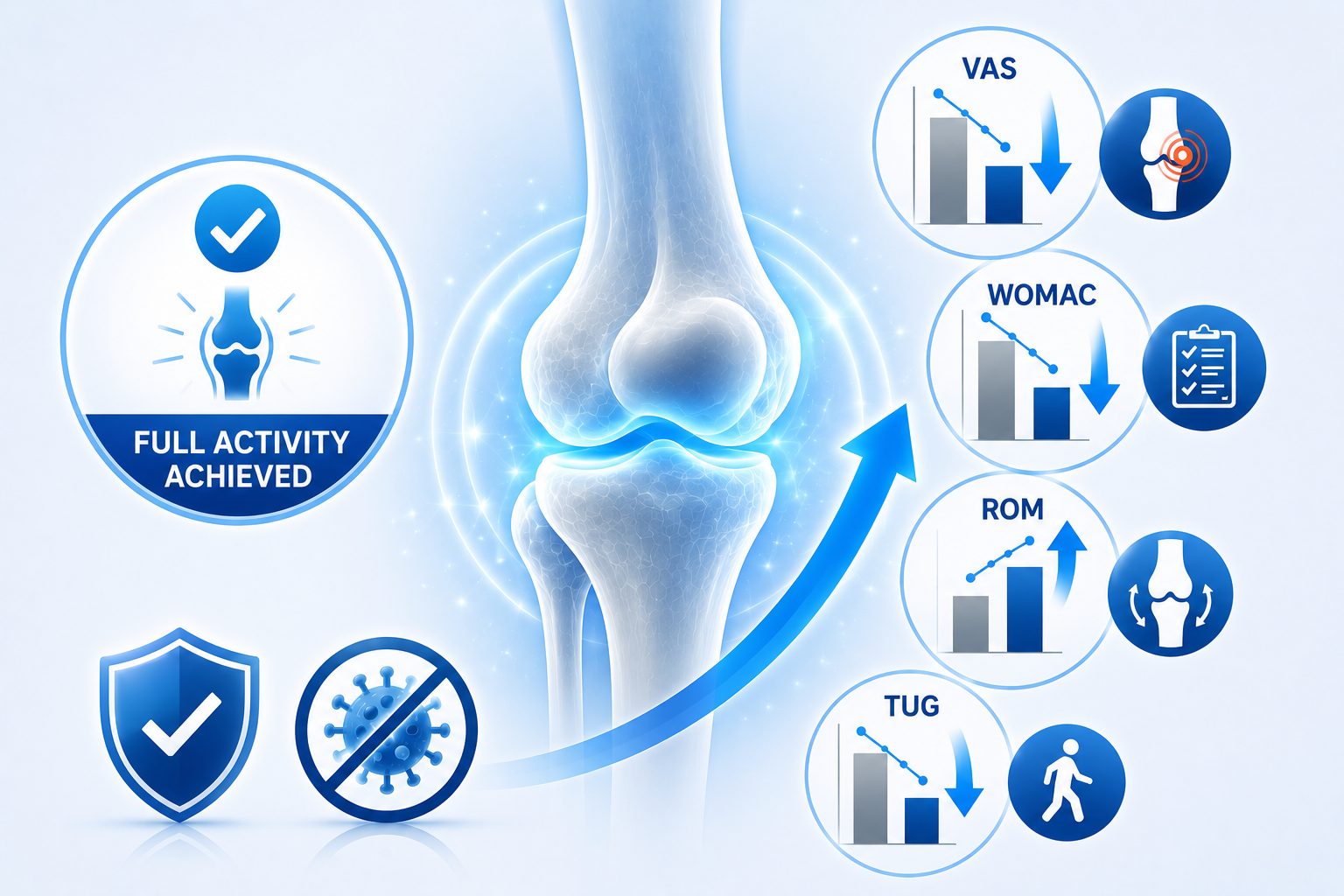
VAS · WOMAC · ROM · TUG — Improvement in all four evaluation metrics
All 6 people fully recovered their ability to work, and their knee pain decreased.
Not a single serious adverse reaction was reported.
1
Full Activity Achieved
This is a result particularly emphasized by the research team. All 6 participants (8 knees) after SVF injection Attained Full ActivityThis signifies that daily activities previously restricted by knee pain have been restored, representing a result that demonstrates an actual change in quality of life beyond mere improvement in pain levels.
2
VAS pain score decrease — knee pain has decreased
Visual Analog Scale (VAS) scores significantly decreased after SVF injection. This study [applied to] the VAS 4 points or more (moderate to severe pain) Patients were recruited, and their scores decreased after treatment. Pain reduction is the change patients perceive most directly, and it is the primary result addressed in this study.
3
WOMAC Score Improvement — Overall Improvement in Pain, Stiffness, and Function
The WOMAC score has also improved. WOMAC is a comprehensive scale that measures knee osteoarthritis pain, morning stiffness, and specific daily functions such as climbing stairs, sitting, and walking. Functional recovery experienced in daily life, going beyond simple painThis has been confirmed.
XNUMX
ROM·TUG improvements — Joint movement and actual mobility have also improved
Both range of motion (ROM) and walking-to-standing time (TUG) have improved. Improvement in ROM means that stiff joints bend better, and improvement in TUG is The actual ability to stand up from a chair and walk has increased.This means that it is a clinically very important indicator of functional recovery.
5
No adverse reactions — The primary objective of 'safety' was perfectly achieved
This study The primary purpose is safety evaluationNo serious adverse reactions associated with the intra-articular injection of autologous SVF were observed in any of the six patients. Since it was autologous tissue, there was no immune rejection, and no side effects such as infection or blood clots were reported. The primary objective of safety was perfectly achieved.
Why SVF Is Effective for the Knee Joint — Intra-articular Mechanism of Action
The mechanism proposed by the research team and subsequent studies regarding how SVF improves pain and function when injected into the joint is as follows:
Anti-inflammatory and immunomodulatory
ADSCs in SVF inhibit inflammatory factors such as TNF-α and IL-1β, alleviating the inflammatory environment within the joint → pain reduction
cartilage protection
Promotes chondrocyte proliferation and survival through the secretion of growth factors such as TGF-β and BMP-2, and inhibits further damage
Synovial improvement
Suppression of chronic inflammation of the synovium covering the inside of the joint, normalization of the joint fluid environment
Promotion of angiogenesis
Creating an environment for tissue regeneration by improving blood supply to soft tissues surrounding joints and enhancing nutrient and oxygen delivery.
How long does SVF stay in the joint?
According to related research, it is known that some injected SVF cells settle in the soft tissue structures within the joint (ligaments, tendons, synovial membrane, etc.), while others circulate throughout the body via the bloodstream. What is important is not the physical lifespan of the cells themselves, but what the cells secrete Growth factors and cytokines (paracrine effect)The key point is that it alters the inflammatory and regenerative environment within the joint. This effect can persist even after the cells have disappeared.
The significance of this research in the field
At the time this paper was published in 2015–2016, clinical data on the direct injection of SVF into the knee joint were very rare. Dr. Fodor’s team, utilizing their expertise in fat-related procedures as plastic surgeons, applied SVF to joint treatment from a perspective distinct from orthopedics. This study is subsequently cited by numerous studies on SVF for knee osteoarthritis. One of the early clinical evidence literaturesIt became.
In particular, the academic journal of this paper Aesthetic Surgery JournalThe fact that this is a plastic surgery journal is also significant. It serves as an example demonstrating that SVF joint treatment is not the exclusive domain of orthopedics, but is being independently researched and applied within the field of plastic surgery, which deals with fat-related procedures.
The conclusion reached by the paper
Intra-articular injection of autologous SVF into the knee joint is It has been confirmed to be safe and, regarding pain reduction in knee osteoarthritis New potential treatmentsIt showed potential as.
— All 6 members fully recover their activity capabilities
— Improvement in VAS (Pain), WOMAC (Comprehensive), ROM (Range of Motion), and TUG (Functional Movement)
— No serious adverse reactions
This result shows that SVF is a knee osteoarthritis Safe and promising new treatment optionsThis suggests that it could be, and urges larger-scale follow-up clinical trials.
Stories from SC301 Clinic
Saying that "climbing stairs is difficult because of knee pain" is not just simple pain; it is the deprivation of daily freedom. This study suggests that simply by directly injecting stem cells extracted from fat into the knee, Restoration of activity, pain reduction, and improvement of joint range of motionWe presented initial clinical evidence that this is possible.
Of course, this study is a first-step research with a small sample size of only six participants and no control group. However, the fact that safety has been confirmed and all evaluation indicators have improved demonstrates that research in this field is worthy of further development.
SC301 Clinic goes beyond cosmetic purposes Latest research trends exploring the potential of SVF treatment in various fields such as joints, autoimmunity, and wound healingWe will continue to deliver it to you.
Questions (Q&A) regarding knee SVF injection study
Q1. Is the SVF knee injection a treatment that regrows worn-out cartilage?
A. It is difficult to view it that way. Even in this study, SVF was applied not to completely reconstruct severely damaged cartilage, but to protect the remaining cartilage environment and support regeneration. In fact, the study subjects were limited to early to moderate (KL I–III) patients who still had room for recovery, excluding severe (KL IV) patients with almost complete cartilage loss. In other words, it is more accurate to understand this approach as helping with pain and function by reducing inflammation and improving the joint environment, rather than as a 'treatment to create new cartilage.'
Q2. How did the effects manifest, and how reliable are the results?
A. In this study, all six patients (eight knees) recovered their activity levels, and all four indicators—pain (VAS), comprehensive symptoms (WOMAC), range of motion (ROM), and standing and walking ability (TUG)—improved. However, caution must be exercised in interpreting the results. This is a small-scale "safety and feasibility study" involving only six participants and lacking a control group. It is correct to view this not as a definitive proof of efficacy, but rather as a stage that presents initial evidence suggesting that "it is safe and effective, so a larger study is worth conducting."
Q3. I heard that these are cells extracted from my own fat. Are they safe?
A. The primary objective of this study was safety evaluation, and consequently, no serious adverse reactions related to the injection were reported in any of the six subjects. Since autologous tissue extracted from the patient's own fat was used, there was no immune rejection, and no side effects such as infection or blood clots were observed. However, as this is the result of a small-scale study, it is difficult to generalize it to mean that there are absolutely no side effects for everyone.
Q4. How is the procedure performed, and does it take a long time?
A. This study was conducted using a same-day collection and same-day injection method. The process involves aspirating a small amount of fat from the abdomen, isolating and purifying SVFs through enzymatic treatment (securing an average of approximately 1,400 million cells in this study), mixing them with 3 mL of lactic acid Ringer's solution, and injecting them directly into the knee joint cavity. A key feature is that the entire process, from collection to injection, is completed within a single day without a separate cell culture period.
Q5. Do the cells continue to survive inside the knee to produce an effect?
A. The key lies not in how long the cells physically survive, but in how the growth factors and cytokines they secrete alter the joint environment. It is known that some injected SVF settles in the soft tissues within the joint, such as ligaments, tendons, and synovium, while others circulate into the bloodstream; these molecules secrete signaling substances that suppress inflammation and aid in regeneration (the paracrine effect). It is believed that this effect can persist for a certain period even after the cells have disappeared.