


For those visiting dermatology or plastic surgery clinics, what kind of changes
If you ask what they are most concerned about, some people answer wrinkles, but these days The impression changes as volume is lost.is
The number of people saying they are more worried has increased significantly.
In reality, as you get older, your face looks tired or age
The biggest reason it looks like is
wrinklesee Loss of volumeThere are many such cases.
Today, I will explain why facial volume decreases, and Using my cells Naturally restoring volume facial fat graftingis
How to approach it
I will tell you.
The real reason your face looks different is the loss of volume.
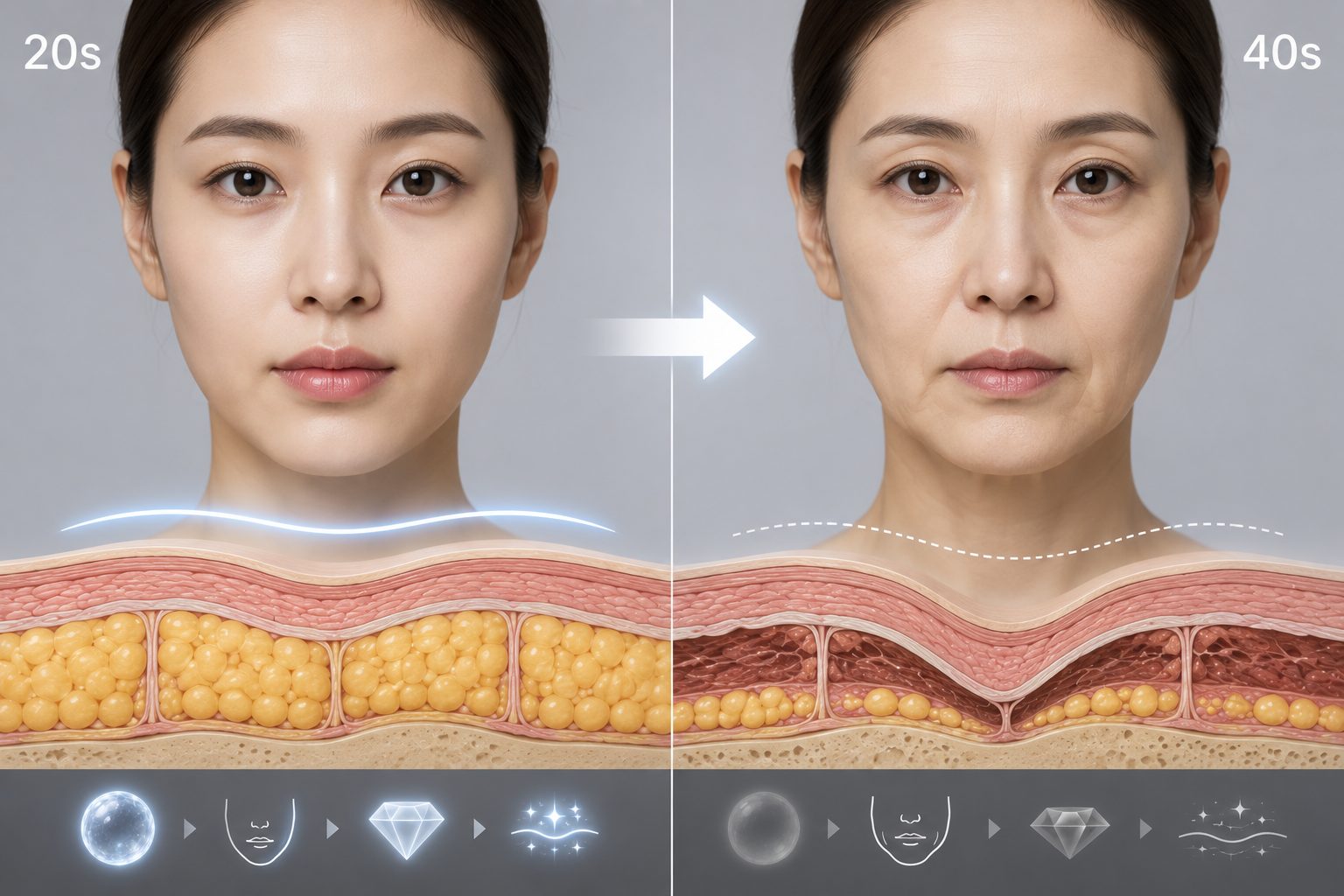
20sand 40sIt is easy to think that the reason the face looks different is simply due to wrinkles, but in reality, it is caused by the shrinkage of the fat layer and subcutaneous tissue throughout the face. Volume reductionIt plays a larger role.
Sunken under-eyes, flattened cheeks, and deepening nasolabial folds are all caused by sagging skin itself, but The organization filling the space underneath
Reduced resultIt is also
If the three-dimensionality of the face disappears, the overall impression becomes flat, and light is not reflected evenly, making one look tired or
It leads to an impression of looking older.
For this reason, the recent direction of anti-aging is shifting from methods that cover or tighten the surface... The volume itself를 Direction of recoveryIt is moving rapidly to.
What is the method of facial fat grafting?
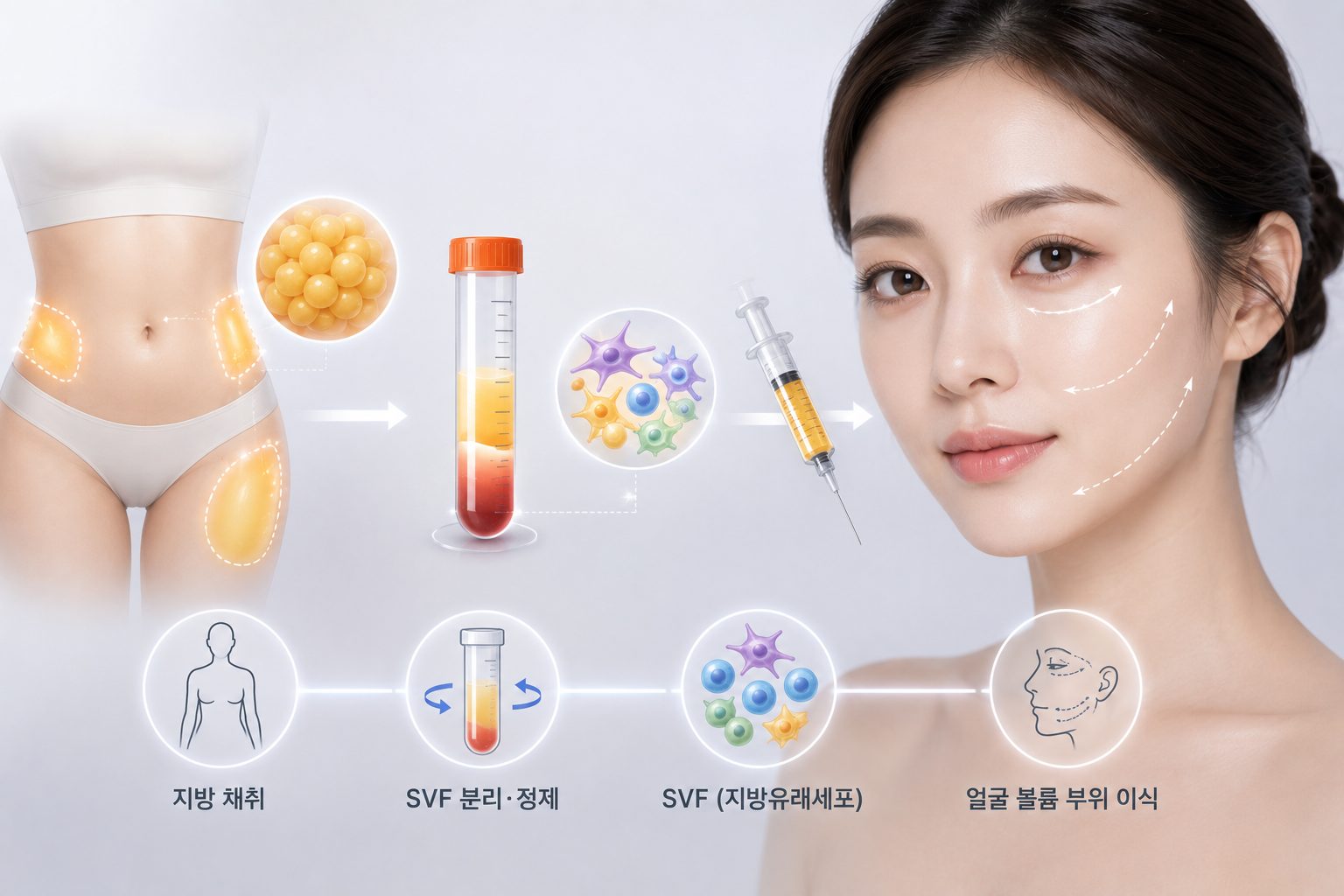
facial fat grafting은 abdomen, thighs, sides After harvesting fat from an area of the back where there is sufficient fat, the existing within it SVF in other words Adipose-derived cell componentsprecisely Separation and purificationIt is a method of transplanting to areas of the face that need volume.
General fat graftingThe difference between the departments Utilize SVF togetherIt lies in the fact that it does.
SVF contains various active cellular components involved in angiogenesis and tissue environment restoration, allowing transplanted fat to go beyond simply filling volume Conditions for settling stably in a new environmentIt makes together.
Simply put, it is a method that designs the environment in which the fat can survive and be maintained.
Since the patient's own tissue is utilized, the risk of foreign body reactions is relatively low, and a natural texture and lines can be expected.
facial fat graftingThis is the reason it is receiving attention.
Approach that varies by age
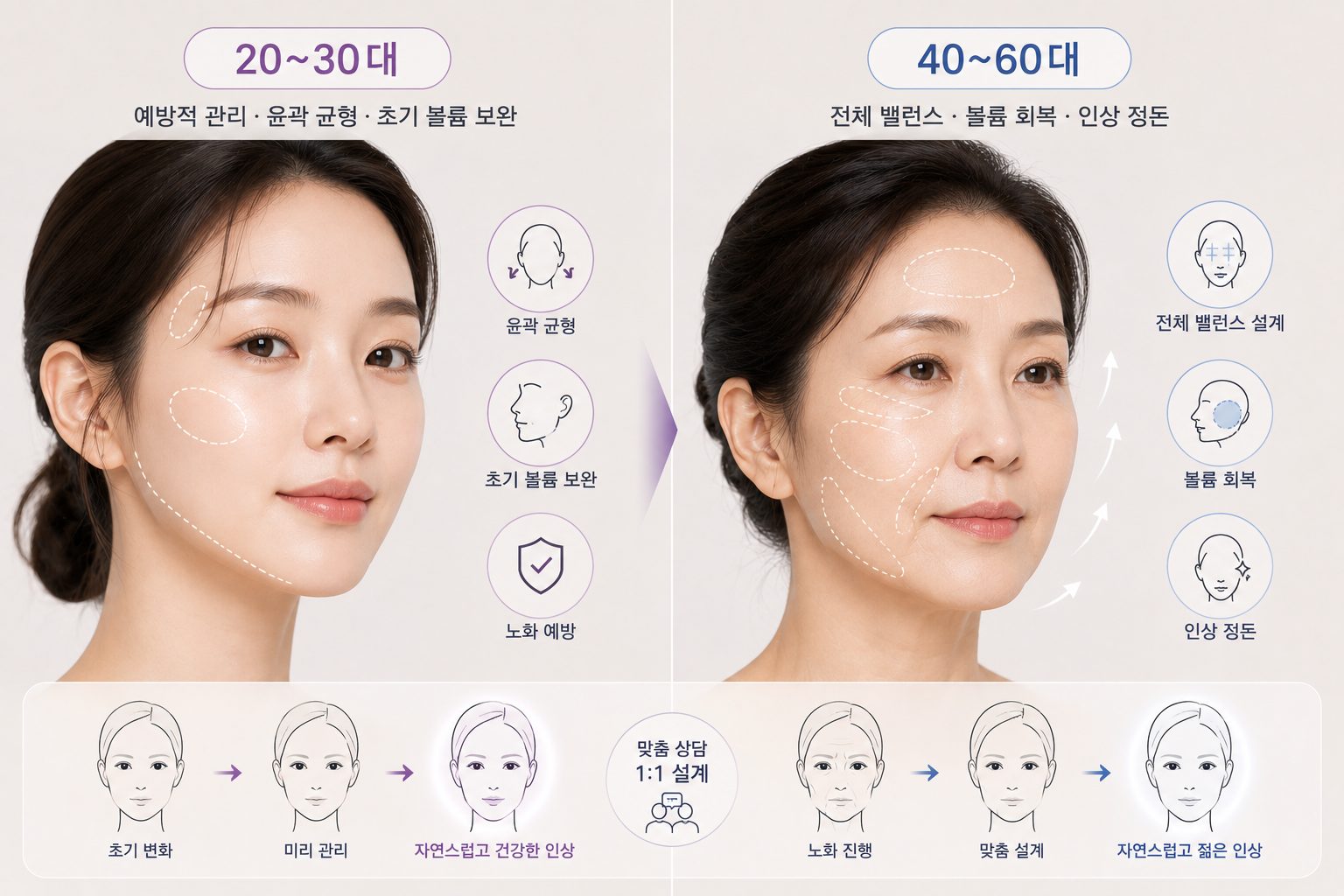
facial fat graftingThe goals and design direction vary depending on age and skin condition. Even for the same procedure, the approach for those in their 30s and 50s is bound to be different.
20s to 30sThis is the stage before aging begins in earnest. At this stage, rather than adding significant volume, it is often approached as a preventive care concept that balances facial contours and gently compensates for early volume loss.
It is advantageous to take care of it in advance when your face starts to look tired or certain areas begin to appear sunken, as this helps create natural results in the long run.
40s to 60sThis is a period when elasticity and volume decrease together, and sagging and wrinkles appear in combination. Rather than filling in specific areas separately, designing a plan to restore volume and refine the facial impression while considering the overall balance of the face leads to a much more natural result.
Especially during this period, it is important to have a customized plan tailored to the individual's facial structure through sufficient preliminary consultation.
The process of handling cells and the environment determine the result.
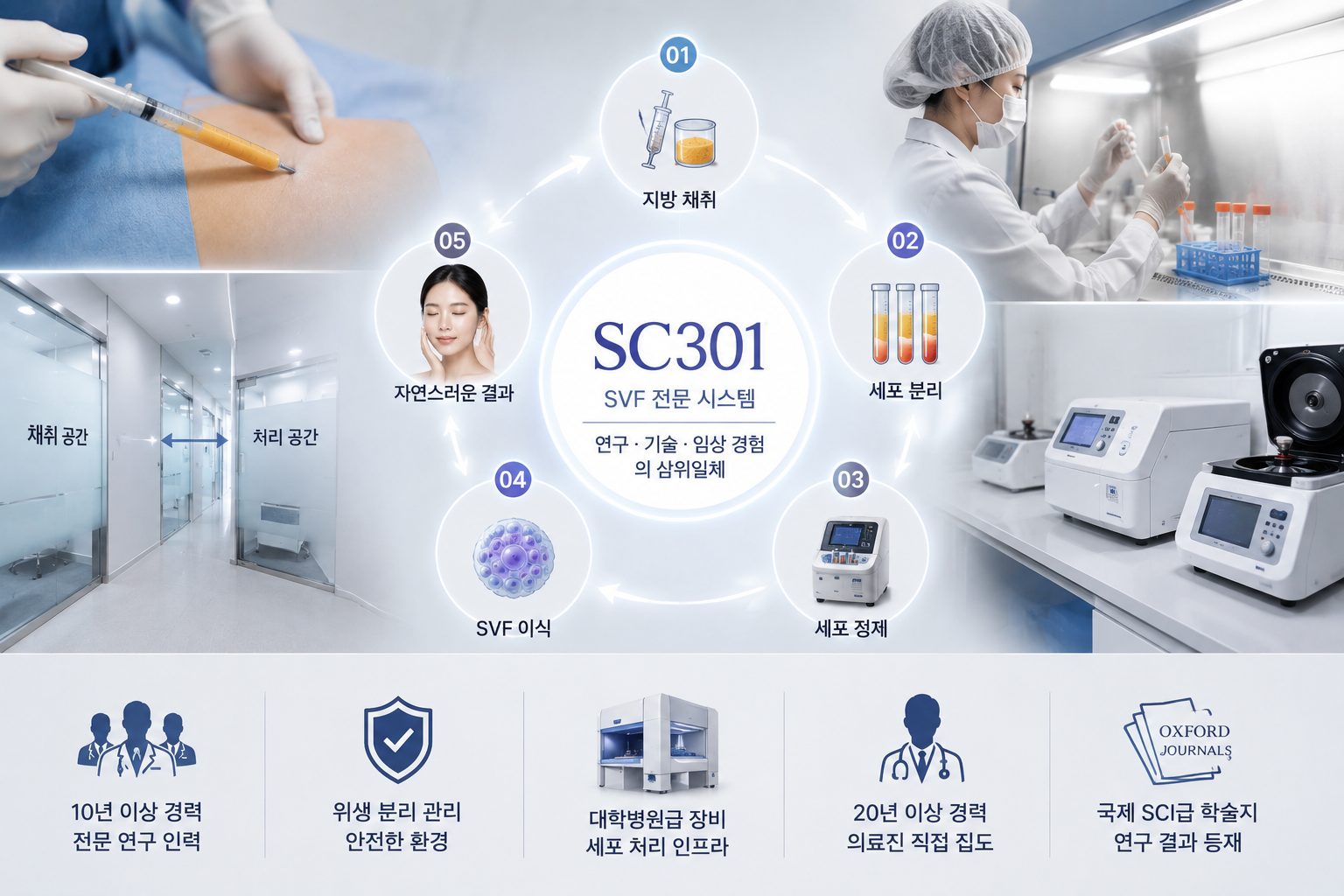
facial fat graftingIt is not simply a procedure to transfer fat. It involves the entire process of separating, purifying, and transplanting cells. How stably the state of the cell
Whether to maintainIt has a direct impact on the final result.
This is why the results can vary even with the same procedure name, depending on where and how it is performed.
SC301It independently operates a dedicated system for SVF engraftment research, handling the entire process from fat harvesting to cell separation and purification.
Structure directly managed by the research teamIt is equipped with.
Professional research personnel with over 10 years of experience oversee the entire cell processing process, and a hygienic management environment with separated collection and processing areas,
We are equipped with university hospital-grade cell processing equipment.
The infrastructure itself is different in maintaining a stable cell state and managing uniform quality.
In addition, medical staff with over 20 years of clinical experience personally handle everything from consultation to surgery, and regarding SVF plastic surgery Published research results in international SCI-indexed academic journals, including the Oxford Journal.It is a research-focused medical institution.
experienceand 데이터Reliable in that it is supported together Evidence.
Cell banking linkage for post-procedure care
SC301 is extracted during facial fat grafting SVF ingredientStoring in an ultra-low temperature environment of minus 196 degrees Cell banking serviceWe operate together.
With a structure that allows the current healthy cell state from a single extraction to be utilized for future management, it does not end with the procedure.
Long-term personalized managementIt is a system that leads to.
It is like receiving the procedure now while simultaneously preparing future assets for management.
Facial fat grafting is not a procedure that dramatically changes the face.
It is closer to a direction of naturally regaining volume and vitality lost over time by utilizing your own tissues.
If you wish to look a little more vibrant or simply want to change the impression of looking older, here is a direction that suits your current condition.
We recommend that you verify this through a consultation.
Good results always start with a plan that suits me.
Frequently Asked Questions (Q&A) Regarding Facial Fat Grafting
Q1. How natural can I expect results after facial fat grafting?
A. Since facial fat grafting utilizes the patient's own fat and cells, you can expect a naturalness distinct from fillers or implants that use artificial materials. Because the transplanted tissue is part of the body, its texture and movement blend naturally with surrounding tissues, and there is relatively less chance of it appearing unnaturally prominent when making facial expressions. However, the degree of naturalness may vary depending on the amount of tissue transplanted, the graft site, the cell processing method, and the individual's skin condition. In particular, the more stable the engraftment of the transplanted fat, the more natural and long-lasting the results will be. SC301 designs the procedure by utilizing SVF components to optimize the engraftment environment, and plans the amount and graft site according to the individual's facial structure based on over 20 years of clinical experience. As the principle of SC301 is to aim for changes that are not excessive or burdensome, the goal is to achieve a result where vitality is restored naturally to the point where it is difficult for others to notice.
Q2. How does facial fat grafting differ from fillers?
A. While fillers and facial fat grafting share the common goal of supplementing facial volume, they differ fundamentally in their methods and characteristics. Fillers utilize artificial fillers, such as hyaluronic acid, to provide immediate volume enhancement. Although they offer the advantages of a short procedure time and minimal recovery burden, they require periodic re-treatments because they decompose within the body over time, and repeated procedures can lead to the accumulation of tissue changes. Facial fat grafting, on the other hand, involves transplanting the patient's own fat and cellular components, resulting in a lower risk of foreign body reactions. Furthermore, tissues that have successfully engrafted tend to be maintained for a relatively long period. Patients experience results distinct from fillers, as the tissue feels natural to the touch and moves in sync with facial expressions. However, it is important to consider that the fat harvesting process requires a relatively longer recovery period. Based on over 20 years of clinical experience, SC301 comprehensively assesses the individual's age, skin condition, degree of volume loss, and recovery potential to determine which method is more suitable between fillers and facial fat grafting. Our principle is to propose the most realistic approach for each individual rather than unconditionally recommending a single method.
Q3. How long do the results of facial fat grafting last? Will they not disappear over time?
A. The longevity of facial fat grafting depends on the engraftment rate. Once the transplanted fat settles stably in its new environment, it integrates into the patient's own tissue; therefore, unlike fillers that decompose and disappear, it is maintained for a relatively long period. However, not all transplanted fat achieves 100% engraftment, and the survival rate varies depending on the cell processing method, transplantation technique, and the individual's physical condition. Generally, engraftment stabilizes between 3 and 6 months after surgery, and in most cases, the volume remains stable without significant changes thereafter. While changes in body weight can affect the transplanted fat to some extent, a natural state is maintained within a range that avoids drastic weight fluctuations. SC301 utilizes SVF components to design the procedure in a way that enhances the engraftment rate by simultaneously fostering blood vessel formation and creating an environment for tissue recovery at the transplant site. In fact, the average engraftment rate of 77.48% officially reported by SC301 in SCI-indexed international academic journals is the result of such research and accumulated clinical experience, serving as reliable evidence regarding its sustainability.
Q4. Where is the fat harvested from, and will it be noticeable or cause any side effects after harvesting?
A. The fat used for facial fat grafting is primarily harvested from areas with sufficient natural fat, such as the abdomen, thighs, and flanks. Since the harvesting is performed using a suction method with a fine cannula, only a small amount of fat is extracted without major incisions; depending on the harvesting site, some patients even experience localized body contouring effects. Temporary bruising or swelling may occur after harvesting, but in most cases, it resolves naturally within one to two weeks. The harvesting marks are merely very small holes that become almost invisible over time. SC301 meticulously analyzes the individual's body shape and fat distribution to determine the harvesting site and volume, and designs a harvesting plan designed to minimize tissue burden. Since the procedure is conducted in a sterile environment with separate harvesting and processing areas, strict hygienic safety management is ensured. Any remaining SVF component after the procedure is stored at ultra-low temperatures via a cell banking system for future management, allowing you to prepare for both the present and the future with a single harvest.
Q5. How long is the recovery period after facial fat grafting, and can office workers undergo the procedure?
A. Facial fat grafting requires simultaneous consideration of recovery for both the graft site and the fat harvesting site. Generally, swelling is most pronounced 3 to 5 days after surgery, and recovery to a level where daily activities are possible often occurs within 1 to 2 weeks. While it takes 3 to 6 months for complete engraftment and stabilization of the final results, discomfort significant enough to interfere with daily life is mostly resolved within the first 1 to 2 weeks. Desk-based office workers may plan to return around one week later, whereas those in physically demanding professions are advised to allow at least two weeks for safety. SC301 designs the procedure to minimize tissue burden by considering the individual's body type and physical condition, focusing on reducing the recovery burden even for the same procedure. Surgical plans can be fully coordinated through consultation to accommodate your return-to-work schedule or personal lifestyle patterns, and a comprehensive post-operative care process is in place to ensure systematic guidance throughout the recovery period.

Frequently Asked Questions
What is the method of facial fat grafting?
Facial fat grafting is a method in which fat is harvested from areas with sufficient natural fat, such as the abdomen, thighs, or flanks, and the SVF (fat-derived cell) components present within it are precisely separated and purified before being transplanted to areas of the face requiring volume. The difference from standard fat grafting lies in the utilization of SVF.


