


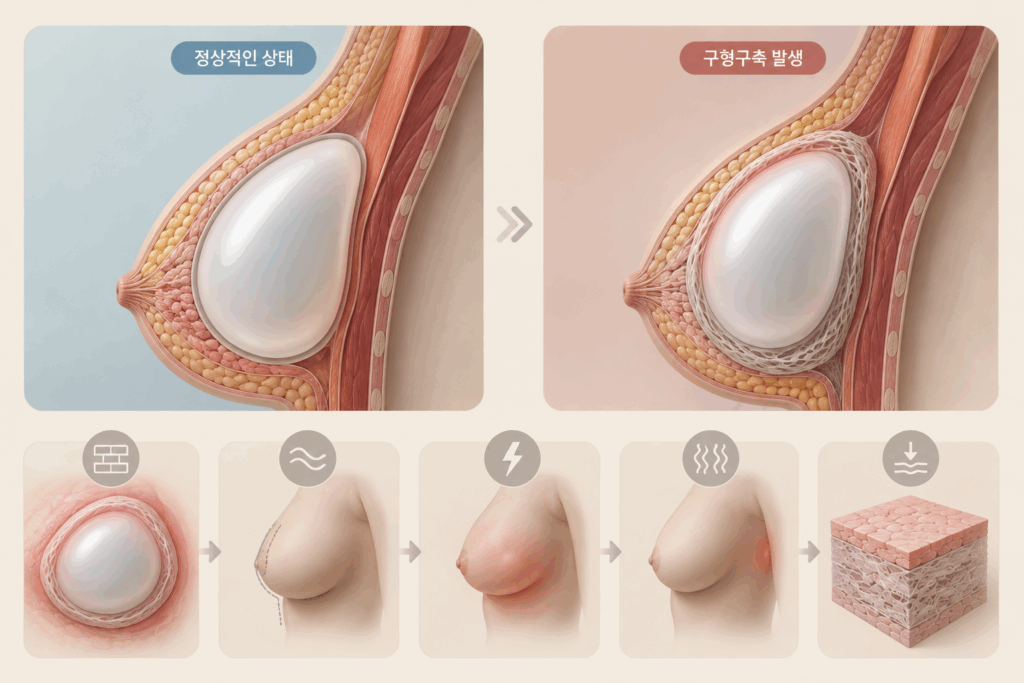
Capsular contracture is a condition in which the capsule surrounding the implant hardens, accompanied by changes in touch and shape as well as pain; therefore, revision surgery requires an approach that precisely considers the tissue condition. Stem cell (SVF) breast augmentation is considered an alternative for revision surgery as it utilizes SVF (adipose-derived cell components), which are known to aid in improving damaged tissue environments. However, due to the need for a sophisticated process involving fat harvesting, SVF isolation, purification, storage, and transplantation, as well as dedicated facilities, the number of institutions capable of performing this procedure is relatively limited. When selecting a hospital, it is important to verify the separation of cell processing spaces, contamination prevention systems, dedicated research teams, and specialized equipment.
Why does revision surgery become more difficult if capsular contracture develops?
The occurrence of capsular contracture means that the capsule surrounding the breast has hardened. This can lead to problems such as the area around the implant becoming stiff, the shape changing, pain or a foreign body sensation, and reduced tissue flexibility.
Once such a change occurs, the subsequent revision surgery must be approached with careful examination of the tissue condition, as it begins under different conditions than the initial surgery.
Why Stem Cell (SVF) Breast Augmentation Is Mentioned as an Alternative for Revision Surgery
There is a reason to consider SVF-based fat grafting when contemplating revision surgery following capsular contracture. SVF (adipose-derived cell components) is known to contain ingredients that help restore the damaged tissue environment to a healthier state, making it a method considered when tissues have hardened and lost flexibility.
It is frequently considered, especially in the following situations.
- When reinsertion of an implant is burdensome due to the existing hard capsule
- When volume does not spread evenly due to scar tissue
- When you have experienced difficulty maintaining volume after the first surgery
SC301 has published and disclosed an average graft survival rate of 77.48%, calculated based on over 9,000 cases, in the SCI-indexed international journal *Annals of Plastic Surgery*. (Grafting rates may vary depending on individual constitution and lifestyle.)
Reasons why institutions performing SVF re-surgery are limited

Unlike simple fat grafting, the process of stem cell (SVF) breast augmentation is sophisticated.
Fat harvesting → SVF isolation → Purification → Storage → Transplantation
For this entire process to proceed safely, facilities, equipment, and research processes must all be in place. Therefore, it is not a procedure that can be easily performed at all institutions, and the number of institutions capable of conducting it is relatively limited.
4 Key Points to Check When Inspecting Facilities
| 확인item | why중요한가 |
| Whether the cell processing space is separated | It must be separated from the general operating room to lower the risk of contamination. |
| pollution prevention system | Key elements that minimize the risk of cell damage and infection |
| Presence or absence of a dedicated research team | Directly related to the precision of the SVF separation and purification process |
| Specialized equipment and facilities | Determines the stability of cell extraction and storage |
SC301 is equipped with SVF-related processes based on cell processing space separation, contamination prevention systems, dedicated research teams, and specialized equipment and facilities, and provides customized designs that comprehensively consider an individual's scar tissue, elasticity, and previous surgical history based on accumulated clinical data.
In such cases, we consider SVF-based revision surgery.
- If discomfort occurs due to hardening around the implant
- When the lines on both sides differ and correction is needed
- Cases where standard fat grafting was difficult due to thin tissue or extensive scarring
- Cases where concerns remain due to changes in shape, texture, or volume after the first surgery
Things to check during consultation
- Whether the cell processing space is separated from the general operating room
- Is there research personnel dedicated to the separation and purification of SVF?
- Do you have experience handling cases with scars or tissue conditions similar to yours?
- Whether graft survival rate data can be verified through papers, etc.
Frequently Asked Questions
Q. What happens if I undergo SVF revision surgery at a facility that is not equipped with the necessary equipment?
A. The risk of contamination or damage increases during the cell processing process, which can affect both engraftment rates and safety. It is important to verify that the institution is equipped with the necessary facilities and processes.
Q. Can SVF revision surgery be considered even if the capsular contracture is not severe?
A. Since the approach may vary depending on the severity of symptoms, it is essential to first check your tissue condition through a precise diagnosis.
Q. How is a revision surgery consultation different from the initial surgery consultation?
A. Since the existing tissue condition (capsule, scar, history of volume changes, etc.) must be comprehensively evaluated, a more detailed consultation process is often conducted along with a precise examination.
Introduction of the surgeon
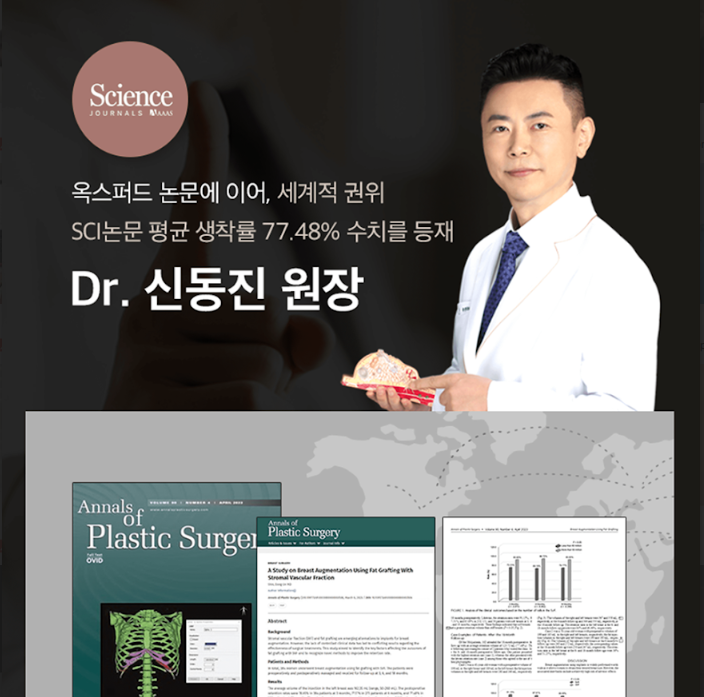
This article was written based on the clinical standards of Chief Director Shin Dong-jin (19 years of experience, over 9,000 cumulative surgeries performed), who has established the field of stem cell (SVF) breast augmentation. He served as the President of the Korean Society of Stem Cell Plastic Surgery for 10 years and maintains a principle of performing a maximum of only 2 to 3 surgeries per day.
This content is for informational purposes only., Procedure results and engraftment rates depend on the individual's constitution·Organizational condition·There may be differences depending on lifestyle habits.. Please confirm the accurate diagnosis and eligibility for the procedure through an in-person consultation..
Member SC301 · Chan & Chan Tower, 611 Yeongdong-daero, Gangnam-gu, Seoul (77-9 Samseong-dong) · 1-minute walk from Exit 2 of Bongeunsa Station (Line 9)
https://blog.naver.com/sc301guide – SC301 Naver Seongchelin Guide Blog


