


Have you ever worried that the sides of your armpits stand out or that your clothes don't fit the way you want them to?
It looks like fat on the outside, but if you look closely accessory breastsThis is a not uncommon cause. Since the weight does not drop easily even with exercise or weight loss, many people consider surgery.
Today, I will guide you step-by-step on how to better understand accessory breasts and what to check before deciding on surgery.
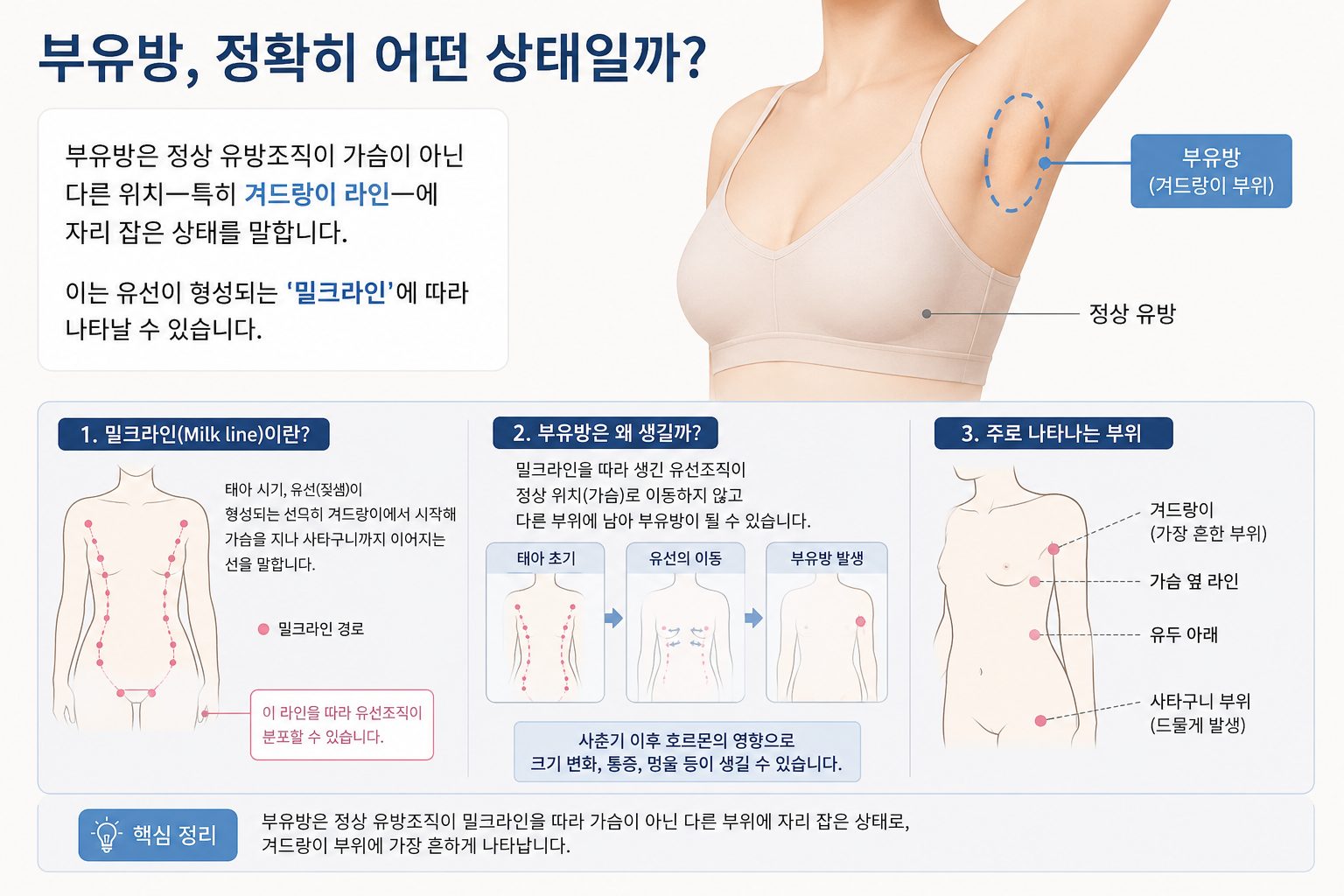
What exactly is the condition of accessory breasts?
Accessory breasts are normal breast tissue located in a position other than the chest—Especially the underarm lineIt refers to the state of being situated in —. This is where the mammary glands are formed. MilklineIt may appear depending on.
What is a milkline?
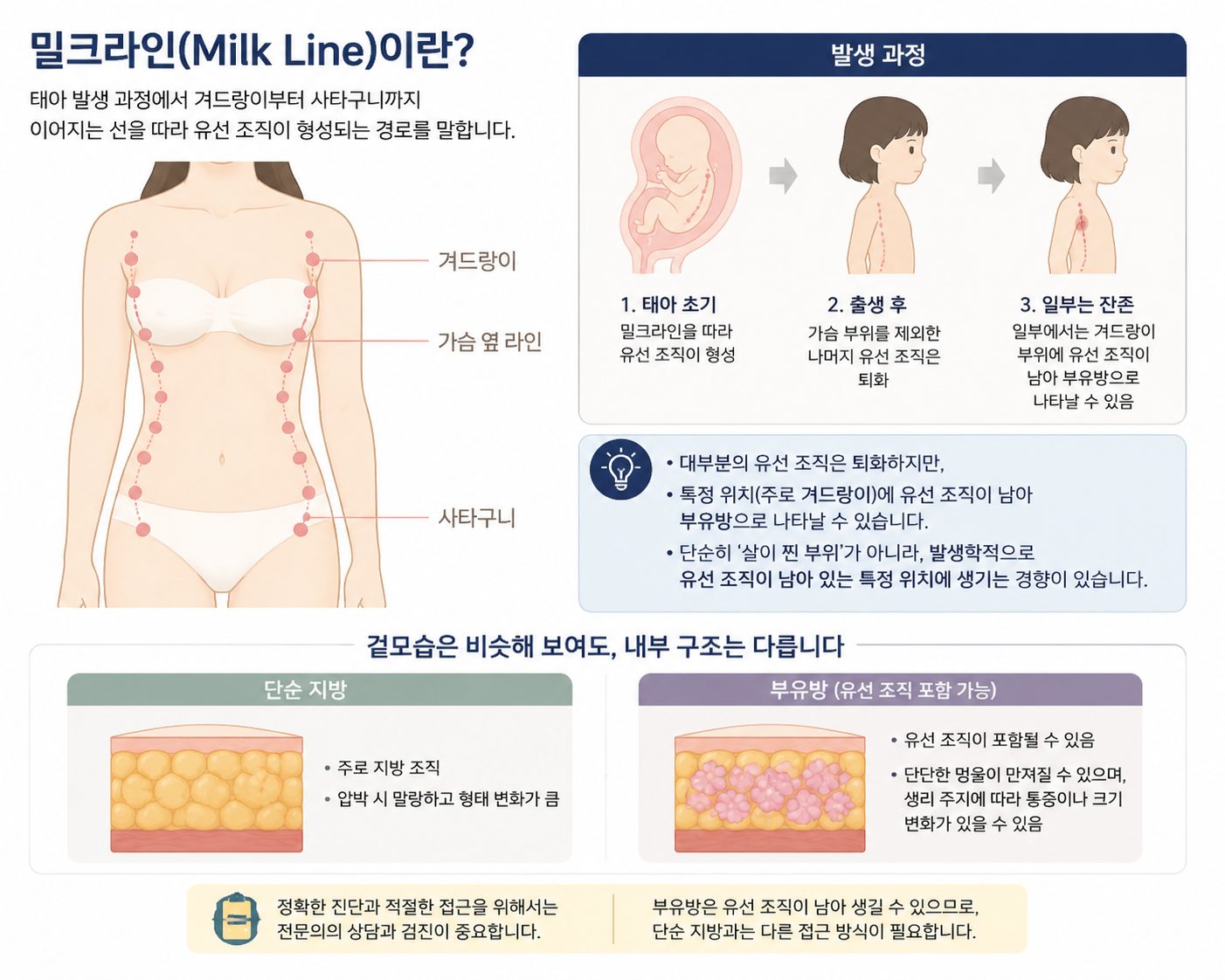
The milk line follows the line extending from the armpit to the groin during fetal development. The path through which mammary tissue is formedIt refers to... In most cases, the traces of mammary glands degenerate in areas other than the chest, but in some cases, there are glands in the armpit areaRemaining glandular tissue, accessory breastIt may appear as.
For this reason, accessory breasts are simply Fatty areaRather, it tends to occur in specific locations where mammary gland tissue remains embryologically.
Although it appears to be simple fat on the surface, the approach is completely different because there is a possibility that it actually contains mammary tissue.
How do you distinguish between a local type and a streamlined type?

Accessory breasts are often divided into two main types depending on their composition.
regionally centeredIt is relatively soft upon palpation and tends to show little variation according to the menstrual cycle.
Type accompanied by mammary tissueA hard lump is felt upon palpation, and swelling or pain is often present before and after menstruation.
However, this is a general trend, and in some cases, accurate differentiation is difficult based on palpation alone, so confirmation through imaging tests such as ultrasound is necessary.
How is accessory breast surgery performed?
Treatment methods vary depending on the composition of the accessory breast.
If the problem is fat-centered → resolved through liposuction.
When mammary gland tissue is present → Apply both suction and incision
In particular, mammary tissue Blood vessels, lymph, nervesIf this is not handled delicately, it may recur or cause inflammation due to unnecessary tissue damage.
Therefore, the key point of accessory breast surgery is the tissue How accurately It is about distinguishing and safely removing it.
Why the first choice is important
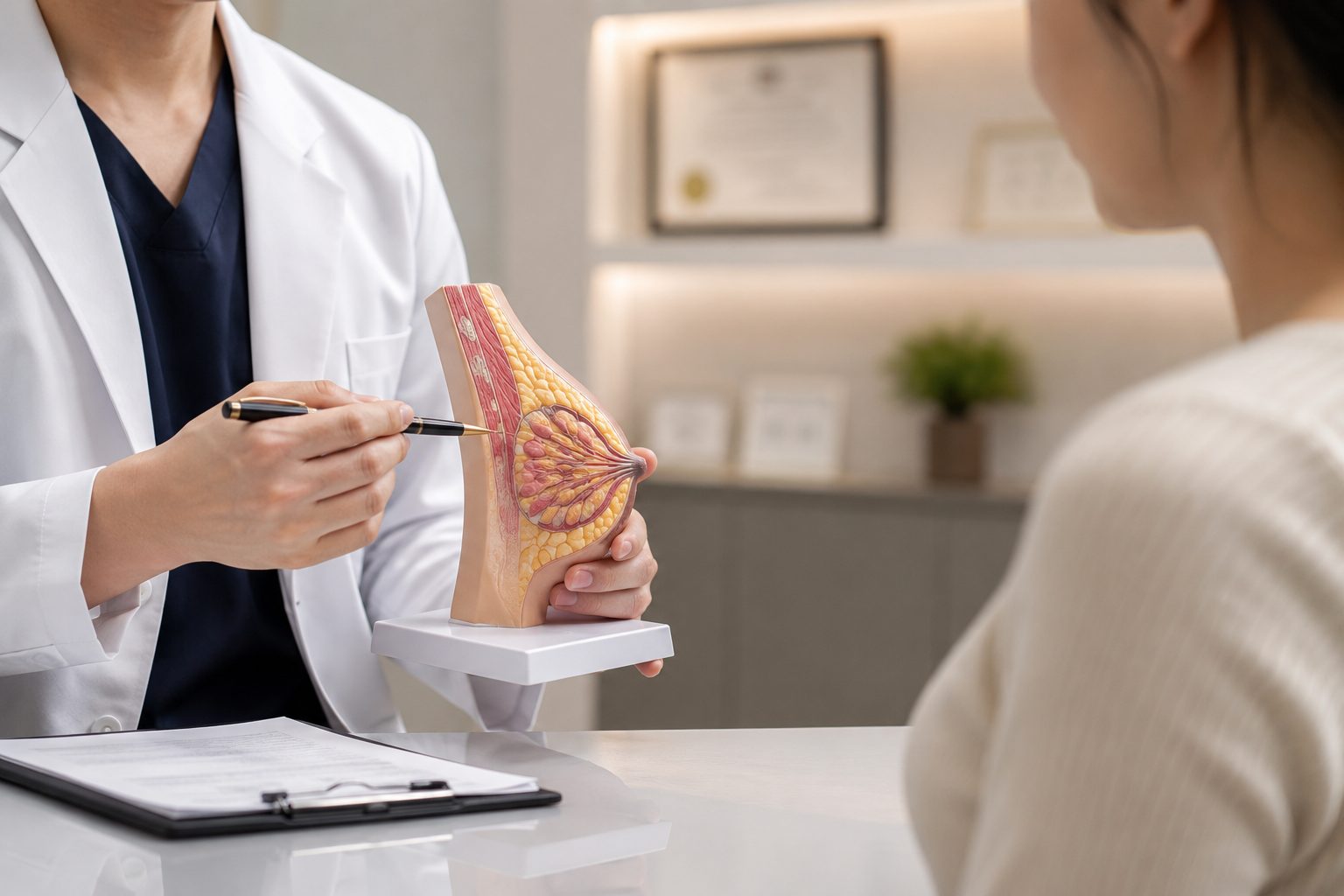
Unlike simple fat removal, accessory breast surgery Anatomical structureYou must deeply understand it.
If not sufficiently corrected in the initial surgery ReoperationThis may become necessary, but revision surgery significantly increases the difficulty and the burden of recovery.
So from the beginning
✔ Experienced medical staff
✔ A hospital that has handled a wide variety of cases
Choosing is more important than anything else.
How should SC301 be processed?
SC301 is a lot of clinical dataBased on this, we accurately identify the pattern and location of the accessory breasts and formulate a plan tailored to each individual's anatomical characteristics.
Use of 2~3mm micro cannula → Minimizes scarring
Oxygen chamber management → Alleviating the burden of the recovery process
Perform the surgery on a small scale, but the result is Natural and clean linesWe are aiming for this.
If you are considering both accessory breast removal and chest line improvement
Recently, there are many people who say, "It feels a shame to just remove accessory breasts," or "I want to refine my overall silhouette."
The methods available at this time Accessory Breast Removal + Breast Volume ImprovementIt is a method of proceeding simultaneously.
Transplanting extracted fat into the breasts allows you to trim unnecessary areas and create three-dimensional lines, resolving two concerns at once.
Gangnam accessory breast surgery
Because it is not a method that uses implants Advantages of your own fatThe fact that it can be imported as is is also a reason why many people prefer it. SC301 is calculated based on over 9,000 cases Average engraftment rate 77.48%an SCI-level international academic journal Annals of Plastic SurgeryIt is listed and published. (Results may vary depending on the individual.)
Good questions to check during consultation
Whether to distinguish between fatty and glandular types through imaging tests such as ultrasound in addition to palpation
Whether an excision method that minimizes damage to blood vessels and nerves is used when mammary gland tissue is present
What is the procedure for simultaneous accessory breast removal and breast line improvement?
What are the criteria for designing the first surgery to prevent revision surgery?
Frequently Asked Questions
Q. Can accessory breasts disappear with dieting?
A. Even in fat-centered types, the condition often does not disappear completely, and if mammary gland tissue is involved, weight loss alone tends not to lead to improvement. An approach based on an accurate diagnosis is necessary.
Q. Does accessory breast surgery leave significant scarring?
A. Fat-centered types are often treated solely with suction using a micro-cannula, resulting in minimal scarring; however, if mammary gland tissue excision is required, an incision may be necessary, so the procedure varies depending on the individual's tissue condition.
Q. Can accessory breasts recur after removal?
A. If mammary gland tissue is not sufficiently removed during the initial surgery, there is a possibility of recurrence; therefore, it is a crucial point whether accurate tissue differentiation and removal are performed from the beginning.
Introduction of the surgeon
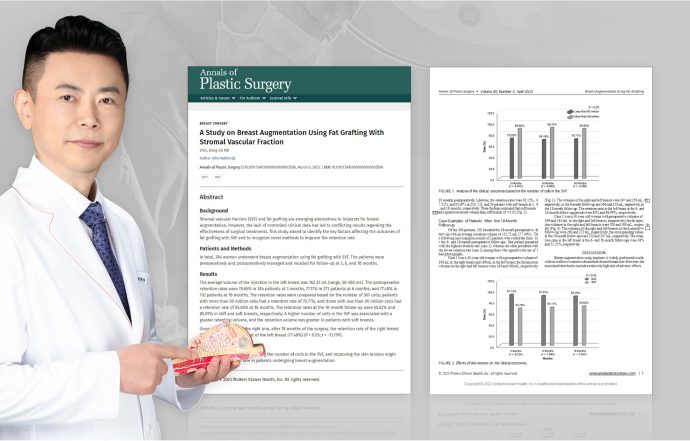
This article was written based on the standards of Chief Director Shin Dong-jin, who has accumulated 19 years of clinical experience in the field of SVF procedures. He served as the President of the Korean Society of Stem Cell Plastic Surgery for 10 years, and Only a maximum of 2 to 3 surgeries per dayWe are maintaining the principle of doing so.
to finish

Although accessory breasts may look like small protrusions, they actually have a significant impact on the overall impression and confidence of the body line.
✔️ Have you understood the principle of accessory breast formation based on the milk line?
✔️ Have you been accurately diagnosed as the fatty type or the type accompanied by mammary tissue?
✔️ Have you checked the criteria for designing the initial surgery to prevent revision surgery?
✔️ Have you decided whether to consider improving the bust line as well?
I recommend that you verify these four points through a consultation.
Gangnam accessory breast surgery
Accurate diagnosis, understanding of the tissue, and the experience of the medical team are important criteria that determine the stability of results and satisfaction.
SC301 conducts customized consultations by thoroughly analyzing each individual's body type and condition, taking into account not only accessory breast removal but also breast line enhancement if necessary.
If you have any questions, please feel free to contact us anytime!
Procedure results and recovery periods may vary depending on individual tissue condition and constitution. The information above is for reference only, so please confirm an accurate diagnosis through an in-person consultation.
This has been the Seongchelin Guide.

Frequently Asked Questions
What exactly is the condition of accessory breasts?
Accessory breasts refer to a condition where normal breast tissue is located in a position other than the chest—particularly along the armpit line. This can occur along the 'milk line' where mammary glands form.
What is a milkline?
The milk line refers to the pathway along which mammary gland tissue forms during fetal development, extending from the armpit to the groin. In most cases, traces of mammary glands degenerate in areas other than the chest, but in some instances, mammary gland tissue remains in the armpit area, which may appear as an accessory breast. For this reason, accessory breasts tend to develop not simply as a "fatty area," but in specific locations where mammary gland tissue remains embryologically.
How do you distinguish between a local type and a streamlined type?
Accessory breasts are often broadly divided into two types based on their composition. Fat-centered type: Relatively soft upon palpation and tends to show little change with the menstrual cycle. Glandular tissue-associated type: A hard lump is felt upon palpation, and swelling or pain is often present before and after menstruation. However, this is a general tendency, and accurate differentiation can be difficult based on palpation alone, so confirmation through imaging tests such as ultrasound is necessary.
How is accessory breast surgery performed?
Treatment methods vary depending on the composition of the accessory breast. If it is primarily fat, it is treated with liposuction. If mammary gland tissue is present, both liposuction and incision are applied. In particular, mammary gland tissue is intertwined with blood vessels, lymph, and nerves, so if not handled delicately, it can lead to recurrence or inflammation due to unnecessary tissue damage. Therefore, the key to accessory breast surgery is 'how accurately' the tissue is identified and safely removed.
How should SC301 be processed?
Based on extensive clinical data, SC301 accurately identifies the characteristics and location of accessory breasts and formulates a treatment plan tailored to individual anatomical characteristics. The use of a 2–3mm micro-cannula minimizes scarring, while oxygen chamber management reduces the burden of the recovery process. The goal is to perform the surgery on a small scale, aiming for natural and clean lines in the results.


