


가슴지방이식As you look into it, a thought like this is bound to cross your mind at least once.
"What if there are side effects...?"
"I heard about necrosis or an oil cyst. Will it be okay?"
Even when casually searching for information, there comes a moment when your heart feels heavy as you delve just a little deeper. Today... 가슴지방이식 부작용Why this occurs, what kind SymptomI will provide a fresh summary of how it appears and what you should check during the consultation.
Why does some of the transplanted fat cause problems?
가슴지방이식It is a surgery in which the patient's own fat is harvested from areas with excess fat, such as the abdomen or thighs, and transplanted into the chest.
There is something you absolutely need to know here. The fact that not 100% of the transplanted fat survives.
If some of the transplanted fat cells are not sufficiently connected to blood vessels, they naturally... over time TemporaryIt may become or lose its function. During this process, if the fat hardens or oil components leak out to form small pockets, it becomes what is commonly heard. oil cystor fat necrosisIt can lead to.
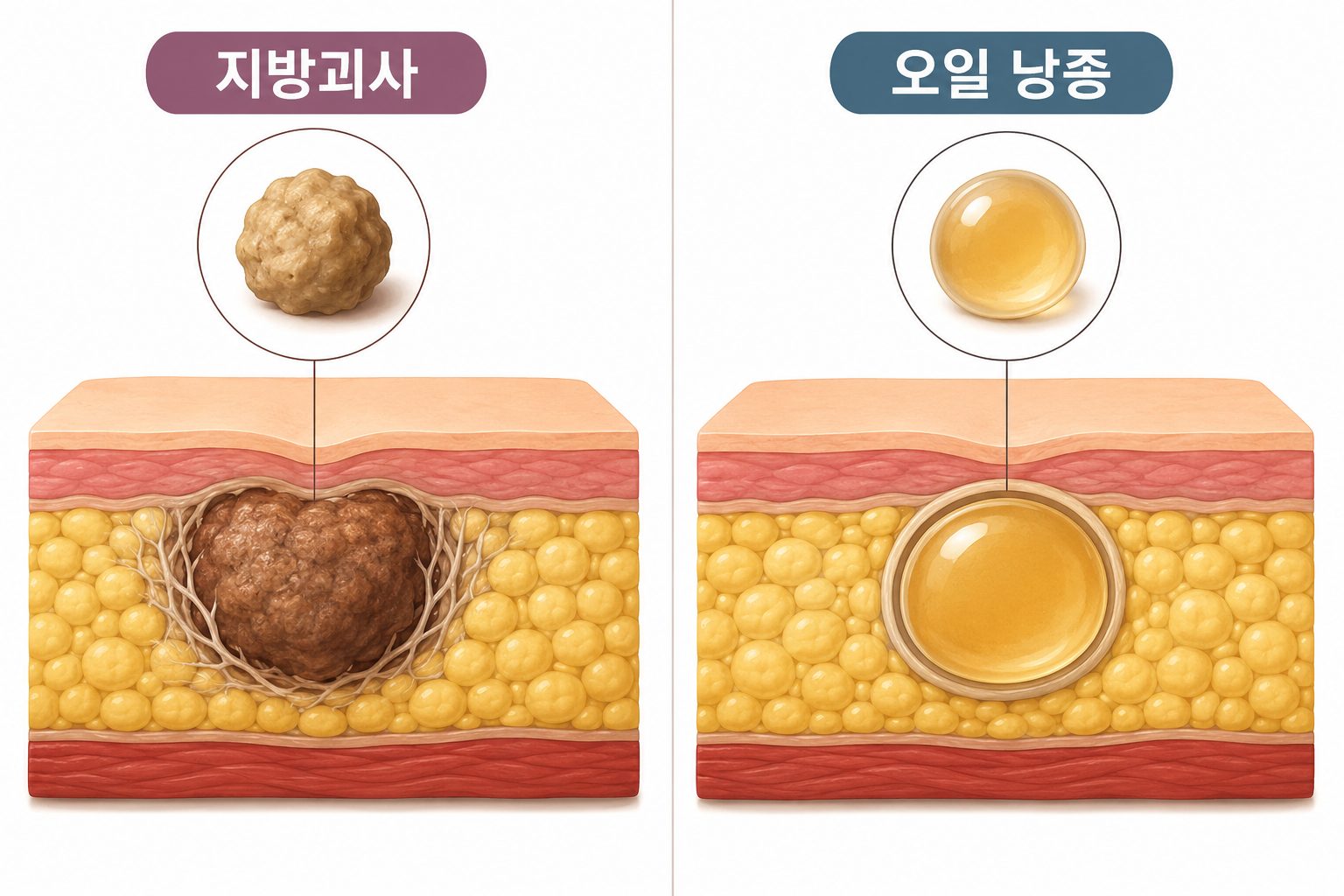
How are oil cysts and fat necrosis different?
The two terms are often used interchangeably, but they are slightly different concepts.
fat necrosis: A phenomenon in which fat cells deprived of blood flow die and harden into fibrosis. It may feel like a hard lump upon palpation.
oil cyst: A phenomenon in which oily components leak out of necrotic fat cells and remain in the form of a sac (cyst). It may feel slightly softer due to its fluidity.
In both cases, there is no immediate threat to health, but it can affect the texture or shape, so accurate identification and management are required if necessary.
Signs you can check yourself

If you experience the following changes after surgery, we recommend consulting with your medical team to determine if this is a natural part of the recovery process or if it requires further verification.
✔️ A hard lump can be felt that does not shrink easily over time.
✔️ Only specific areas are unusually hard or protrude convexly
✔️ The asymmetry between the left and right sides is evident even after the swelling has subsided.
✔️ The skin surface looks bumpy or like indentations.
However, since many of these symptoms may appear temporarily during the recovery process, it is more accurate to confirm them through regular checkups rather than self-diagnosing.
The key to fat grafting is the 'environment for the fat to survive'

finally Gangnam 가슴지방이식The key is how many regions can stably establish themselves.
✔ Whether blood flow is smooth
✔ Whether the fat has been distributed evenly without clumping in one place
✔ Whether pre- and post-operative care was provided together
The better these factors are established, the more comfortably the fat settles, and the risk of side effects naturally decreases.
What is different about Stem Cell (SVF) Breast Augmentation (Breast Fat Grafting)?

SC301In order to create an environment where fats can survive well Stem cell (SVF) breast augmentation (breast fat grafting) We are applying the method.
SVF is Adipose-derived cells It refers to the component. This component is around the transplanted fat. blood vessel formationand recoveryIt contains various factors involved, helping fat settle more stably.
SC301 is based on the fundamental principle of mixing healthy fat and adipose-derived cell components in appropriate proportions, dividing them into very small units, and injecting them uniformly.
The results showed
✔ Reduce the amount of fat lost
✔ It can also relatively lower the likelihood of it leading to hardening or lumps.
SC301 was calculated based on over 9,000 cases Average engraftment rate 77.48%an SCI-level international academic journal Annals of Plastic SurgeryIt is listed and disclosed. (Engraftment rates and the occurrence of side effects may vary depending on individual constitution and lifestyle.)
'Step-by-step management' as important as surgery
Gangnam breast fat grafting is not a process that ends in a single day. SC301 considers the following flow to be important.
1. Pre-management Checking fat status and overall physical condition, and preparing the body so that fat can settle properly.
2. Surgical Process Safely separates adipose-derived cell components and evenly disperses and injects them at a microscopic level.
3. Follow-up Management Combining lifestyle management tailored to the recovery process with a management program that aids fat engraftment
like this Pre-operative → Surgery → Post-operative careWhen connected as a single flow, the stability of the result can also be significantly different.
Post-operative follow-up monitoring should be done as follows.
As a new addition, I have summarized the general observation timelines to check for side effects early.
1~2 weeksCheck for initial swelling and bruising, and verify normal recovery.
Around 1 months: Checking tissue condition through palpation
Around 3 monthsCheck for lumps or cysts using imaging tests such as ultrasound if necessary.
Around 6 months: Check final engraftment results and left-right balance
Whether such regular verification processes are in place is also a criterion you can consider when choosing a hospital.
Good questions to check during consultation
How fat is uniformly distributed and injected during fat grafting
Is there a response procedure in place for the occurrence of oil cysts or fat necrosis?
What are the schedule for regular post-surgery check-ups and the examination methods (palpation/imaging)?
What are the policies regarding additional costs or revision surgery in the event of side effects?
Frequently Asked Questions
Q. If a lump is felt, is revision surgery absolutely necessary?
A. That is not the case. It may be felt temporarily during the initial recovery process, and even if it is confirmed to be fat necrosis or an oil cyst, observation alone may be sufficient depending on the size and symptoms. An accurate diagnosis is the priority.
Q. Are oil cysts or fat necrosis dangerous to health?
A. In most cases, they do not lead to immediate health threats, but depending on their size and location, they can cause discomfort or cosmetic concerns, so appropriate care is required.
Q. Does using SVF eliminate side effects entirely?
A. While SVF helps create an environment where fat settles stably, it does not completely rule out the possibility of all side effects. Achieving stable results requires a precise procedure combined with proper pre- and post-treatment care.
Introduction of the surgeon
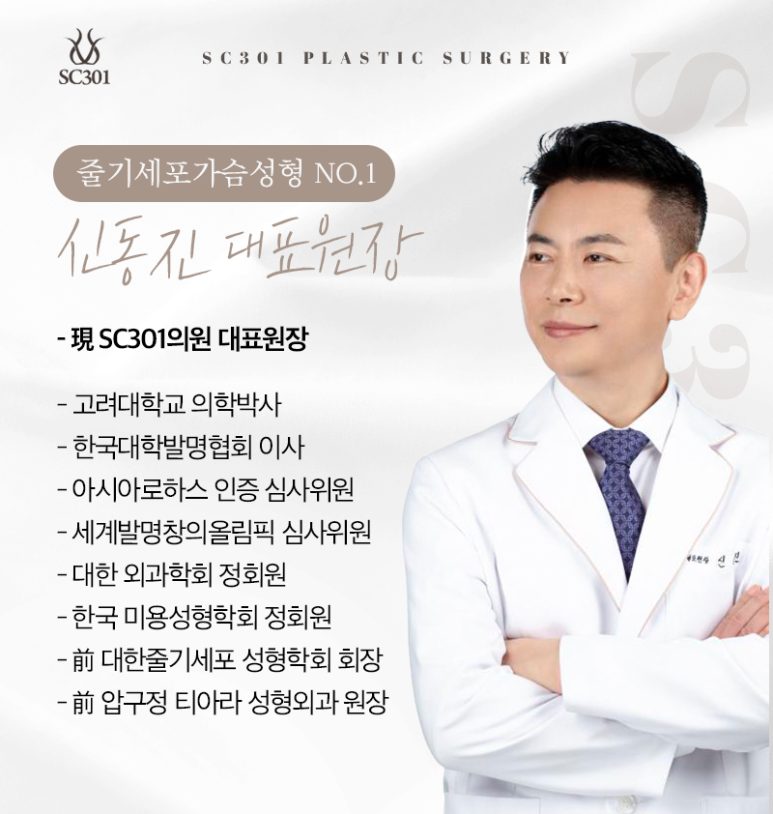
This article has established the field of stem cell (SVF) breast augmentation. Chief Director Shin Dong-jinThis was written based on clinical standards (19th year, over 9,000 cumulative procedures performed). Served as President of the Korean Society of Stem Cell Plastic Surgery for 10 years, and Up to 2–3 cases per dayWe maintain the principle of performing only surgeries.
Finally, there is something I would like you to keep in mind.

Side effects from breast fat grafting are not inevitable problems, nor are they something that must be left solely to luck.
✔ How the fat is handled ✔ Whether preparation and care are in place for engraftment ✔ Whether a system for regular post-operative checkups is in place ✔ Whether you are guided through the entire process, not just a simple explanation
It is most important to calmly check these aspects.
If you make your choice with a little more knowledge, your worries will decrease and your satisfaction will be much higher. If you have any questions, please feel free to browse and compare thoroughly at any time.
Procedure results and the occurrence of side effects may vary depending on an individual's constitution, fat condition, and lifestyle. The information above is for reference only, so please confirm an accurate diagnosis through an in-person consultation.
This has been the SC301 Seongchelin Guide.


Frequently Asked Questions
Is it a side effect if I can feel a lump after breast fat grafting?
Since it may appear temporarily during the recovery process, it is more accurate to confirm it through regular checkups rather than self-diagnosing. However, if you feel a hard lump that does not shrink over time, or if a specific area is particularly hard and bulging, we recommend consulting with your medical team.
How are oil cysts and fat necrosis different?
Fat necrosis is a phenomenon in which fat cells deprived of blood supply die and harden into fibrosis, and it may feel like a hard lump upon palpation. An oil cyst is a condition in which oily substances leak out from necrotic fat cells and remain in the form of a sac; due to its fluidity, it may feel slightly softer.
Does 100% of the transplanted fat survive?
That is not the case. If some of the transplanted fat cells are not sufficiently connected to blood vessels, they will naturally be absorbed or lose their function over time. During this process, if the fat hardens or oily components leak out to form small sacs, it can lead to oil cysts or fat necrosis.
If I experience any symptoms after surgery, is it necessary to check?
This applies when you feel a hard lump that does not shrink over time, when a specific area is unusually hard or bulging, when there is noticeable asymmetry even after the swelling subsides, or when the skin surface appears uneven or looks like an indentation.
If a lump is felt, do I absolutely have to have revision surgery?
That is not the case. It may be felt temporarily during the initial recovery process, and even if it is confirmed to be fat necrosis or an oil cyst, observation alone may be sufficient depending on the size and symptoms. An accurate diagnosis is the priority. Chief Director Shin Dong-jin examines the size, location, and progression of the condition to distinguish between cases where observation is sufficient and those requiring treatment, providing clear guidance accordingly.
Are oil cysts or fat necrosis dangerous to health?
Although most do not lead to immediate health threats, they can cause discomfort or cosmetic issues depending on their size and location, so proper care is required.
Do side effects disappear completely when using SVF?
While SVF helps create an environment where fat settles stably, it does not completely rule out the possibility of all side effects. Achieving stable results requires a precise procedure combined with proper pre- and post-treatment care.
When is the best time to have follow-up observation after surgery?
The general follow-up schedule involves checking for initial swelling and bruising at 1 to 2 weeks, assessing tissue condition via palpation around 1 month, confirming the presence of lumps or cysts using imaging tests such as ultrasound if necessary around 3 months, and checking the final results of engraftment and left-right balance around 6 months. SC301 Clinic provides regular check-up schedules based on these timings and verifies the condition through imaging tests if required.
What conditions are necessary for fat to settle properly?
It is crucial to ensure smooth blood flow, that the fat is injected evenly without clumping in one spot, and that proper pre- and post-operative care is provided. The better these factors are met, the more comfortably the fat settles, and the risk of side effects naturally decreases. SC301 Clinic adopts the fundamental principle of mixing healthy fat and fat-derived cell components in appropriate proportions and injecting them uniformly in very small units.
What should I check during the consultation?
We recommend that you check how fat is uniformly distributed during grafting, whether procedures are in place to handle oil cysts or fat necrosis, the schedule and methods for regular post-operative check-ups, and the policies regarding additional costs or re-operation in the event of side effects. SC301 Clinic provides guidance on these items first during the consultation phase.


