


Good morning.
This is the Seongchelin Guide 😊
In the process of considering breast augmentation
The most concerning aspect is by far the side effects.
The implants
There are concerns about a hard texture or capsular contracture,
fat grafting
When you come across stories about side effects such as oil cysts or calcification
You are bound to be confused about which choice is safer.
so today
In breast augmentation with implants and breast fat grafting
What are the actual side effects of concern,
And how to approach it to reduce risk
Whether satisfactory results can be expected
I will calmly summarize it for you.
If you are considering breast augmentation
In sorting out anxiety and finding direction
This will be helpful.
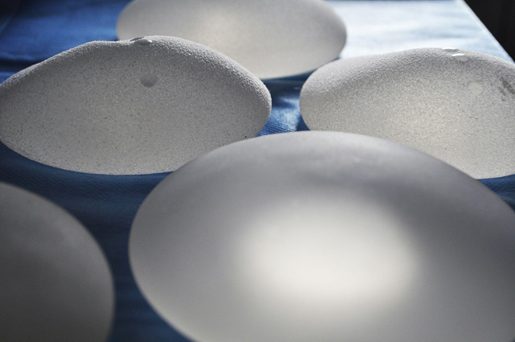
Breast Implant Augmentation: Why Are Side Effects Reported?
In the past
When it comes to breast augmentation,
Implant insertion was the most common choice.
However, as time passed
The following limitations gradually became known.
Unfamiliarity in touch or shape
Capsular contracture (a phenomenon in which the capsule surrounding the implant hardens)
Possibility of inflammation or pain
Concerns regarding implant durability
Deformity that may remain after removal
The implants
Because it is a structure that inserts external substances into the body
Depending on an individual's constitution or immune response
The fact that it could create a long-term burden
This is the biggest feature.
Because of this
"Isn't there a more natural way that puts less strain on my body?"
The worry continued,
As an alternative, autologous fat grafting has started to gain attention.

Limitations of simple breast fat grafting, engraftment rate issues
Autologous fat grafting
Because it uses your own fat
It has the advantage of being natural in terms of texture and shape.
But at the same time
There are also clear limitations.
Some of the transplanted fat may be absorbed.
Possibility of oil cysts or calcification due to fat necrosis
When repeated procedures are required to achieve the desired volume
Ultimately, the core is
How stably the fat survives,
In other words, it is the survival rate.
Fat cells are
If you do not receive a rapid blood supply in the new location
Some fail to survive and perish,
Side effects related to fat necrosis may occur during this process.
So many people
“Is there a way to make it look natural while increasing the survival rate?”
This leads to the question...

Stem Cell (SVF) Breast Augmentation: Differences in Approach
In order to compensate for these limitations
Stem cell (SVF) breast augmentation (breast fat grafting) is utilized.
SVF is
existing together in the fat
It refers to adipose-derived cell components,
Helps with blood vessel formation and tissue repair
It contains cellular components.
SC301's stem cell (SVF) breast augmentation is
It proceeds in the following flow.
1. Obtain fat cells purified from fat
2. Separate SVF components from the same fat
3. Mix the two components in an appropriate ratio and transplant.
because of this
Transplanted fat in a new environment
So that it can settle in more stably
You will create a structure that provides help.
To put it simply,
fat that can be maintained for a long time
It is a method of designing the environment together.
The survival rate is not determined by technology alone.
The important point here is
Just because you use SVF
The point is that the survival rate does not increase automatically.
SC301 is
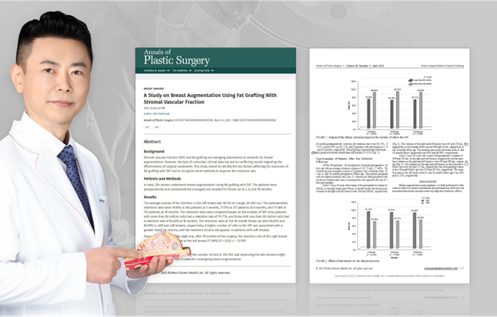
Based on over 8,000 clinical data points over 18 years
From pre-operative care to surgery and post-operative care
We have established a proximate-centered protocol.
Prepare your fat condition through pre-diet management.
A purification environment that minimizes cell damage
Transplant design tailored to individual conditions
Lifestyle and diet management for approximately 6 months after surgery
These factors work together
This led to a result of an average engraftment rate of 77.48%, and
Related information has been reported in an international academic journal (SCI).

Make sure to distinguish the name 'stem cell'.
There is also one thing you need to be careful about.
In some procedures
PRP (Platelet-Rich Plasma)
There are cases where it is described as a stem cell (SVF) procedure.
PRP is
While it can play an auxiliary role in aiding recovery,
Like adipose-derived cell components (SVF)
The technology for designing the fat engraftment environment
There is a clear difference.
If you are considering stem cell (SVF) breast augmentation
Able to formally separate and purify SVF
Whether there is a system and experience
It is important to make sure to check.

The key to reducing side effects is 'design and management'
In breast augmentation
Although it is impossible to make side effects completely zero,
Depending on the approach
You can sufficiently lower that possibility.
The important thing is
Rather than what materials are used
In what environment
who
By what standard
How to manage.
SC301 is
Based on the authentic SVF protocol
Minimize the possibility of side effects, and
Aiming for natural volume and texture
I am designing a procedure.
If you have any questions or
If you are wondering about a safe method that suits you
You may want to calmly verify this through consultation.
until now
This was the Seongchelin Guide 😊
3 Things You Must Check If You Are Considering Breast Augmentation!

#SC301, #StemCell(SVF)BreastAugmentation, #StemCellSVFBreastAugmentation, #NaturalBreastAugmentation, #FatGraftingBreastAugmentation, #FatGraftingSideEffects, #FatGraftingNecrosis, #BreastAugmentationSideEffects, #BreastAugmentationReviews, #BreastFatGrafting, #BreastFatGraftingSideEffects, #HowToIncreaseGraftingSurvivalRate, #BestBreastAugmentationClinic, #BreastLineCorrection, #BreastAugmentationCost, #BreastAsymmetryCorrection, #BreastSurgeryInfo, #ImplantSideEffects, #OilCyst, #FatGraftingCalcification, #BreastAugmentationForThinBodyTypes, #StemCell(SVF)FatGrafting, #BreastAugmentationRevision, #BreastAugmentationConsultation, #BreastAugmentationBeforeAndAfter, #BreastAugmentationConcerns, #GangnamBreastAugmentation, #SafeBreastAugmentation
Frequently Asked Questions
Breast Implant Augmentation: Why Are Side Effects Reported?
In the past, breast augmentation was the most common choice. However, over time, the following limitations have gradually become known: unnaturalness in feel or shape, capsular contracture (hardening of the capsule surrounding the implant), the possibility of inflammation or pain, concerns regarding implant durability, and potential deformation remaining after removal.


